



Content warning: This article contains mentions of sexual abuse.
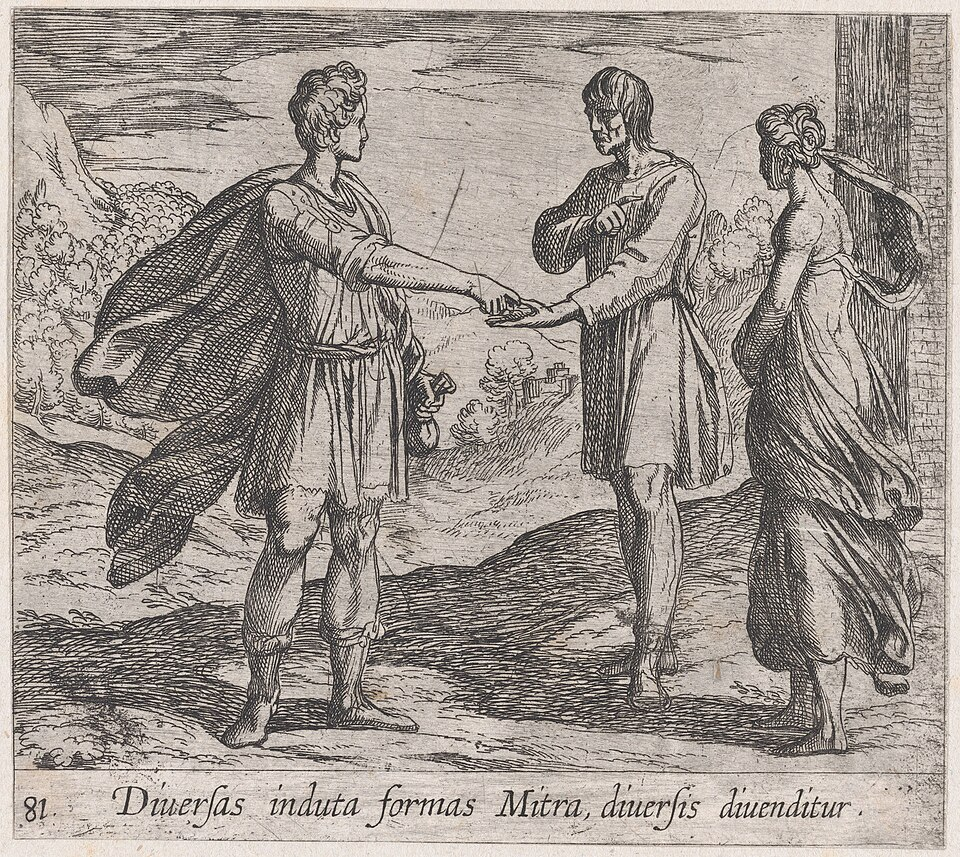
Her first metamorphosis was into the fisherman. Then, the queen. Into a butcher, then a cow, a sparrow and finally back to a girl. The transformations of Mestra are some of the many chronicled in the Roman poet Ovid’s first-century epic “Metamorphoses.” Madeline Miller put her own spin on this story in her latest short story, “Mestra,” released Sept. 29, joining her other Greek myth adaptations, “The Song of Achilles”, “Circe” and “Galatea”.
Following an ongoing trend of Greek retellings, her works have been at the discursive forefront of classical literary adaptations, perhaps setting the tone by asking: what can these myths reveal about our modern systems of power? With the theatrical release of Anaïs Mitchell’s “Hadestown: The Musical” — the myth of Orpheus and Eurydice — and Christopher Nolan’s “The Odyssey” this summer, the classical world clearly still has a lot to say.
In “Mestra,” Miller once again walks the literary road less traveled, giving voice to characters otherwise disempowered or sidelined by the dominant narrative. In “The Song of Achilles,” she told a story of the gods, heroes and war of Homer’s “Iliad” through the lovers within it. With “Circe,” Miller chronicled Homer’s “Odyssey” from the perspective of the titular witch, challenging mainstream attitudes towards ostracized female figures. Now, her most recent publication reimagines the story of a mortal king as a story about a young woman.
Born an only child to Erysichthon, king of Thessaly, Mestra is still a girl when her father slights the goddess Demeter by desecrating a sacred grove, provoking her wrath. As the Olympian deity of agriculture, Demeter curses Erysichthon with a fitting affliction: unrelenting, insatiable hunger. Meanwhile, so Ovid’s version goes, the sea god Poseidon takes the king’s daughter Mestra as his lover, favoring her and granting her the power to shapeshift.
In Miller’s telling, however, Mestra is raped by Poseidon before her father sells her into marriage. Poseidon grants her the power to shapeshift, and she uses it to escape from her menacing suitor. When Erysichthon discovers her transformative abilities, he hatches a plan to sell her to multiple buyers a day, making her change face and body each time as she steals food for him with every getaway. As his greed swells, so too does the burden of Mestra’s strange powers.
There are many metaphors at play in “Mestra,” most of which relate to the underlying theme of power. Erysichthon’s criticisms of Mestra’s appearances, for instance, echo the strict demands that the male gaze places on the female body — a manifestation of patriarchy. He reprimands Mestra for her inability to transform her features at will, to have one woman’s face and another’s body. Erysichthon acts as the ultimate male arbiter of Mestra’s womanly beauty, but the reach of his power is not merely over her appearance. By conflating her appearance with her literal market value, Erysichthon determines what Mestra is worth as a human being, to herself and others. Indeed, the social sanctioning of men determining the inherent worth of women upholds a system of male dominance.
Also noteworthy is the broader metaphor of Mestra’s shapeshifting representing women’s bodily agency. For instance, reframing the narrative from being Poseidon’s lover to him having raped her shifts the focus of the narrative to power rather than sex — more specifically, male abuse of power over girls and women. Mestra’s body is consistently treated as an object, being exploited, weaponized and ultimately transformed, representing how the abuse of women feeds insatiable systems of control. This speaks to the broader message of how the female body possesses inherent power and illustrates the ruinous consequences for women robbed of it.
On the other side of this power dynamic, Miller uses Erysichthon’s character to examine greed. Erysichthon, who cut down trees sacred to Demeter to build a feast hall, demonstrates how power — his royal title — begets arrogance, which begets an all-consuming greed. His hunger does not begin when Demeter places the curse; she merely physically manifests the corruption within. With virtually every outlet for his power destroyed by hunger, he abuses his daughter — for even a morally disgraced, haggard former king is positioned more powerfully than a woman. Thus, Miller infuses the myth with potent metaphors that reveal the underlying brushstrokes of power, from where it moves and why.
Erysichthon’s curse ties into a broader motif in “Mestra”: afflictions. With the ravenous king, Miller reveals how physical hunger mirrors psychological hunger, both with destructive consequences. Mestra herself suffers from multiple afflictions. Before she gains her powers, Mestra is plagued with the shame of not being a virgin, having been raped by Poseidon. She feels dishonest and terrorized by the thought of what the merchant to whom she was sold would do when he found out. From early in the narrative, she is afflicted with a perceived absence of worth. This shame and fear is the catalyst for her prayer to the god, granting her the power of transfiguration — a power which would also reveal itself to be an affliction. While Mestra is able to attain some level of agency, it is soon exploited, driving her back to a position of subordination.
Miller strategically highlights how when a woman is empowered, this recovered agency can still be exploited to benefit the powerful. But ultimately, Mestra’s affliction is not her power to shapeshift, nor by any means her lack of virginity — or rather, her survival of Poseidon’s assault. The only true affliction in this story is the voracious arrogance of Erysichthon, poisoning his daughter’s upbringing, tethering her sense of worth to himself, all while it ate him alive. A powerful tale indeed.
With “Mestra,” Miller once more proves her ability to parse potent myths from millennia past and extract meanings most relevant to modern cultural discourse. Her delicate style does justice to the centuries-old poetic layering of the Greek myths. Like her titular character, she demonstrates a transformative power of her own: to sweep the dust off of even the most obscure parables and bring their rich voices back to life.
Sean Watanabe is an Arts & Entertainment Intern for the fall 2026 quarter. He can be reached at seanlw@uci.edu.
Edited by Travis Foley and Geneses Navarro.

Interested in becoming an intern or a contributing writer for the Entertainment section?
Contact us at entertainment@newuniversity.org!