

“Project Panama is our effort to destructively scan all the books in the world. We don’t want it to be known we’re working on this.”
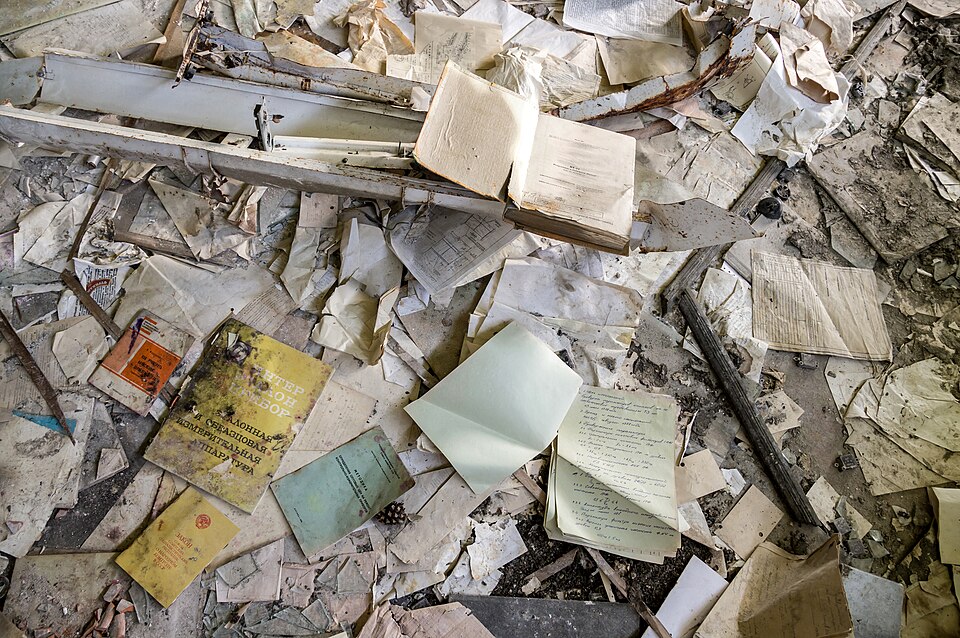
This might sound like a line from a dystopian novel, but it comes from court documents unsealed this January during the recent lawsuit Bartz v. Anthropic. Project Panama refers to Anthropic’s newest AI training method, which involved the company using pirated media and secondhand books in order to train their large-language models (LLMs). The books would be destroyed after being used for training, and anywhere between 500,000 to 2 million physical copies have already been erased.
Project Panama may feel dystopian to many, as many parallels can be drawn between Anthropic’s method and educational science-fiction texts. Netizens have especially noticed similarities between the project and Ray Bradbury’s 1953 dystopian novel Fahrenheit 451.
The novel was written in the 1950s during the Red Scare, a time in which anti-communist censorship and paranoia ran rampant in the United States. Seeing the effects of this intellectual censorship and how technology was used to further a state-driven agenda, Bradbury wrote Fahrenheit 451. He was also influenced by public outrage towards the Nazi book burnings during World War II.
The parallel between the Project Panama and both historical and fictional book burnings is clear – they aimed to remove access to information and public media.
In Fahrenheit 451, the jump between normal society and a book-burning dystopia was gradual. It involved multiple small steps, slowly desensitizing the public to each. Each small step felt harmless, but they ultimately paved the way to achieve a larger, unacceptable goal. It is the same tactic that Anthropic now employs; they are taking small steps in order to make public information less accessible. It is vital to be able to translate the lessons learned through history and fiction into real life because it is easy to reject book burnings in Nazi Germany and Fahrenheit 451, but it is harder to recognize and actively protest Anthropic’s modern destruction of media and information.
A group of authors launched Bartz v. Anthropic because they felt their literary copyrights were violated when their work was used to train Claude LLMs, as the company illegally pirated millions of books from websites like LibGen and Pirate Library Mirror to feed to the AI. During the lawsuit, further investigation into Anthropic’s training operation revealed another concerning methodology. The company bought millions of cheap physical books from secondhand book resellers before using an irreversible process to instantly destroy the information as soon as it was fed to Claude. Anywhere between 500,000 to 2 million physical copies have already been erased. By destroying books and media at such a large scale, Anthropic’s Project Panama serves as the first step towards desensitizing the public to gradually erasing physical and accessible human-created knowledge; it is at least a cheap and irresponsible means to save time, and at most a deeply manipulative and unethical scheme to make public knowledge less accessible.
In today’s social and academic climate, the destruction of physical media at such a large scale is deeply concerning. The decision to use cheap secondhand books — and even an earlier plan to make bulk purchases from libraries — literally strips information off of the shelves. In destroying these books, Anthropic takes access to affordable physical media away from the people, many of whom rely on these secondhand marketplaces.
Public knowledge under modern capitalism is already shrinking. Libraries are losing funding, newspapers and research journals are paywalled and the digital divide remains inadequately addressed. Libraries and secondhand books remain a consistent way for the public to access literature and knowledge without a financial barrier because they bridge the gap created by paywalled content. Published books also generally undergo multiple rounds of proofreading and fact-checking, which is a vital asset in the age of AI and the internet.
As Anthropic erases these books written by real humans, the levels of AI-generated media continues to rise both online and in person. Even with the rise of the internet in recent decades, the search for knowledge has slowly shifted into the search for reliable knowledge instead. Even those who may have more financial means still face an internet riddled with inaccurate information and AI-generated content. Even online media that was thought to be reliable, such as scientific journals, have been contaminated with AI content. This makes entirely human-written media and information invaluable, and the fight to preserve that media essential.
Shanaaz Faisal is an Opinion Staff Writer. She can be reached at shanaazf@uci.edu.
Edited by Ruby Goodwin

Shanaaz is a second-year Math major and joined New University as an Opinion writer in the summer of 2026. In her free time, she enjoys reading murder mysteries, photography, and knitting.