

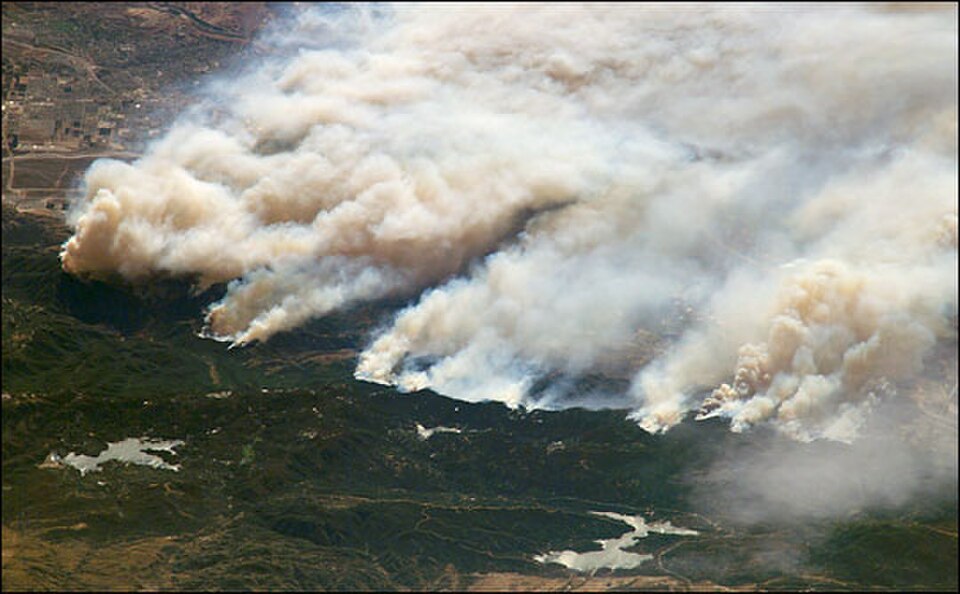

“Climate change will manifest as a series of disasters viewed through phones with footage that gets closer and closer to where you live until you’re the one filming it.”
This was a viral tweet by @PerthshireMags during the 2025 Los Angeles wildfires that continues to describe the social perception of climate change. Climate change is not an abstract danger, and it should not be treated as such. However, many Americans ignore climate change because of the privilege of living in the Global North. The lack of climate change legislation in the United States and other industrialized countries is inherently selfish because the citizens of these countries do not suffer the full consequences of the lifestyles they lead and the policies they enact. Instead, it is the less industrialized areas within the Global South that bear the brunt of the damage despite being responsible for almost none of it.
South and Southeast Asians are being killed by hurricanes and cyclones. Countries like Niger and Kenya are being ravaged by drought, affecting over 60 million people. However, families in the Global South generally live more eco-friendly lifestyles, only contributing to a small fraction of historic climate change compared to those living in the Global North. Much of this difference stems from less overconsumption overall and more sustainable customs and traditions, especially in indigenous communities, but also less industrialization in many areas. Additionally, students in the Global South show that they care more about climate change, and they have also been involved in creating grassroots movements and organizations to combat it. This may be because they are experiencing its effects firsthand more than in other parts of the world.
While many American citizens are also devastated by the effects of climate change — such as the 2025 Los Angeles wildfires or the 2024 Hurricane Milton in Florida — these destructive events do not remain consistently in the public consciousness. The news cycle moves fast, and only those whose homes and lives have been affected remember. Americans forget tragedies happening across the world at an even faster rate; an earthquake in Afghanistan or a flood in Southeast Asia may be part of the news cycle for a day or two, but are ultimately forgotten by American relief organizations and the general public. Those afflicted are left without support.
The United States is the highest historic contributor to climate change, overtaking even India, which has more than twice the population. However, without acknowledging the devastating effects of American corporations’ pollution and carbon emissions, the Trump administration has irresponsibly cut climate policies and funding. The United States recently pulled out of the Paris Climate Agreement. The Paris Agreement is a framework signed by almost 200 international parties to achieve long-term climate goals, including lowering global greenhouse gas emissions. By withdrawing from the agreement, the United States refuses to take accountability for its climate policy and shows indifference to the countries affected by its actions. The Trump administration has also agreed to build AI data centers on critical wildlife areas and is obstructing policies aimed at transitioning to clean electricity.
Because Americans do not face the consequences of climate change as frequently or as severely as those in the Global South, many Americans feel less strongly about climate change as an issue, and American politicians continue to implement irresponsible climate policies.
However, accurate climate change education may help to address these concerns. The lack of proper education surrounding climate change is one of the factors that has led to inadequate climate action in the United States. For students, climate change has often been portrayed as an unknown, abstract danger, like a monster that catches students who don’t recycle their candy wrappers and water bottles. That mindset is counterproductive and not how climate change should be taught, and it manages to both catastrophize climate change and muddle its true impacts.
Education ultimately paves the way for the action students will take later in their lives. Climate change should be taught with the emphasis on two main aspects: facts and action. It is vital to first bring attention to the effects of climate change worldwide and how they are disproportionately affecting countries in the Global South, and then it’s important to outline how to create effective change in environmental attitudes and policies.
Spreading education and awareness about the ongoing, global impacts of climate change is a vital step in motivating American citizens to take organized and productive action. Climate change is a global issue that requires large-scale action to fix. However, large-scale change starts at the local level: it is vital to focus efforts on supporting the grassroots organizations that are lobbying for a better future.
Shanaaz Faisal is an Opinion Intern for the summer 2026 quarter. She can be reached at shanaazf@uci.edu.
Edited by Ruby Goodwin and Joshua Gonzales

Shanaaz is a second-year Math major and joined New University as an Opinion writer in the summer of 2026. In her free time, she enjoys reading murder mysteries, photography, and knitting.