

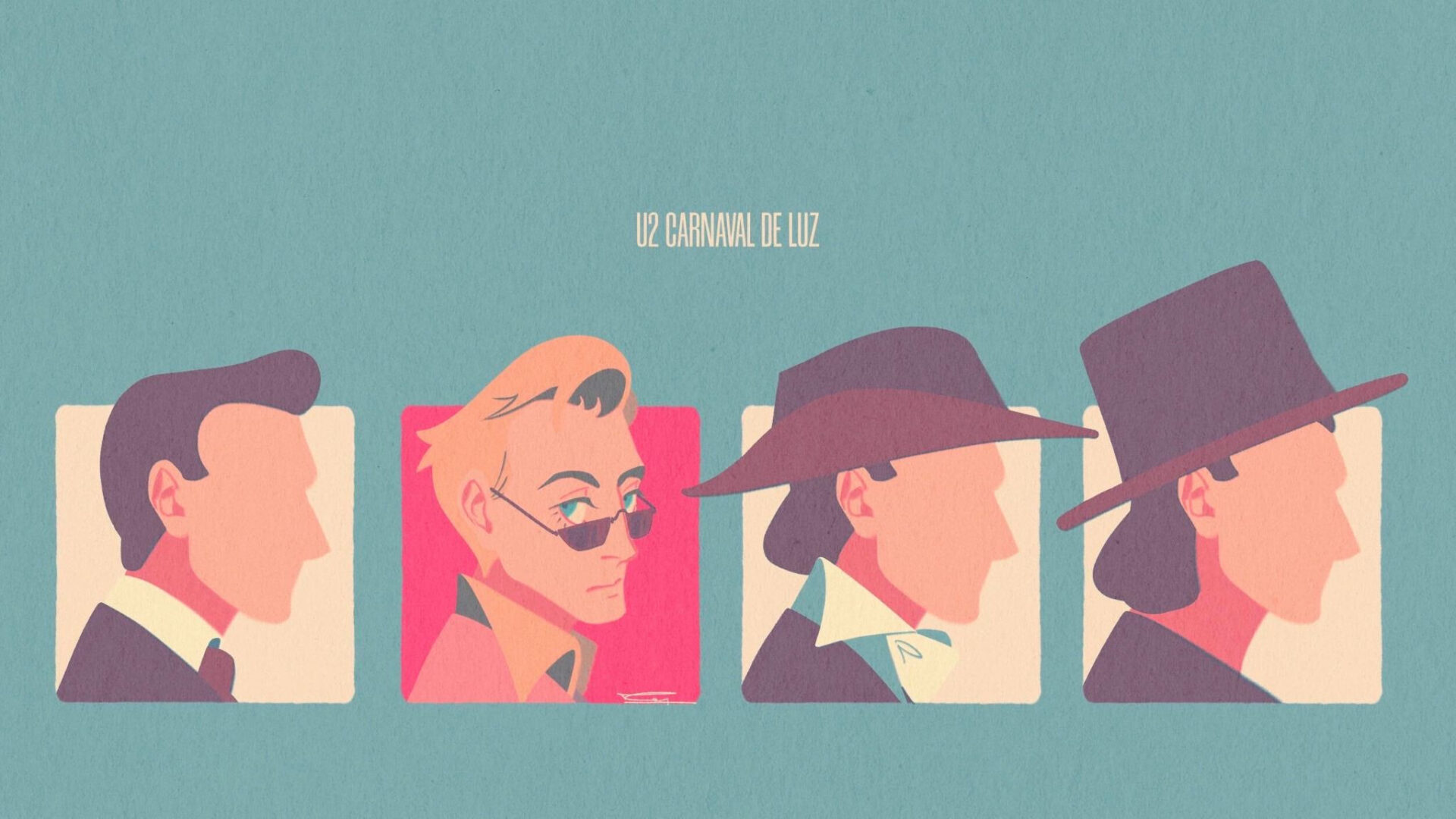

Nine years after their last studio album, Irish rock band U2 released “Carnaval De Luz” on Nov. 13. The album release lands on the 50-year anniversary of the band’s formation in Dublin.
The album was produced by Jacknife Lee, who started as a session player for U2 in 2004 and recently produced two of their Extended Plays (EP) “Days of Ash” and “Easter Lily” earlier this year. Each of the 12 tracks on “Carnaval De Luz” features uplifting vocals intended to capture the record’s celebration of spirituality and renewal. The tracklist hinted at in the album’s title, which directly translates from Spanish and Portuguese to “Carnival of Light.”
The record was foreshadowed by “Days of Ash,” which references Ash Wednesday, and “Easter Lily,” which alludes to Catholic Lent. Since the Catholic season of Carnival precedes both observances, U2’s new record completes a thematic sequence through the Catholic liturgical calendar leading up to Easter.
“Carnaval De Luz” builds on the politically charged themes of U2’s previous releases, acting as a successor for the protest-oriented opening track “American Obituary” from “Days of Ash.” The song blended personal grief with political commentary on institutional violence and harmful media narratives. U2’s new album similarly protests cynicism, with reflective lyrics on the band’s Catholic roots and political advocacy.
U2’s new song “If The World Is At War We Better Not Be” doubles down on themes of protest and resistance against authority from “American Obituary.” The track title acts as a mission statement for the whole album, reflecting U2’s long-running humanitarian mission to combine music and activism that addresses global issues. The song features stripped-back guitar and keyboard instrumentals to highlight Bono’s lead vocals, confronting listeners with a spiritual message of the shared obligation we have to question “the fiction of a nation.”
“A light has entered the darkness / No darkness can put it out,” frontman Bono sings in the final verse, underscoring that the “light” of the album is an intentional response to the “darkness” caused by current political division.
In comparison with the darker tone of U2’s recent EP releases, “Carnaval De Luz” blends rock, pop and experimental arrangements to create a distinctly hopeful sound. The opening track “Go (Carnaval De Luz)” cultivates a positive outlook for the rest of the album. Bono sings about spiritual motifs of illumination and light as a way to counteract the darkness of political division, reinforcing that “illumination is the way to fight this.” The album’s lyrics are bursting with optimism, rejecting the cynicism of their previous EPs. The song’s loud guitar and percussion instrumentals feel reinvigorated with hope, giving the song a celebratory rhythm that sets the precedent for the rest of the record.
This album also marks drummer Larry Mullen Jr.’s return after stepping away from the band due to medical issues. Mullen’s percussion instrumentals are most prominent in the high energy track “Silencio,” which shifts between quiet interludes, heavy drumming and rock-infused guitar riffs, catapulting listeners through the lyrical tension between peace and violence.
“Uneasy feeling, I just heard a gunshot (silencio) / There are things you can get used to or not,” Bono sings in a defiant response to gun violence, calling on listeners to reject suppression and join his protest.
The album’s colorful visuals capture the record’s optimism and emphasizes its thematic shift towards a joyful celebration of life. The music video for “Street of Dreams,” a direct reference to their 1987 hit “Where The Streets Have No Name,” features U2 performing the song for the first time in Mexico City. The song and video are tied to U2’s work with the Street Child World Cup, an international football tournament that advocates for better living conditions. The video captures the local community dancing as U2 performs on the roof of a school bus, emphasizing the song’s topics of belonging and resilience.
The record’s closing track, “Torn,” is a co-written duet by Bono and the late country singer Dolly Parton, featuring her last recorded studio vocals. The song is a meditative reflection on familial conflict. Its lyrics depict a mother caught in the domestic divide between her two sons and struggling to reconcile with the emotional turmoil of loving them both, serving as a universal ballad on personal and political division.
“Torn apart these loving hearts / That beat and break the same,” Bono and Parton harmonize, referencing how political divides can tear a nation and family apart. “We share a house divided.”
The song’s tender lyrics evoke images of a fractured family structure, emphasizing that nobody truly wins when cultural or political division tears people apart. The country-rooted instrumentals further bolster Bono and Parton’s message, using warm acoustic-driven guitar chords to appeal to its listeners and encourage open-minded conversations and understanding. As the last track on the album, “Torn” acts as a heartwarming goodbye to Parton while its broader references to political divide and unresolved tension creates a thematic bridge to the explicitly political topics that began in “Days of Ash.”
Though “Carnaval De Luz” may sound different to U2’s recent releases, its optimistic lyrics are just as defiant. The album maintains a hopeful attitude in the face of political unrest described in “Days of Ash” and “Easter Lily,” bringing U2’s three-part thematic run to a celebratory close.
Isabella Moody is an Arts & Entertainment Intern for the fall 2026 quarter. She can be reached at moodyi@uci.edu.
Edited by Travis Foley Zara Baker.

Interested in becoming an intern or a contributing writer for the Entertainment section?
Contact us at entertainment@newuniversity.org!