


Editor’s Note: This article contains spoilers for “Wildwood.”
“Wildwood,” the new film from LAIKA Studios released in theaters on Oct. 23, is one of the longest and most ambitious stop motion animation projects ever made. “Wildwood” continually pays attention to every detail while crafting a beautifully moving story.
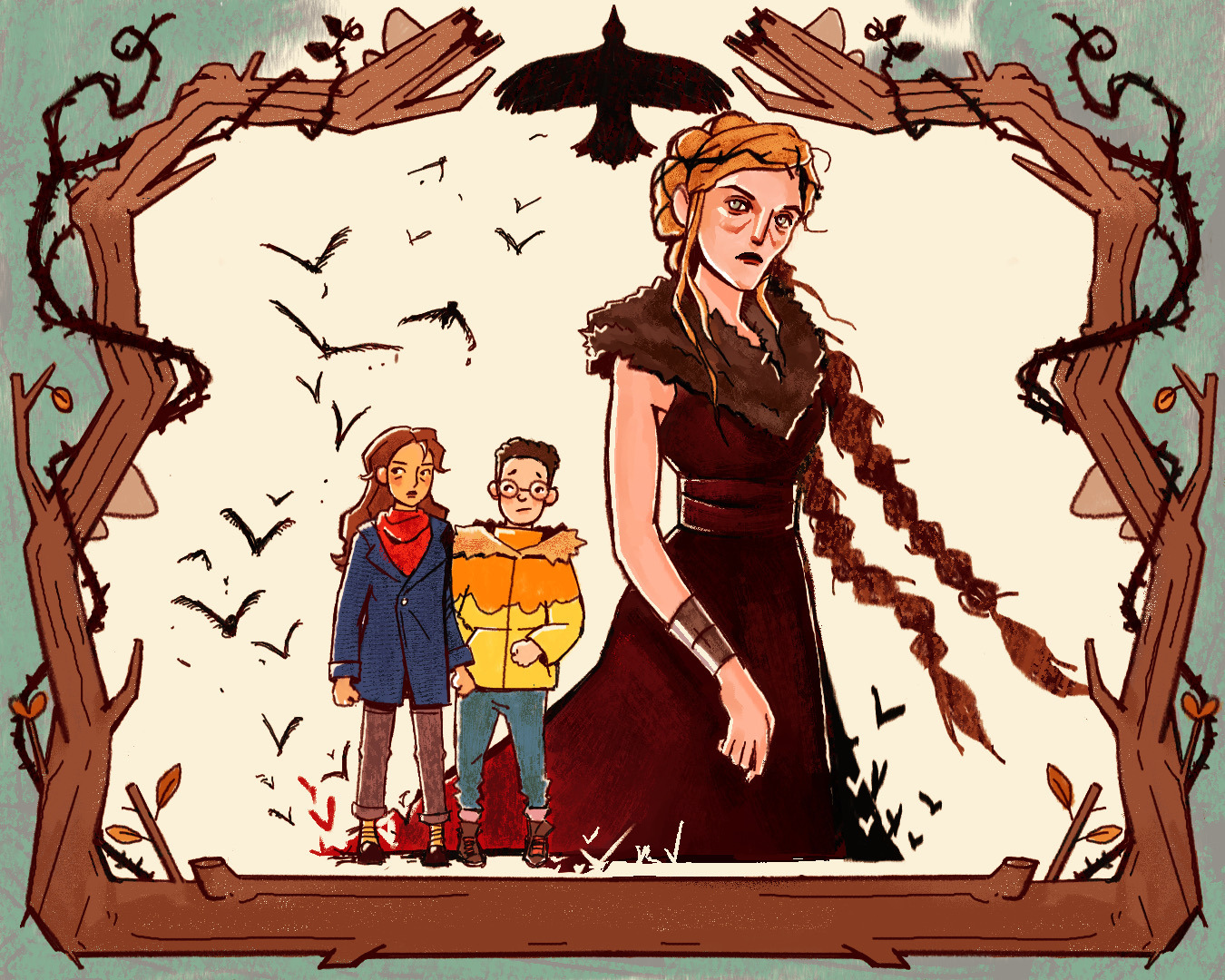
The film follows two young children, Prue McKeel (Peyton Elizabeth Lee) and Curtis Mehlberg (Jacob Tremblay), after Prue’s younger brother, Mac (Arthur Knight), gets carried by crows into a mysterious forest. They discover that this forest is the home of a whole community of talking animals and people that are dealing with very human issues: war, politics and grief. After the two get chased by coyotes, Prue and Curtis are separated and independently explore this world while searching for Mac. Individually, they meet the film’s main antagonist, Alexandra (Carey Mulligan), a mother who is trying to take over the magical vines that surround the forest to bring her son back to life.
“Wildwood” is undeniably a technical marvel. It had been worked on for a total of 16 years, with production starting in 2021, and took over 200 puppets and 1,000 artists to make. With each shot, each puppet moves a microscopic distance to create the illusion of smooth motion. No two puppets are the same. Communities of birds, coyotes, farmers and bandits all maintain distinct identities, even when well over 50 characters are often on screen at the same time. The sets maintain such detail that every building feels like a real one you could enter, including incredibly realistic recreations of real sites in Portland, Ore., where the film is set.
They handmade a miniature natural world that bears a shocking resemblance to our earth; their replicated sun rays and carefully crafted foliage make you want to explore the forest with them. The scenes of Curtis and Prue walking through the forest are full of wild life, despite being shot inside of massive warehouse complexes.
With that much time and dedication also comes an amazingly moving story. The separation of Prue and Curtis allows the audience to gain a full picture of the entire world before they actually get involved in the politics of the forest, getting them emotionally invested in all the communities within the forest. In Prue’s adventure, she meets the bird civilization as well as a community of mystics and farmers. When they join the larger war to fight along with the Bandits, that moment holds an incredible emotional weight because of how they helped Prue try to find her brother along the way. Similarly, Curtis spends a lot of time getting to know the Bandits while he helps them escape from prison, so the audience sympathizes with a group that were initially introduced as villains.
Like the studio’s previous films “Coraline” and “Kubo and the Two Strings,” “Wildwood” is centered around children. They are not written as caricatures of children. Instead of being young and naive, they are considerably mature and well-adjusted. But, Curtis and Pure’s contrast makes them both feel incredibly real and easy to relate to. Prue insists that she has grown up and puts incredible amounts of responsibility on herself when her brother gets kidnapped, a feeling many kids understand as they want to be treated like adults. Curtis, on the other hand, is more self-aware but still has big, fantastical dreams of becoming a grand hero, which motivates him to follow Alexandra in the beginning of the story.
Additionally, the film’s opening sequence characterizes Alexandra before the characters have really met her. The scene shows Alexandra’s robotic son falling to his death as she proceeds to get banished. Through this exposition, the audience recognizes who Alexandra is and some of her history before Prue and Curtis do, keeping them on the edge of their seat wondering what the whole story is and when Prue and Curtis will find out.
This opening scene also allows the audience to insinuate story themes based on character actions. For example, Lars Svik, the current mayor of South Wood, is shown in this scene to be the one who accuses and shames Alexandra, implying the reason he is governor is simply because he banished her. When Prue later visits him and realizes that the South Wood is being managed horribly, the background the opening scene establishes creates a theme hidden underneath the surface of the story about how people abuse others to gain power.
The opening scene is indicative of the entire film as a whole: a sight to be seen, with a story that balances themes of grief, war and family, all while carefully characterizing a range of people that started off as puppets. In a world where all animated movies have started looking the same, “Wildwood” maintains this handmade unique style with a fresh plot that makes it unlike any other movie releasing today.
Shannon Kunz is an Arts & Entertainment Intern for the fall 2026 quarter. She can be reached at skunz1@uci.edu.
Editing by Jocelyn Cosgrove.

Interested in becoming an intern or a contributing writer for the Entertainment section?
Contact us at entertainment@newuniversity.org!