

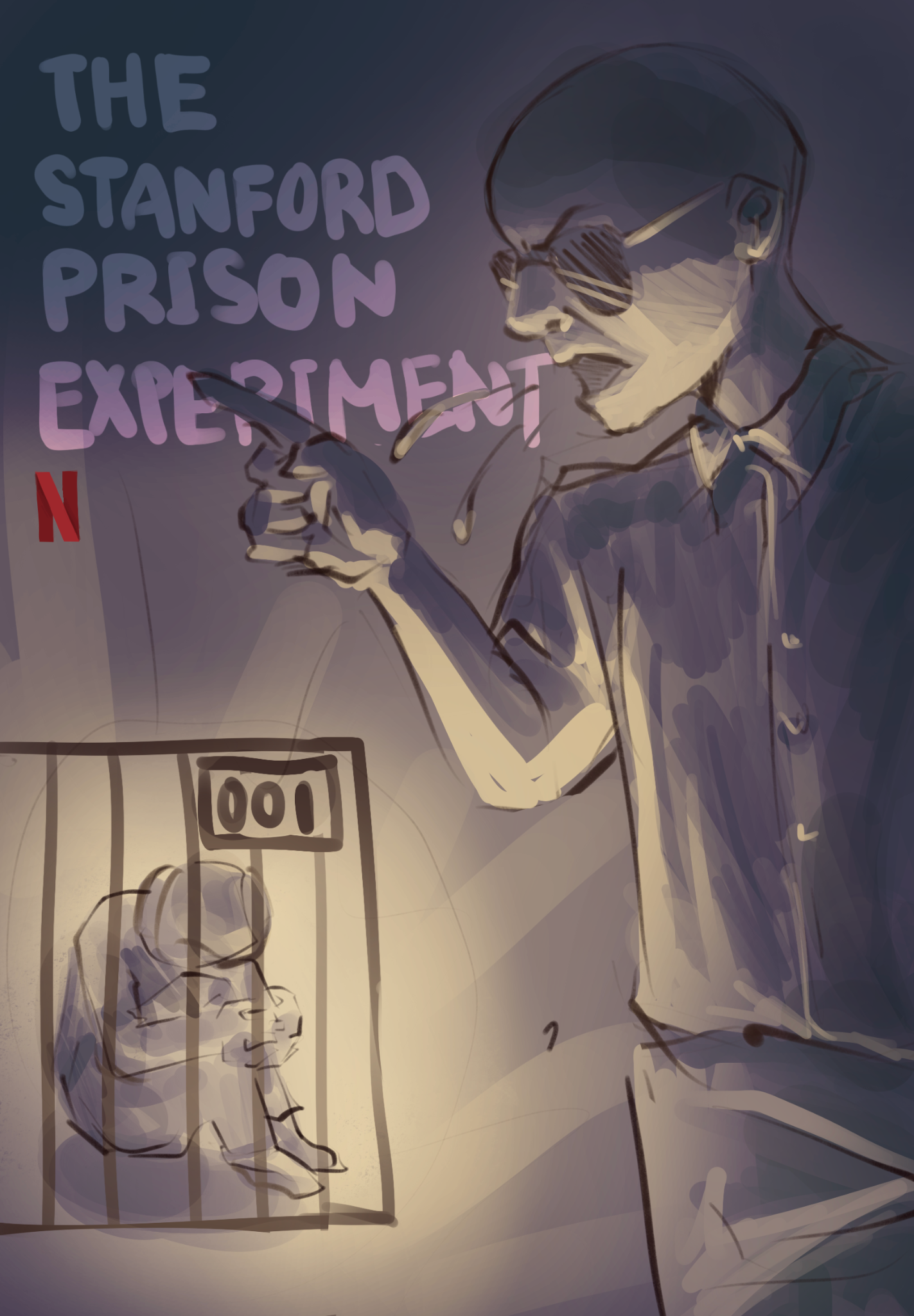

Netflix debuted their series “The New Stanford Prison Experiment” on Oct. 21, shocking audiences with a six-episode reality TV adaptation of the controversial 1971 Stanford Prison Experiment by Philip Zimbardo.
Netflix’s reimagined experiment explores a key question from the 1971 study: does power corrupt? The experiment was conducted by behavioral psychologist Alison Brooks, Pulitzer-prize winning journalist Trymaine Lee and former federal correctional professional Michael Cantrell. Thirty screened volunteers participated in the two-week experiment inside a real decommissioned prison facility in Georgia.
The renewed experiment was modeled on Dr. Zimbardo’s original social study of antisocial behavior, which is widely regarded as one of the most unethical experiments in modern psychology. Zimbardo aimed to simulate a high-stakes prison environment in the basement of a Stanford University psychology building. He randomly assigned 24 male college students the role of guard or prisoner, encouraging guards to control prisoners by any means necessary in order to study their conformity to social roles.
Zimbardo was forced to preemptively end his two week experiment after only six days due to prisoners showing signs of psychological disturbance. Guards exhibited extremely hostile behavior, while prisoners staged a rebellion on the second day and one even went on a hunger strike. The study has since been criticized for its methodological flaws and ethical concerns.
More than fifty years later, Netflix revisits the problematic legacy of the original study by transforming it into a mini series primed for reality TV. The show feels like any other reality program as viewers get to hear personal testimonies and candid interviews from selected participants. Most of the show’s footage also comes from wall-mounted cameras instead of cameramen to capture raw footage of the guards interacting with prisoners, while the experimenters observed a live stream of footage from a separate viewing room.
The Netflix series doesn’t bypass all of the unethical methodologies of the original study. Producers introduced several challenges throughout the study to manufacture division within the prison, including selecting a prison trustee and head guard. Volunteers simulating prison guards were instructed to perform various training drills in riot gear, while participants were encouraged to exclusively refer to prisoners by their prisoner number, dehumanizing them.
Participants quickly adhered to the rules of the prison, paralleling the results of the 1971 study. Prisoners performed daily chores and complied with a strict regiment of meals and recreation time, while guards exerted power over the prisoners by issuing strict punishments when they showed signs of rebellion. Like Zimbardo’s findings, the experiment revealed just how quickly some participants conformed to the power hierarchies of the simulated prison.
“I’m staying here ‘til somebody tells me to go home,” prisoner Sonny Robertson told the cameras even after producers eliminated the prison guard position from the experiment.
Not only is the experiment unethical in and of itself, but this new rendition adds a new immoral layer: reality television. It intentionally televises participants in a high-stress environment for viewers’ entertainment. Five participants even left early due to psychological distress or simply becoming disconnected from the experiment’s simulation, exposing the harmful effects of participating in a reality TV series.
“Power and control is exactly what the country is built off of right now, but we also have the power,” Anthony Terry said, a property manager from Colorado who participated as a prisoner. “We’re just too scared to make the move.”
However, the reality TV format also takes away from the scientific pursuits of an experiment. Its primary goal is to entertain, not to conduct a controlled experiment. Rather than leaving prisoners to act of their own accord, producers gave guards real training and distributed instruction guides for them to follow. The show’s manufactured drama only undermines the authenticity of the study, taking away from any of its actual psychological insight.
Despite attempting to eliminate some of the methodological concerns of the original study such as active participation from experiment conductors, producers also found ways to coerce cast members into maintaining order through strict punishment. This form of coercion parallels the active coaching used by Zimbardo to incite aggression in his original study. Zimbardo was an active participant of his own experiment as he simulated the role of a prison superintendent, making it impossible for him to draw objective conclusions.
The show reveals how easily susceptible people are to power abuse, but it also shows how easy it is to break out of that mold. The final episode culminated in a strangely optimistic closing scene of the prisoners linking arms and declaring “we have the power,” freeing themselves from the experiment after only ten days. This contrasts Zimbardo’s experiment, which was forced to shut down due to participants’ escalating psychological distress. However, the show’s hopeful end only feels like an overly produced attempt to downplay the study’s inherently problematic nature.
Overall, the show may have succeeded in entertaining viewers from a reality TV stand point, but it doesn’t justify recreating a notoriously unethical study. Despite the producers’ attempts to dramatize the experiment for television, it is difficult to overlook the fact that the show is exploiting participants in moments of distress, making the experience of watching the show uncomfortable at best.
Isabella Moody is an Arts & Entertainment Intern for the fall 2026 quarter. She can be reached at moodyi@uci.edu.
Edited by Travis Foley and Geneses Navarro.

Interested in becoming an intern or a contributing writer for the Entertainment section?
Contact us at entertainment@newuniversity.org!