
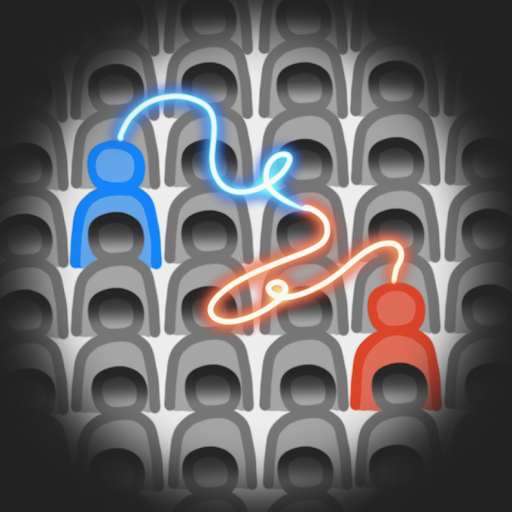

What makes certain relationships meaningful? What is the point of conflict? How do our interactions shape the society we live in?
In his new book “Vibe: The Secrets of Strong Connections in a Lonely World,” organizational psychologist and author Adam Grant identifies, classifies and justifies claims about dialogue with these questions. Released on Oct. 13, drawing directly from the best available academic literature, Grant discusses the nature of our relationships and how they manifest in different contexts. He presents a rich categorical vocabulary to make abstract concepts more legible to a popular audience. Yet, his writing is not devoid of a narrative ingredient; at the heart of “Vibe” — indeed, at the heart of any well-written non-fiction — are stories. Stories substantiated by extensive research, yes, but which strengthen Grant’s writing by explaining meaningful relationships through real-life relationships.
Opening with an anecdote about having his basketball stolen by a “friend,” Grant goes on to explore how to establish, sustain and recalibrate meaningful connections. He first introduces a typology of relationships. Based on their level of interpersonal significance, Grant categorizes them as: transactional ties or “associates,” ties of shared goals or “allies,” the shared interests of “pals” and the overlapping values of “companions.”
A second central notion in “Vibe” is behavior patterns that sociologists call “interaction rituals.” These are the small ceremonies in which we connect with others — anything from handshakes to candlelight vigils — and function as the fulcrum of connection. If they succeed, our bonds are bolstered; should they fail, our bonds are diminished.
Moreover, listeners of Grant and “Daring Greatly” author Brené Brown’s podcast “The Curiosity Shop” will recognize the concept of “collective effervescence,” credited to the founding father of sociology Émile Durkheim. Collective effervescence is the consequence of robust group interaction rituals; the energizing sense of unity we find marching at Pride, worshipping at altars or cheering for our favorite sports team.
Grant then illustrates these vibrant concepts with real-life stories of culturally significant figures. One memorable tale is of the unlikely friendship between civil rights activist Ann Atwater and former KKK leader C.P. Ellis. At odds in spring 1971, the two worked as co-chairs — a.k.a. “allies” — for the Durham, North Carolina school district, an intense battleground of the Civil Rights Movement. Grant explores how the alignment of goals can fortify social bonds while also pointing out that in today’s polarized landscape, a relationship like Atwater and Ellis’ would be prematurely dismissed.
Another noteworthy claim in “Vibe” is our capacity to alternate between types of relationships. A poignant story through which Grant illustrates this is the friendship between C.S. Lewis and J.R.R. Tolkien; a story of the geneses of the fantasy book series “The Chronicles of Narnia” and “The Lord of the Rings.” Here, he posits to readers a less static, more dynamic view of people — and hence, their relationships. In a claim that may make social psychologists beam and personality psychologists grimace, Grant emphasizes the power of the situation over the individual. Our behavior is not always a function of our personality; we socially shapeshift in response to our environment, meaning that we can transfer across different wavelengths of interactions with others — from allies to associates, pals to companions, etc. It is because of this that Tolkien and Lewis were able to move between an adversarial and fraternal relationship. By coloring his conceptual ideas through figures with a rich inner life, Grant brings his analytical writing closer to the reader’s humanity.
Many of Grant’s stories, like his basketball parable, are anecdotal as well — or, at least, draw upon his existing professional network. From his initially tumultuous tie with Brown to queer author and activist Glennon Doyle — see “Untamed” — and her wife Abby Wambach’s relationship, Grant further infuses his writing with personal and professional relevance.
But the most important story at the core of “Vibe” is how our technologized and globalized world affects modern connection. With the proliferation of the internet, social media and generative A.I., connection has perhaps become more important than ever. In clarifying the stakes, he reinforces the need to profoundly understand and even advance the quality of our communication.
Grant reframes conflict not as something to be avoided at all costs, but moved through and learned from, because “the purpose of conflict is to bring people closer.” In dialogue with Brown’s research on shame and leadership, he affirms that vulnerability is a source of strength, not an indicator of weakness. By challenging our dominant attitudes, Grant offers a more sophisticated, nuanced understanding of our connections.
Indeed, “Vibe” seems to advance dialogues with several other texts. In addition to the work of Lewis, Tolkien and Brown, Grant’s writing also seems to converse with the work of journalist and New Yorker staff writer Malcolm Gladwell — especially his 2005 book “Blink: The Power of Thinking Without Thinking.” But though some of his ideas may appear to rebut Gladwell’s earlier literature — like how “a thin slice of a person fails to create a well-rounded picture of the prospects for your relationship” contests Gladwell’s argument for the power of thin-slicing — Grant also directly references Gladwell by name with esteem, implying that there are no scholarly hard feelings. The dialogue may not be fully explicit, but it does reflect that “Vibe” is relevant to our modern intellectual discourse. The intertextuality of Grant’s book even extends to the Muppets’ very own Great Gonzo, with the powerful wisdom that “there’s not a word yet for old friends who’ve just met” — see “I’m Going to Go Back There Someday” from “The Muppet Movie.” Clearly, Grant has made some enriching choices for his conversation circle.
At a time of American cultural, political and industrial turmoil, “Vibe” is a pointed reimagining of relationships. In a vocabulary that is both accessible and sophisticated, Grant invites readers to better understand themselves and those close to them. Indeed, our ways of relating to one another can — and must — be not only maintained in their humanity, but refined in their nuance. Grant makes the strong argument that this is a crucial step in achieving American society’s much-needed sociopolitical redress. Perhaps how we vibe is truly the key to a more promising future.
Sean Watanabe is an Arts & Entertainment Intern for the fall 2026 quarter. He can be reached at seanlw@uci.edu.
Edited by Avani Kumar and Riley Schnittger.

Interested in becoming an intern or a contributing writer for the Entertainment section?
Contact us at entertainment@newuniversity.org!