

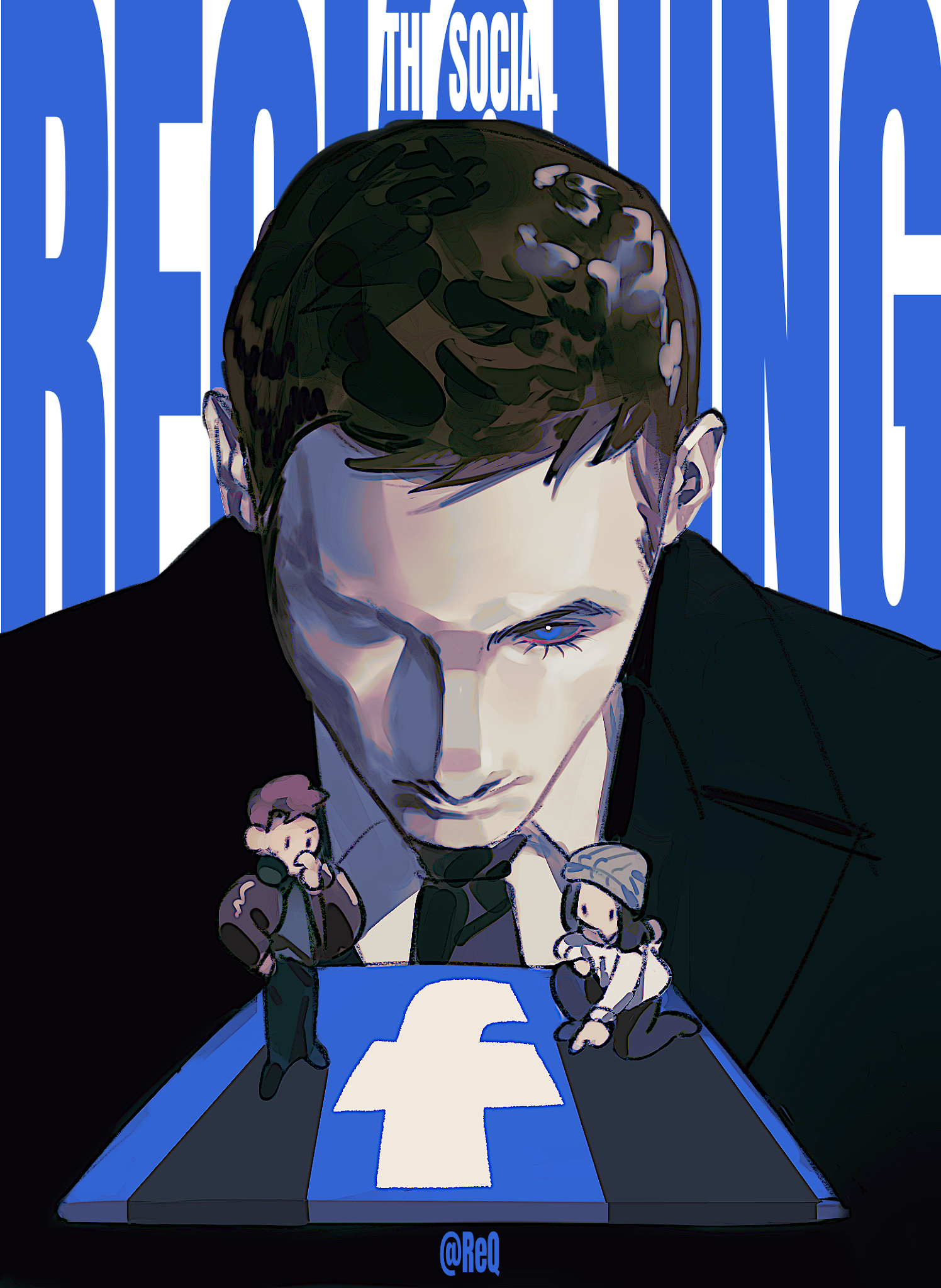


Aaron Sorkin’s “The Social Reckoning,” released on Oct. 9, portrays the present like the past. It follows the real story of “The Facebook Files,” a series of articles published in 2021 revealing how Facebook has impacted many users’ lives, whether that be increasing teens’ depression and anxiety or exasperating peoples’ political views until they’re extremist, but it acts like the story is over.
The film follows Jeff Horowitz (Jeremy Allen White), an investigative journalist working with the New York Times to look into Facebook. When he messages all the employees of Facebook’s ethics committee, Frances Haugen (Mikey Madison) is the only one who responds. Frances Haugen loves her job. But, when she does her own investigation on Facebook’s algorithm, she realizes that it recommends extremist content to users more often than not. When she tries to alert the company, no one listens to her. So, in order to actually make a difference, she reluctantly begins talking to Jeff. As the company continues to ignore Frances, she continues to help Jeff, eventually becoming an official whistleblower.
First things first, this is not a sequel to David Fincher’s 2010 film “The Social Network.” Even though it was somewhat marketed as one, with similar posters, the same title structure and the same writer. The feel and overall topic of this movie are staunchly different from the film about how Mark Zuckerberg (Jesse Eisenberg) came up with and built Facebook.
“The Social Reckoning” instead follows an external investigation and essentially becomes a movie about journalism. “The Social Network” is a quick paced character exploration of Zuckerberg, but this film is a slow journey about researching an incredibly private company. This contrast is quite stark if you’ve seen both movies. The new film doesn’t pick up where we left off; it tells a completely different story, one focused on Facebook’s harmful effects on the real world rather than Zuckerberg’s character.
As its own movie, “The Social Reckoning” tries to do a lot. Frances and Jeff set out to write one article, specifically focused on how Facebook’s algorithm shows people increasingly extreme content. But, when they learn more about Facebook’s algorithm, they realize that the problem is much deeper: teenagers using the site have higher rates of anxiety and depression.
Because the events of this film range from 2018 to 2021, the recency of it can be jarring. The article was ultimately written during COVID-19 pandemic, so Sorkin tries to cover it while not making it the center of the story. This leaves some awkward moments where characters have to say “Don’t worry, I’m tested!” every time they enter a room to explain why no one is wearing masks. Lines like these serve to address the pandemic while subduing it in order to reduce its importance in the story. Ultimately, it creates cognitive dissonance in an audience who all remember the pandemic.
Similarly, a large part of the climax of this film surrounds the Jan. 6 insurrection, and due to the ongoing political debates over rioters’ fault, it’s weird to see these events adapted to film already. The same goes for teenage mental health, political polarization and even Facebook itself. Although the real-world work of Jeff Horowitz and Frances Haugen doesn’t get as much attention now as it did in 2021, all these problems are ones we are still dealing with today.
With “The Social Reckoning,” Sorkin reminds us that these problems are still out there but also acts like the story is over. At the end of the movie, Frances speaks to the senate, urging them to regulate social media and leaves the capitol throwing her fist in the air signaling success. But, regulation has only now started being proposed at the state level. This gives the film a surreal quality, since it’s hard to understand what it’s really trying to do: Is it reminding us of an ongoing issue, or pretending that those issues have been solved?
Despite this timing, “The Social Reckoning” is still entertaining. It maintains the quick quips of Sorkin’s other films like “Moneyball” and even “The Social Network” that make it funny when it’s not trying to cover those deep issues. Additionally, White and Madison both bring a certain charm to the story. Madison plays Frances Haugen as a socially awkward, nerdy girl who’s misunderstood by her coworkers, and White plays Jeff Horowitz as an out-of-the-zeitgeist reporter who really wants the scoop. Although both characters struggle to grow beyond that, falling into caricatures of their real-world counterparts, watching Frances call Jeff dumb for not understanding her tech jargon is still fun.
Additionally, Jeremy Strong’s Mark Zuckerberg is incredibly hilarious. He does a great job portraying Zuckerberg’s robotic demeanor, which makes it impossible not to laugh at his line deliveries.
At the same time, there are still writing faux pas. Because Frances and Jeff ultimately write two articles, the film almost follows the same story twice: Frances reluctantly gives up information about Facebook, almost decides to quit, Jeff convinces her to stay and Frances gives up more internal documents. Within this formula, many of Jeff’s convincing speeches and Frances’ qualms about the project fall flat purely because the writing is fairly repetitive.
For example, the movie establishes Frances’ love for her job and fear of losing it early on, carrying that as her main argument thus making many of her monologues sound the same.
Furthermore, in scenes taking place in Facebook headquarters, Sorkin tries to make it feel chaotic by making various characters interrupt or talk over each other, but it feels overly rehearsed and unrealistic, resulting in awkward delivery, no matter how hard the actors are trying to make it feel natural.
At the end of the day, “The Social Reckoning” is enjoyable in a vacuum. There are funny and entertaining parts that do make it fun to watch. However, it is hard to fully enjoy when there are awkward moments that hit you with reality, which is partly due to the nature of the story Sorkin decided to tell. Events that happened five years ago are still going to feel fresh and jarring to watch no matter the actors or directors. Regardless, “The Social Reckoning” remains awkwardly charming, even if its purpose is confusing.
Shannon Kunz is an Arts & Entertainment Intern for the fall 2026 quarter. She can be reached at skunz1@uci.edu.
Edited by Travis Foley.

Interested in becoming an intern or a contributing writer for the Entertainment section?
Contact us at entertainment@newuniversity.org!