

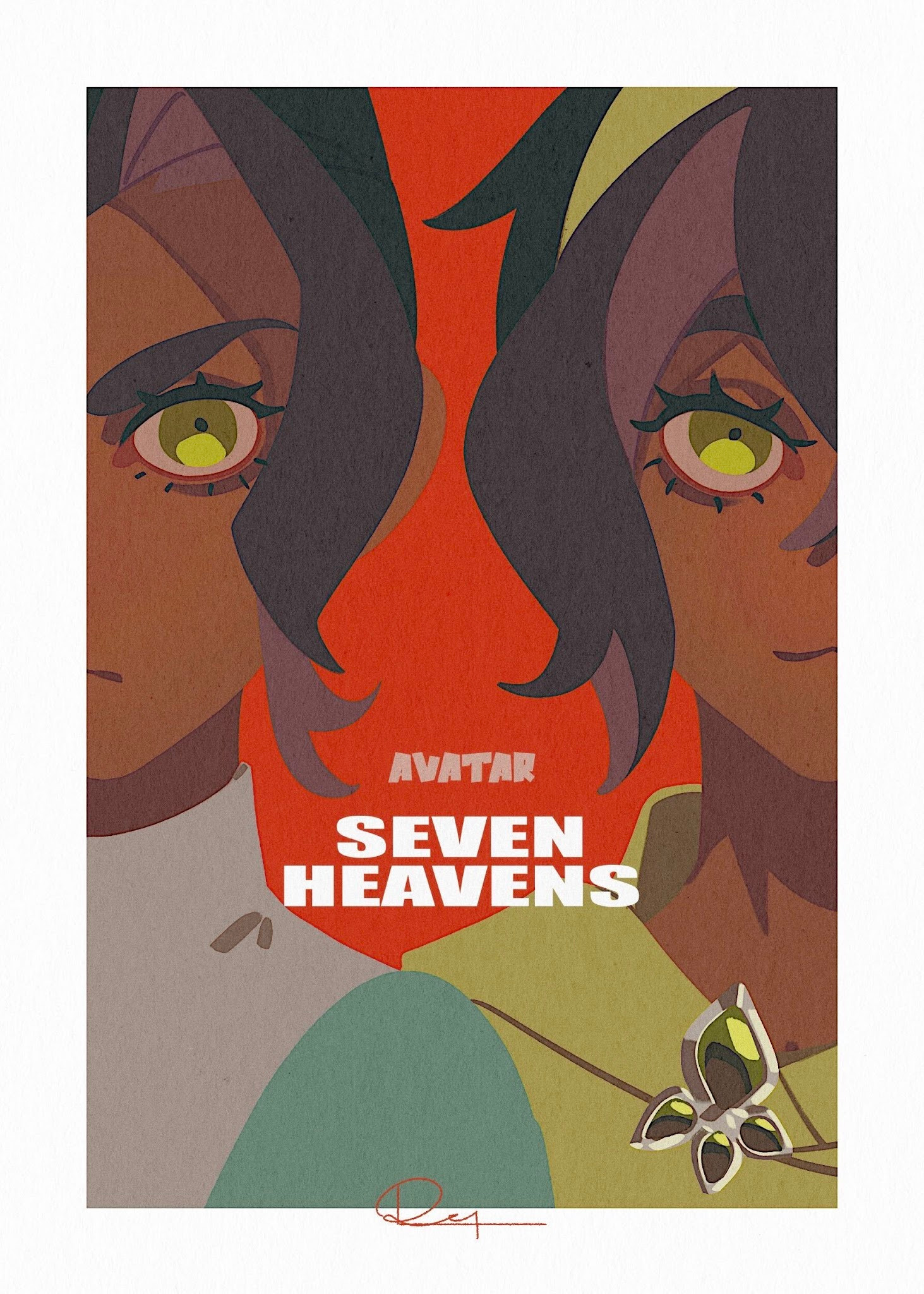

2005’s “Avatar: The Last Airbender” (“ATLA”) revolutionized animated television, proving that the medium can handle mature storytelling through its profound depiction of war, imperialism and genocide. Its 2012 sequel series, “The Legend of Korra” (“TLOK”), doubled down on this sociopolitical storytelling and even pioneered LGBTQ+ representation in Western animation. Now in 2026, creators Michael Dante DiMartino and Bryan Konietzko continue this saga with “Avatar: Seven Havens,” concluding its first season on Oct. 30. Although this series’ pop cultural impact can’t be determined just yet, it’s certainly a worthwhile expansion of this world.
“Seven Havens” is set 225 years after “TLOK,” where the Avatar — master of all four elements and global peacemaker — is now considered a harbinger of chaos. Devastated by an ambiguous cataclysm, the Seven Havens are the only safe places left in this post-apocalyptic world. However, the Avatar has returned, and for the first time in history, there are two of them: orphan twin earthbenders named Pavi (Saheli Khan) and Nisha (Aishu Devan). Hunted by humans and spirits alike, these sisters must save their home, the haven Ellora, from a spiritual anomaly that threatens to destroy it.
To address the lore-breaking elephant in the room, the existence of two Avatars in “Seven Havens” is admittedly off-putting; it directly contradicts “TLOK,” where the Avatar is defined as a single human vessel fused with the spirit of light, Raava. However, the series recognizes this jarring concept of twin Avatars, as the characters are just as confused as the audience, questioning how and why it’s even possible. Season one doesn’t answer these questions just yet — which is bound to frustrate some viewers — but the concept does get easier to digest over time, namely due to Pavi and Nisha’s captivating dynamic.
On the surface, Pavi and Nisha are respective parallels to Aang and Korra, the protagonists of the previous series. While this direction could come off as a cheap trick of nostalgia to lure longtime fans in, “Seven Havens” affords the twins plenty of depth beyond their elementary similarity to Aang and Korra.
Like Aang in “ATLA,” Pavi is full of optimism and childlike wonder; both reject the responsibility of the Avatar, but for entirely different reasons. Aang clings to his childhood, desperate to avoid the complex feelings of guilt and grief that he’s attached to the Avatar title following the genocide of his culture, the Air Nomads. Pavi, meanwhile, rejects the title because of self-doubt and fear — she dismisses herself as a “nobody” unfit to take on the role of global peacemaker, but she’s also afraid of confronting the scrutiny and hatred that the world projects onto the Avatar.
As for Nisha, she’s headstrong, confident and impulsive, just like Korra in “TLOK;” both are eager to embrace the responsibility of the Avatar, but again, for entirely different reasons. Korra conflates her self-worth with her role as the Avatar — she’s eager to take on the role because she struggles to find purpose and identity outside of her heroics and power. Nisha, meanwhile, eagerly accepts the title of Avatar out of fear and need for validation. Afraid that she’ll succumb to the world’s pernicious expectations of her, she wants to show that she’s a powerful, compassionate hero, not a dangerous and destructive burden.
Outside of its protagonists, the post-apocalyptic worldbuilding in “Seven Havens” is a natural, genius progression of everything that comes before it. If “ATLA” portrayed a world slowly separating from nature and embracing industrialization, and “TLOK” questioned how society could balance the natural world with modernity, then “Seven Havens” expands this idea by presenting a world that failed to find the middle ground — rapid technological growth collapsed the ecosystem.
In other words, “Seven Havens” is a piece of climate fiction, grounding its post-apocalyptic setting in a speculative allegory for the world post-climate catastrophe. This season spends a large portion of time dedicated to the old-world spirit energy reservoir under Ellora — an extractive, weaponized source of power that fuels the anomaly threatening the haven, reflecting nuclear fallout and how it contributes to total ecosystem collapse. The harshlands that surround Ellora and the other havens, meanwhile, are plagued by constant, violent storms, paralleling real-world extreme weather patterns influenced by climate change.
Throughout “Seven Havens,” the Indigenous and East Asian cultures that inspire the Water Tribes, Earth Kingdom, Fire Nation and Air Nomads from the original series take a back seat. Instead, Ellora is coded as South Asian. The toned-down presence of these original influences opens a broader conversation about cultural homogenization and loss at the hands of environmental and societal collapse.
Through Jae (Major Curda), an airbender that discovers the twin Avatars, the series shows how the bending brigade, Ellora’s military, conscripts any and all benders, diluting the cultural significance of manipulating the elements into a survival tool. While thematically and narratively engaging, Jae feels stale until the back half of the season, where he’s generally defined by his shift from anxious soldier to empathetic mentor. Much like “TLOK,” the supporting cast feels less fleshed out when compared to the protagonists — a minor yet disappointing issue considering the esteemed ensemble in “ATLA.”
Despite the environmental interpretation, the series insists that Korra was the one who caused the world-ending cataclysm, explaining the current hatred for the Avatar. This narrative is bound to frighten, confuse and anger “TLOK” fans — rightfully so. For years, some viewers have called Korra incapable of solving conflict and inferior to Aang, so making her herald the apocalypse threatens to vindicate criticism that’s often rooted in misogyny. However, it’s clear that this narrative about Korra is a red herring, as characters often misunderstand history, recounting details about past series from a skewed, hyperbolic angle.
In fact, the narrative deepens the environmental interpretation by conveying how humanity has turned Korra into their scapegoat, refusing to take accountability for their collective contribution to environmental collapse. More importantly, though, it provides a meta commentary about Korra’s character: the world of “Seven Havens” wrongfully hates her, just like misogynistic fans.
Aesthetically, the series draws inspiration from Jean “Moebius” Giraud, a renowned French cartoonist. Using his art style, “Seven Havens” employs simplistic backgrounds, vibrant colors and clean line art to reflect the whimsical, naive perspective of the young characters and juxtapose its darker themes.
The only pertinent issue in “Seven Havens” is the animation. Produced by studio La Chouette Compagnie, the animation is often choppy and rigid, making a large portion of the series feel cheap. Although the second half of the season ramps up the animation quality, it never reaches the expressiveness and fluidity of the preceding series. At the very least, the issue subsides enough for the action sequences to remain fast-paced and dynamic, keeping an integral part of the franchise’s identity intact.
With four seasons confirmed and a plethora of unanswered questions, “Avatar: Seven Havens” still has plenty of room to fumble. As things stand, however, the series stands toe to toe with its brilliant predecessors.
Travis Foley is an Arts & Entertainment Assistant Editor. He can be reached at tdfoley@uci.edu.
Edited by Avani Kumar and Geneses Navarro.