

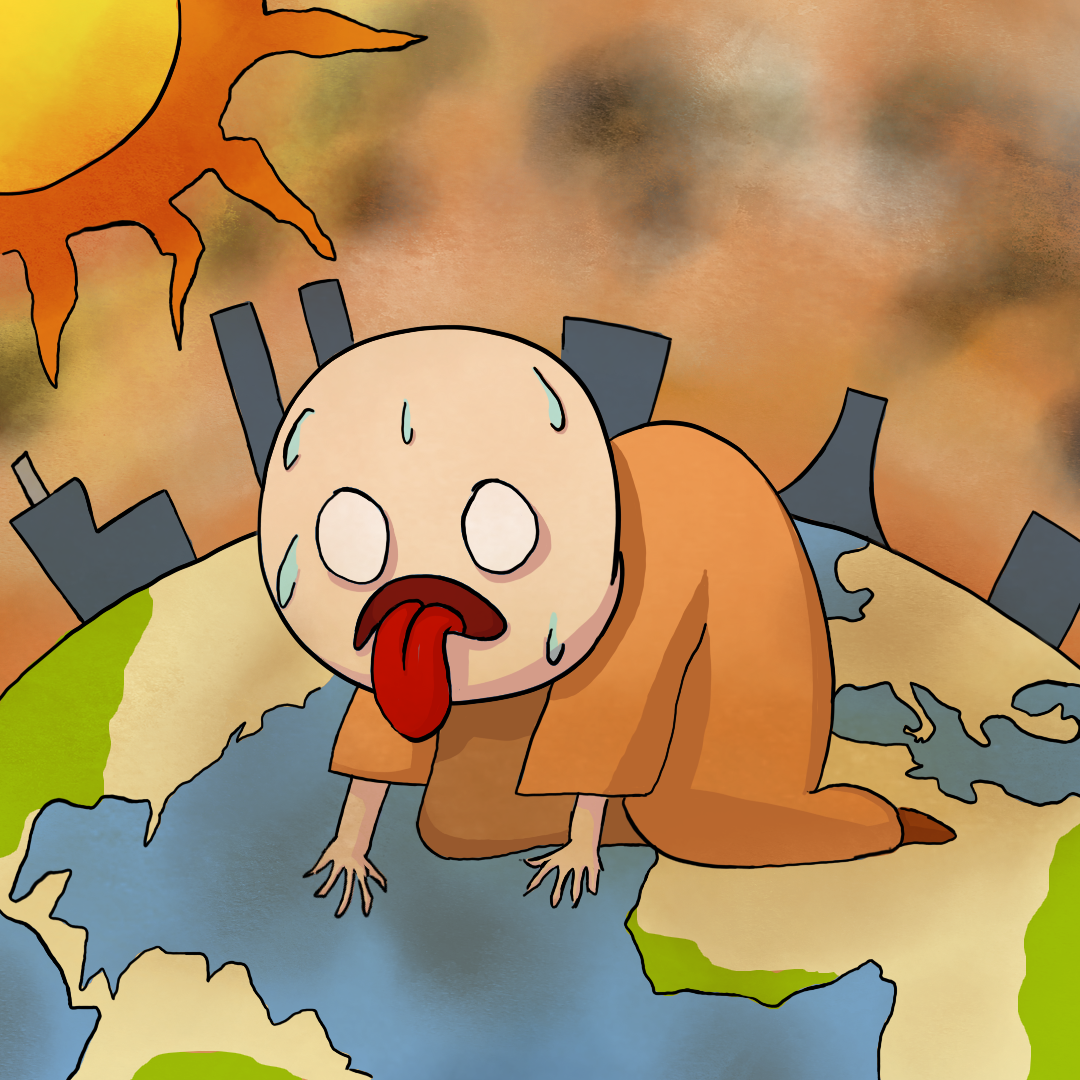


Extreme heat waves have affected Europe and the United States over the past week, contributing to thousands of deaths across Europe, setting new temperature records and drawing attention to the effects of climate change.
The heat dome first affected countries across Europe, where much of the infrastructure is not designed for prolonged periods of extreme heat. Many homes and public buildings in Europe lack air conditioning units and other cooling systems, contributing to school closures and heat-related illnesses and deaths, particularly among older adults and other vulnerable populations. France has reported more than 2,000 excess deaths, though officials expect that number to increase as the impacts of the heat crisis continue to be assessed.
Haley Staudmyer, a fourth year Ph.D candidate in Earth system Sciences at UCI, compared the weather patterns causing heat domes to boiling water in a covered pot. “If the pot has a lid on it, then the water can’t boil over, right?” Staudmyer told New University. “The lid is kind of suppressing that water from coming up. You can think of the lid as this descending air that’s coming down on the same spot.”
The United States is also experiencing a heat dome, with high temperatures spreading across parts of the eastern U.S. and breaking temperature records. The Midwest and North Atlantic are expected to be the most heavily impacted areas, with many cities under heat alert due to a forecasted heat index values between 100-115°F over the Fourth of July weekend. On July 4, there was a record-breaking temperature of 101°F at Washington, D.C.
Scientists at the World Weather Attribution consortium said the extremity of this event is exacerbated by fossil fuel emissions, raising global temperatures and increasing the severity of weather events. The group claims that a heat wave of this magnitude would have been about 2°C cooler in 2003.
Staudmyer describes complicated testing for understanding weather events, and the difficulty of identifying specific factors. “What I can tell you is that there is overwhelming evidence that heat waves in general are getting more frequent, more intense, and longer in duration, because of human-caused climate change,” Staudmyer said.
The atmospheric conditions driving the heat dome over the Midwest and East Coast have contributed to cooler-than-average temperatures across parts of California. Meteorologists attribute this pattern to air traveling from low to high atmospheric pressure zones within the heat dome. However, forecasters expect the pattern to shift as the heat dome weakens and moves westward. Irvine and other major cities in California are accustomed to heat, but the heat wave may bring the hottest temperatures of the season.
Staudmyer remains optimistic, and offered advice for everyday people addressing climate change: talk about climate change, and cut out red meat. “This is real, it’s happening, we should always be talking about it,” Staudmyer begins, before discussing cows’ methane production. “Try to eat less red meat and you’ll be a climate warrior in no time.”
Nicole Funsch is a News Intern for the summer 2026 quarter. They can be reached at nfunsch@uci.edu.
Edited by Konstantin Diatlov

Interested in becoming an intern or a contributing writer for the City News section?
Contact us at citynews@newuniversity.org!