
“This is never going to go anywhere.”
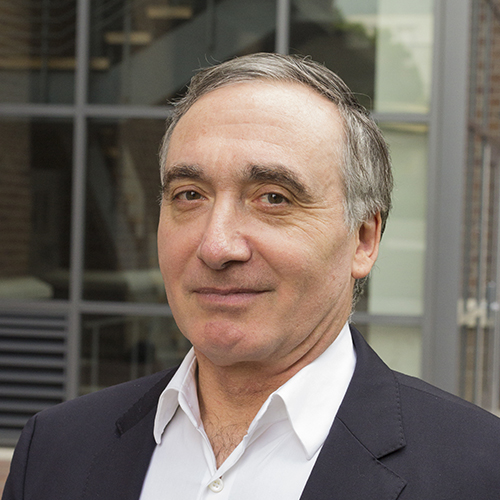
That’s what a well-known International Business Machines (IBM) scientist told Pierre Baldi during a job interview about his neural network research, decades before he became the Distinguished Professor of Computer Science at UC Irvine. Back in the 1980s, neural networks in artificial intelligence (AI) were a young field that few researchers took seriously, except for those like Baldi.
More than 50 years later, neural networks are at the center of the AI boom. Neural networks, in short, are a foundational way to train complex AI models, based on the functioning of a brain. Just like how neurons in the brain transmit information, this artificial neural network trains a model based on differing inputs & signals. Baldi said the core ideas have remained the same since the ‘80s, but the tools to use them have not.
“What has changed is…the computing power, which is a million times more powerful,” Baldi told New University in an interview. “You can train … bigger data sets [for] GPT or Claude or Gemini, all those companies are very, you know, require very large data sets.”
Baldi, meanwhile, is being recognized for his early contributions to the field. He was named the recipient of the 2027 IEEE Computational Intelligence Society Neural Networks Pioneer Award, which recognizes significant contributions to early and sustained development of the field, on Sept. 22.
“People told me, ‘This will never work. Why are you wasting your time on this and this and that?’” Baldi said. “In the ’80s it was not at all fashionable to work in that area. But I knew it was the right thing to do. I just had a very strong gut feeling from the beginning.”
The IEEE Computational Intelligence Society is one of the largest professional societies in AI and has given out an annual Neural Networks Pioneer Award since 1991 — selected by a committee of leading researchers. Baldi joins a coveted list of previous winners, like Nobel Prize winner of physics John Hopfield and Google DeepMind CEO Demis Hassabis.
“Scientists should not focus on honors. They should focus on research,” Baldi said. “This one is significant because it’s a sort of pioneer award. So I am — I am pleased that it recognizes my — my early work, you know, that started in the ’80s.”
Baldi’s journey to the field, however, was just as much of a story. The son of Italian and French parents, Baldi studied psychology & mathematics in Paris, interested in applying information theory to the brain. As a graduate student at Caltech, he began working with Hopfield’s lab on neural networks. Yet, Bardi was also a bartender looking to earn some money.
“I met a gentleman, I was serving him some cocktails, and we started engaging in a conversation,” Baldi said. “It turned out that he was a math professor at UC San Diego, and that he was working in the same area that I was working. And right there he offered me a postdoc position, essentially, at UCSD.”
At the time, Baldi mentioned, UCSD was one of two places that had started developing research on neural networks, the other being Caltech. This chance of an experience had led him to find his main field of neural networks.
“For me back then it was extremely exciting,” Baldi said. “Because the first time I encountered neural networks, I immediately saw that this was, you know, the future. This is what I wanted to do all my life. It was sort of, you know, falling in love at first sight. It was a very strong thing.”
Baldi’s main work derives in two directions, the first being the mathematical conceptual foundation that tests understanding and underlying theories. The second is applications of this research, applied to use cases in sciences.
“For instance, in biomedical imaging, you know, we — we had techniques for analyzing images and classifying them, you know, whether there is cancer or some other disease,” Baldi said. “You can apply AI and neural networks to any kind of data … It’s universal technology.”
Still, Baldi urges the importance of the next generation being aware of potential risks and challenges AI poses. One way he does this is by teaching a course at UCI called “AI Frontiers,” looking at the ethical, societal and technological issues that AI poses. It is one of two total courses he teaches, the other being about neural networks and deep learning.
“I think [students] are already aware just by — through social media, etc., everybody’s using, you know, LLMs, GPT, Claude, Gemini, you know, to do your homeworks,” Baldi said. “But you need to go a little bit beyond that.”
Today, Baldi is still continuing to pursue his research, most excited about a new theory on synaptic neural balance. But no matter what work the distinguished professor is taking, Baldi emphasizes the importance of sticking to your guts.
“If you have a strong gut feeling about the right direction, I think you should stick with it, no matter how much rejection and, you know, haters or whatever other people tell you not to go in that direction,” Baldi said. “If your gut feeling is — is really strong, you should listen to your gut feeling.”
Thierry Wijaya is a Features Intern for the fall 2026 quarter. He can be reached at thierryw@uci.edu.
Edited by Ennes Kahf and Riley Schnittger
When one tries to
Nutgraph
- Award
Graph 1
- His work
Graph 2
- Background, studies,
Graph 3
- Rejection,Ridiculed about neural networks last time
Graph 4
- Turning point and AI taking of
Graph 5
- Outlooks on AI
Interview questions:
- Can you tell me about yourself
- I know you earned a master’s degree in mathematics and psychology and did your Ph.D in math. How do the mind and mathematics lead you to neural networks?
- When you first started working on neural networks, all the way as a graduate student, what did the field look like and how was it different than now?
- Do you have a specific project that’s been one of your proudest?
- So you won the Neural Networks Pioneer Award; can you tell me about that
- What was your reaction when you found out you’d won?
- You also have several other major honors in this field like the 2023 Dennis Gabor Award, so what makes this one meaningful?
- You’ve worked on AI longer than most students have been alive, what do people get wrong about it today?
- You teach a course on AI frontiers and written about AI risks and safety, what concerts you most about where AI is heading?
- What excites you most about AI?
- What advice would you give to students who want to work in AI and those who will just use it every day?
- What skill should students focus on that won’t become outdated?
- Is there anything I didn’t ask you that I should have?
- Ask if he has a provided photo of the award or headshot