

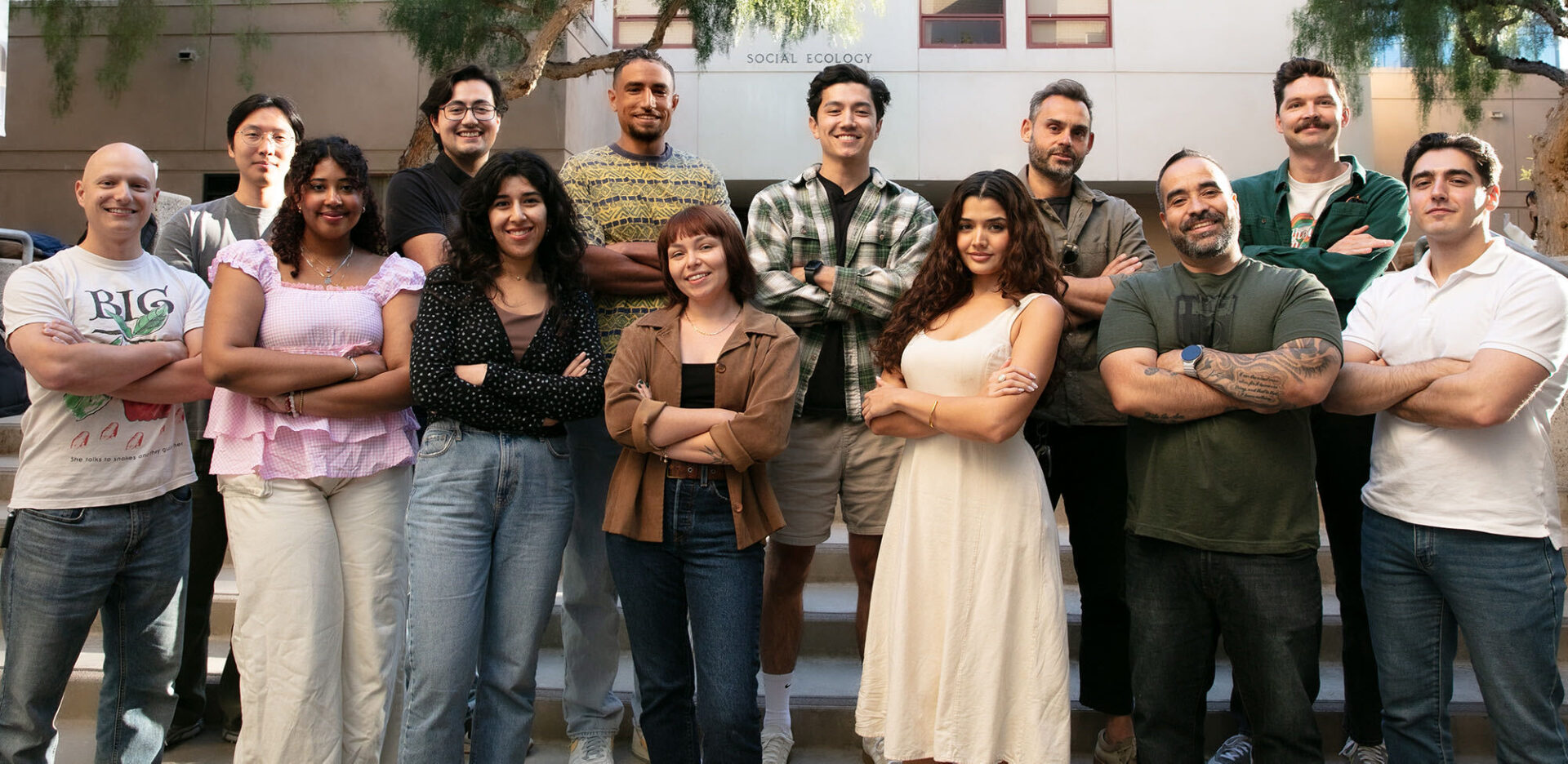

During the summer, while many students are off campus for break, research continues in labs across UC Irvine. One example is the Morality, Emotion and Social Hierarchy (MESH) Lab, a research lab in the Department of Psychology.
The lab studies why people sometimes help others and why they sometimes do not. Its research focuses on factors that shape moral behavior and social connections.
The lab also examines questions such as “What causes people to be kind and moral to one another?,” “How does inequality shape social life?” and “How do emotions shape the way we see ourselves and relate to one another?” Topics vary from the social effects of solar eclipses to the psychological roots of inequality and social class. Under the direction of associate professor of psychology Paul Piff, researchers conduct studies in their respective areas of interest.
Behind the published articles, researchers and assistants contribute to work that readers do not usually see. Anais Geronimo Jimenez, a rising second-year social psychology PhD candidate, is one of the researchers in the MESH Lab. She is conducting research with Piff, her advisor, and Pia Dietze, an associate professor of psychological science.
“I think [for] people who are not as informed about the research process, it might be difficult to conceptualize what is actually going on in a research lab and why it is important to conduct research,” Geronimo Jimenez told New University.
As a first-year PhD student, Geronimo Jimenez takes more classes during the academic year than students who are further along in their programs. Although she does not take classes in the summer, she remains busy with her work. Much of her time is devoted to research as well as working as a teaching assistant, training research assistants and progressing three current research studies.
One of her studies examines consumer behavior through vehicles. Her other two research studies focus on resilience in higher education environments. Geronimo Jimenez could not provide details about the studies because doing so could affect their blinding for potential participants.
Her research interests are influenced by her own background. As a first-generation, low-income student born in the Dominican Republic, Geronimo Jimenez wants to conduct research that can help students from marginalized backgrounds.
“I also know that there were things that contributed to this, for me to be in this place,” Geronimo Jimenez said, “I might have had some privileges that other people may have not had. You know, and then I might have had some disadvantages that others and barriers that other people might not have not had.”
Geronimo-Jimenez continues to think about her research even when she’s not conducting it.
“Sometimes I’m showering and then I think of an idea to run a study, and my brain is still working and it’s working all day,” she said.
Although an individual idea can start a study, Geronimo Jimenez believes completing the research and eventually writing a paper also depends on collaboration. In psychology, researchers often work with others throughout the research process. This collaboration helps the MESH Lab continue their research.
“People may not realize how much in research you rely on collaboration,” Geronimo Jimenez said.
Collaboration happens in several forms within the MESH Lab. Piff maintains the lab and advises PhD researchers such as Geronimo Jimenez. He meets with lab members, stays in contact with them through email and ensures their research is progressing as planned. Geronimo Jimenez’s research assistants also help collect data for her studies.
“Without research assistants, we would not be able to collect data and do things because I’m only one person,” Geronimo Jimenez said, “If I’m in charge of doing lots of reading, creating the research question, designing the study, it’s very hard for me to go out into the field and collect the data as well.”
Other researchers in the lab conduct studies in their individual areas of interest. Although each member in the lab has a different focus, they share an interest in inequality and prosocial behavior. Many researchers examine real-world problems and approach them from different perspectives.
Ishita Singhal, a social psychology PhD candidate, is conducting a study that assigns participants different throwing distances from cornholes to study how people reason about inequality and unfair advantages in shaping life outcomes.
“She’s doing great work in that area, and everybody in the lab is just conducting amazing research that looks at real-world problems and tries to answer real-world questions,” Geronimo Jimenez said of Singhal’s work.
Collaboration also extends beyond the lab’s shared research interests. Geronimo Jimenez works with her advisor and research assistants while also learning from other researchers in the lab. She is encouraged to attend lab meetings led by professors outside of her own research group, which allows her to learn about different fields and apply those perspectives to her own research. These include professor of psychological sciences Pete Ditto, who researches political psychology, and associate professor of cognitive sciences Nadia Chernyak, who researches children and inequality.
During lab meetings, MESH Lab researchers come together to discuss their work. As PhD students present their research, they receive feedback from other students and their advisors.
“We’re supposed to be communicating knowledge, and that is something that you need to practice,” Geronimo Jimenez said. “And communicating our ideas in a way that people can understand, including lay audiences.”
In Geronimo Jimenez’s mind, communication also shapes how researchers work with each other.
“Having collaborators is always great because you get to bounce off ideas, and then you get to also check on each other, make sure that things are being followed in an appropriate format and way,” she said.
Chloe Mo is a Features Intern for the summer 2026 quarter. She can be reached at chloem7@uci.edu.
Edited by Aditya Biswas and Geneses Navarro.

