

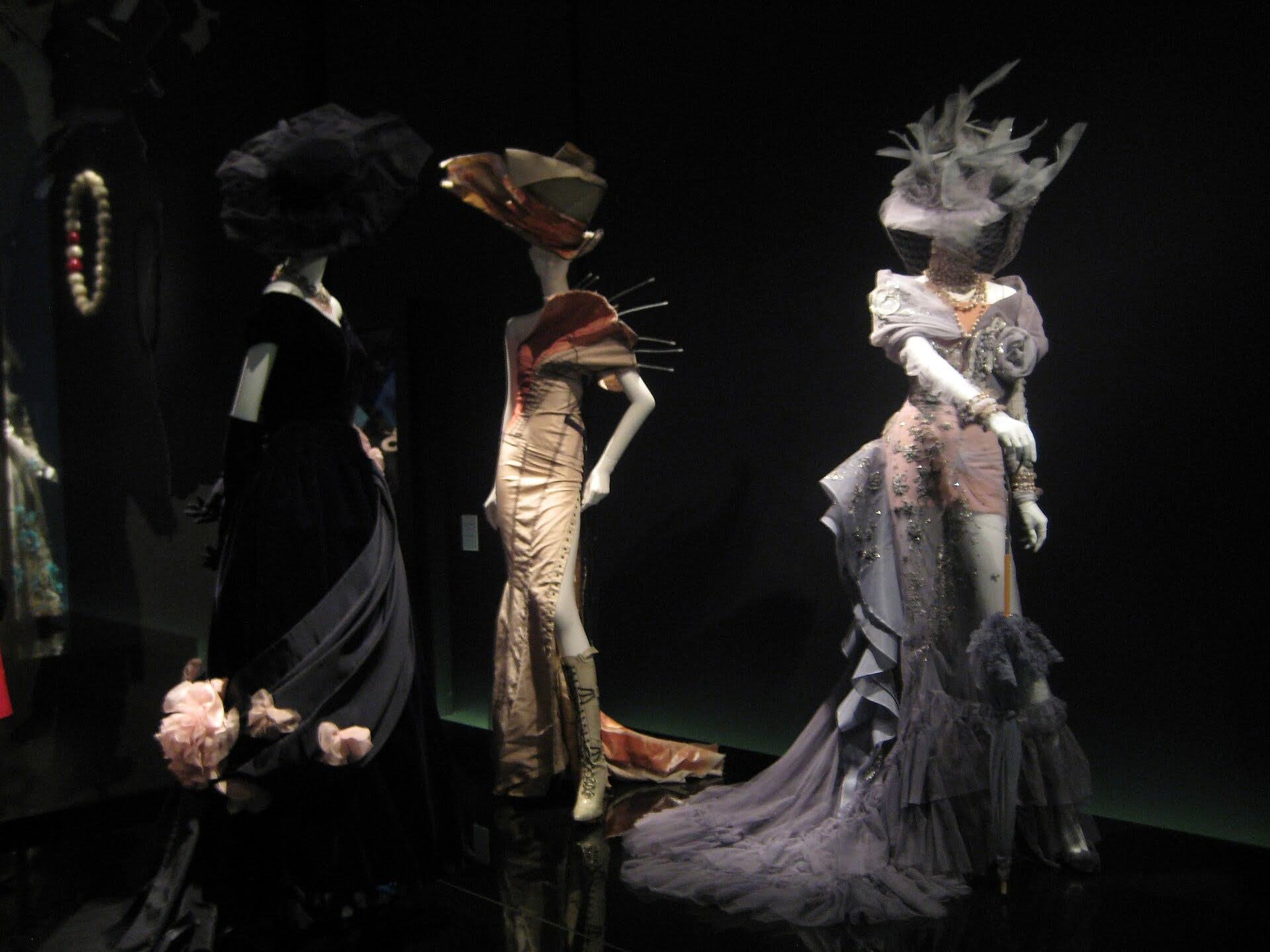


British designer John Galliano was supposed to return to the Metropolitan Museum of Art (Met) next spring, not just as a designer, but as the subject of a major retrospective celebrating four decades of his work titled John Galliano: Horizons.
However, Galliano announced on Aug. 31 that he will be canceling the exhibition. His decision followed backlash over his history of racist and antisemitic remarks, which led to his dismissal from Dior in March of 2011 and a French court conviction in September of the same year.
Galliano addressed the decision in a statement posted on Instagram, thanking the Met and saying that after “much reflection and discussion,” he decided it was “best for the exhibition not to take place at this time.” He acknowledged “the pain caused by [his] words in the past,” specifically mentioning the Jewish and Asian communities.
In a comment on Galliano’s statement, fashion podcaster Nakul Lax Patel praised his decision as a “classy move,” but argued that the cancellation represented “cancel culture,” which does not allow someone to grow and evolve after making a mistake. Another commenter, identifying herself as a Jewish woman, wrote that Galliano’s statement resonated with her. She said, “Antisemitism must never be minimized, excused or forgotten … The past cannot be erased, but I believe in the human capacity to grow and do better.”
Galliano’s influence on fashion is difficult to dispute. Over a career spanning more than four decades, he is known for his theatrical collections at Givenchy from 1995-1996, Maison Margiela from 2014-2024 and, most famously, Dior from 1996-2011. The proposed exhibition would have displayed his work from his 1984 Central Saint Martins graduate collection to his current work. If it was carried out, it would have been the third time that the Met’s Costume Institute had a retrospective devoted to a designer who was still alive.
However, his artistic influence coexists with his history of racist and antisemitic behavior. In 2011, a video surfaced of Galliano making antisemitic remarks in a Paris bar. He was dismissed from Dior and later found guilty in a Paris court for making racist and antisemitic public insults. After apologizing and entering rehabilitation for drug and alcohol addiction, Galliano began working toward sobriety and making amends. In 2014, he returned to the fashion scene as creative director of Maison Margiela.
Some have also criticized Galliano’s past work for relying on exoticized portrayals of other cultures. CNN, in a reflection on his career, points to collections built around “exotic dreams” and references his Fall-Winter 2002 Esquimaux show, where Galliano used terms such as “Eskimo and Mongolian hotties” to describe his models.
The planned exhibition also drew criticism because it was scheduled to open in May 2027 around Yom HaShoah, or Holocaust Remembrance Day. Jewish leaders and New York officials raised concerns about honoring Galliano during this time. New York City Council Speaker Julie Menin, daughter of a Holocaust survivor, urged the museum to reconsider, calling the event “a grave mistake.”
Galliano often designed after being inspired by his travels. In 2003, Galliano drew heavily from his trips through China and Japan for his Dior collections, incorporating traditional Chinese motifs and Kabuki-inspired makeup into highly theatrical runway looks.
The controversy surrounding the Met exhibition is not simply about whether Galliano should be allowed to work again. It is about whether receiving institutional celebration is acceptable while having a controversial past.
Some Galliano fans have pointed to the Met’s 2023 decision to honor Karl Lagerfeld, despite his own history of controversial and offensive remarks, as an example of the fashion industry’s willingness to view the designer’s work independently of their personal conduct. It raises an age-old question: Can the art truly be separated from the artist?
A museum retrospective does more than display clothing. The Met’s Costume Institute has enormous cultural authority, and its decision to devote an exhibition to Galliano would have positioned him among the designers whose work deserves preservation, study and celebration.
Fashion influencer lyas made a TikTok post supporting John Galliano after the statement was released and received heavy backlash. A commenter with the username classseaissues wrote, “I love how fashion people will forgive racism.” Another, theastrostylist, said, “We need to stop worshipping s****y people just because their art is legendary.”
Fashion has always been deeply connected to culture and identity. Designers draw from history, communities and traditions, while museums and publications determine which designers and narratives receive recognition.
Although Galliano has chosen to cancel the exhibition, the situation is highly debated. For some, removing the exhibition feels like accountability. For others, it feels like a refusal to acknowledge that people can change.
The Met’s decision ultimately does not erase Galliano from fashion history. His designs, influence and controversies will remain part of it. This controversy reminds us that fashion and history are deeply intertwined, and that the clothes we wear can reflect, shape and communicate powerful messages to society. Looking at a designer’s work also means considering the context surrounding it, including the people and communities it represents.
Kayla Luke Colon is an Arts & Entertainment Staff Writer. She can be reached at klukecol@uci.edu.
Edited by Corinna Chin.

Kayla Luke Colon is a student at the University of California, Irvine, double majoring in Literary Journalism and Criminology, Law and Society. Originally from O’ahu, Hawai’i, she is interested in storytelling, media, and law. Outside of school, she runs a vintage thrift business, Trashy Fashion, and enjoys hot yoga and listening to The Beatles, Lana Del Rey, and Radiohead.