

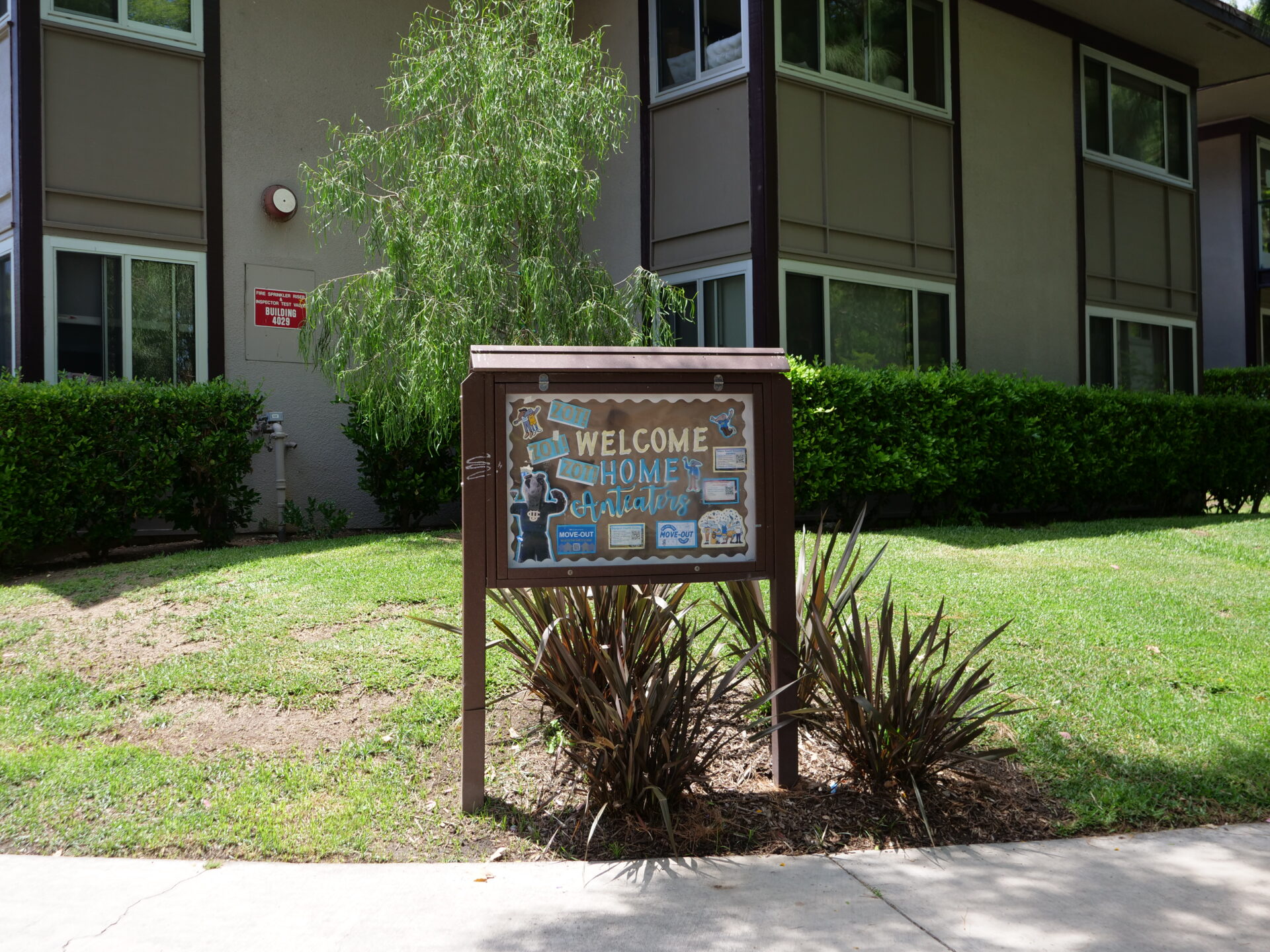

Five bills that will improve student housing for California’s public university students have passed the state legislature as of Aug. 30, advancing to the governor’s desk. There, each bill can either be signed into law, vetoed or ignored by the constitutional deadline of Sept. 30, making it a law automatically.
AB 1732, introduced by Assemblymembers David Alvarez and Buffy Wicks, is known as The Student and Faculty Housing Opportunity Act. Currently, the California Environmental Quality Act (CEQA) requires state and local agencies to disclose, evaluate and mitigate the significant environmental impacts of proposed projects, according to the AB 1732 fact sheet. The fact sheet reports that CEQA lawsuits stalled seven UC housing projects from 2018-2023.
If AB 1732 is signed into law, it will allow housing projects at California’s public universities to be exempt from CEQA if they meet the qualifying requirements. If a campus housing project meets these requirements, it can streamline the approval process for affordable housing construction and reduce costly litigation delays.
“For too many students, the hardest part of getting a college education in California is not getting in. It is finding a place to live once they do. Students are deferring their enrollment, commuting hours each day and dropping out altogether because they cannot find or afford a bed near campus,” Alvarez said in a press release from the Student Homes Coalition (SHC).
The Student Homes Coalition, a group of students and organizations that advocate for accessible and abundant student housing, sponsored all five bills.
“[This bill] helps address the affordable housing shortage facing students and university employees by removing legal barriers that slow the development of needed homes,” stated the Student Homes Coalition in a social media post.
AB 2480 would facilitate California’s first ever private deed-restricted affordable units for students. The state’s Density Bonus Law incentivizes real estate developers to build affordable housing by allowing them to increase the number of residential units beyond a property’s maximum if a certain percentage of those units are used for low-income, moderate-income, senior, or student tenants.
As of now, the super density bonus, a 50% increase in density that comes from also providing units to moderate-income tenants, does not apply to student housing. AB 2480, the Student Housing Super Density Bonus, would allow for affordable student housing projects to qualify for enhanced density bonuses.
“In addressing our state’s housing crisis, it is critical that students are not left behind,” said Assemblymember and AB 2480 author Anamarie Ávila Farías. “Experiencing homelessness can have a lasting impact on students’ educational outcomes and well-being. I was proud to author AB 2480 to give developers more tools to build additional units for low-and-moderate-income students near college campuses.”
AB 2118 will build on the work of AB 2011, the Affordable Housing and High Roads Jobs Act, by closing loopholes that have enabled state agencies and local governments to block affordable and mixed-income housing projects.
SB 916, the Student Homes Protection Act, would allow courts to require a bond, or security deposit, from those who attempt to sue student housing projects in bad-faith. This protects housing development by making the person responsible for the lawsuit cover costs and damages if the delay turns out to be frivolous.
The fifth bill, AB 2766, “will provide much needed relief to students at risk of homelessness,” according to the SHC press release.
AB 2766, seeks to improve access to college for foster youth and students facing homelessness. Authored by Assemblymember Patrick Ahrens, the bill will expand priority access to campus housing, streamline identification and transparency in housing processes, defer upfront fees and align priority registration with support programs.
“If signed into law by the Governor, my legislation AB 2766 will help prevent homelessness and support student success for foster youth and other struggling California students,” said Ahrens in the SHC press release..
Nevaeh Medina is a News Intern for the summer 2026 quarter. She can be reached at nevaem1@uci.edu.

