



Editor’s Note: This article contains spoilers for “Moana.”
Walt Disney Animation Studios released its live-action remake of “Moana” on July 10.
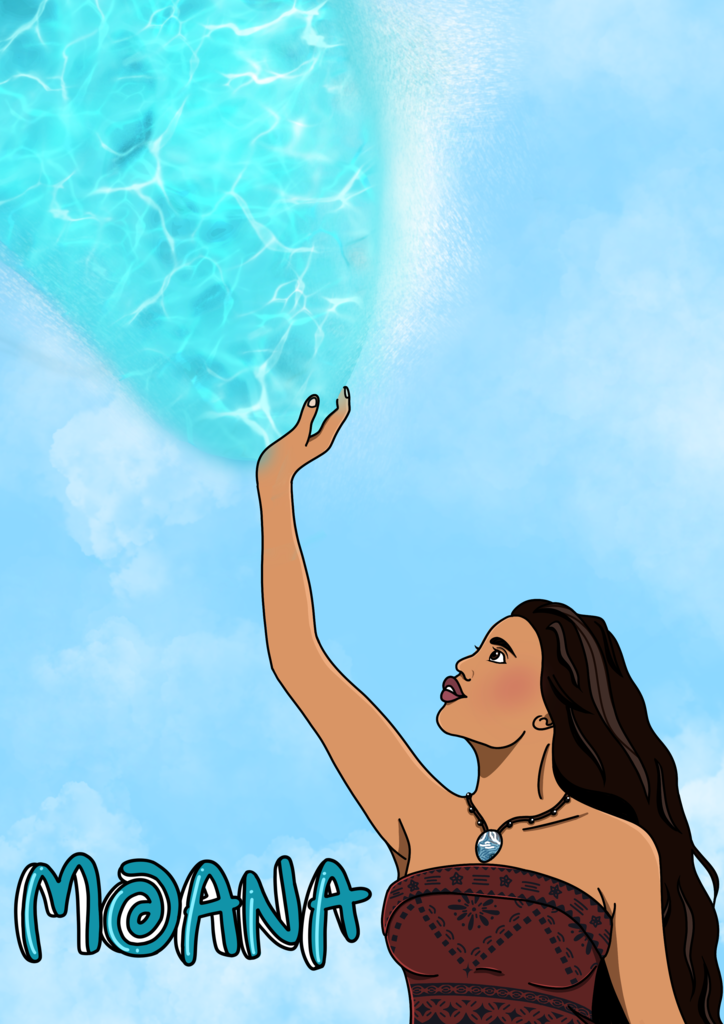
Moana (Catherine Laga’aia) is the determined daughter of the respected chief of Motunui, a fictional Polynesian island. All her life, she feels connected and drawn to the ocean. Moana learns the way of her people, as she will one day become the next chief of Motunui. There is only one condition — her father, Chief Tui (John Tui), strongly refuses to let Moana sail beyond the safety of the island’s reef to see the ocean for herself. Now, Moana must travel the ocean with the demigod Maui (Dwayne Johnson) to restore the heart of the goddess Te Fiti, saving Moana’s island and others from imminent destruction.
The original, animated “Moana” was released in the United States on Nov. 23, 2016. According to box office reports, the film earned $81.1 million from 3,875 theaters during its five-day debut. It “seize[d] the title of number-two Thanksgiving launch of all time,” coming behind “Frozen,” another Disney favorite.
A decade later, the live-action “Moana” only earned $43 million from 3,827 North American theaters during its opening weekend. Considering the production of the new live-action movie cost Disney $250 million, these earnings are disappointing, despite the fact that the ticket sales secured the film a No. 1 spot on box office charts.
Both “Moana” films seem to follow similar patterns throughout. The 2026 film opens with a prologue and script nearly identical to the animated version, preserving a grounded sense of continuity that captures the essence of the original story.
When Moana’s free-spirited Gramma Tala (Rena Owen) narrates the legend of Te Fiti to the village children in the live-action film, the goddess maintains an animated-inspired, mythic appearance compared to most of the rest of the film, creating a feeling of familiarity and comfort. Similarly, Moana’s pig, Pua, and chicken, Hei Hei, appear distinctly cartoonish, sharply contrasting with the film’s otherwise realistic look. In comparison, other Disney live-action remakes, such as “The Lion King,” use computer-generated imagery to make animals appear photorealistic, rather than cartoonish.
In the two “Moana” films, the main voyage starts when the ocean chooses Moana to receive the heart of Te Fiti. Gramma Tala later reveals this when Moana has come of age, repeating the iconic message meant for Maui: “I am Moana of Motunui. You will board my boat, sail across the sea and restore the heart of Te Fiti.” This mighty declaration in both versions serves as the defining motif for Moana and for the entire film.
The bond between Moana and Gramma Tala remains definite, with the emotional core existing within both films. The film’s live-action nature shines brightest during the dance scene where young Moana transitions into a teenager with her grandmother by her side. Seeing that seamless growth of time brought to life by real, physical actresses creates a heartfelt warmth that simply makes the audience feel good inside.
Laga’aia has a striking resemblance to Moana in the original animation. In “How Far I’ll Go,” her vocal performance is strong, and yet, it seems more reserved and quiet compared to the original, where Auli’i Cravalho — the original voice of Moana — had a powerful and prominent voice that shined through her version of the song.
There are also some moments throughout the live-action remake that are noticeably different from the original. The interactions between Moana and her father, Chief Tui, are less intense in the live-action version compared to the animated film. In the 2026 remake, he is portrayed as more calm and reserved.
Johnson, who plays Maui in both the animated and the live-action versions, has brand-new lyrics during the rap portion of “You’re Welcome” in the 2026 remake. When Maui explains his origins later on in the film, the storyline is visually illustrated across the night sky as Moana and he sail the ocean. Once again, this scene reinforces a theme of making the live-action more stimulating than the original, especially for younger audiences.
Throughout the two films, Maui’s core internal dilemma is his desperate need for human validation. While his song “You’re Welcome” seems like bragging, it reveals a deeper declaration of all the things he has sacrificed for humanity just to prove his worth and avoid being forgotten. Both the animated and live-action versions showcase this desire through Maui’s character and how he presents himself to others, including Moana. Johnson’s portrayal of Maui is compelling in both films, serving as a testament to his brilliant depth as an actor.
In both films, the vain, humongous crab Tamatoa (Jemaine Clement) appears when Moana and Maui go to retrieve Maui’s magical fish hook located in Lalotai, the vibrant realm of monsters. As Tamatoa sings his dramatic song “Shiny” in the live-action film, viewers instantly notice the astonishing scale of the environment. Compared to Moana and Maui, Tamatoa looks incredibly massive. Furthermore, the luminous colors in the real-life sequence create a vivid atmosphere that adds to the overall charm of the film itself, making this scene arguably more admirable than its animated counterpart.
The climax of the live-action film remains centered on the song “Know Who You Are.”
“(Ou mata e matagi) I have crossed the horizon to find you / (Ou loto mamaina toa) I know your name / (Manatu atu) They have stolen the heart from inside you / (Taku pelepeie) But this does not define you,” Laga’aia sings. “(Manatunatu) This is not who you are / You know who you are.”
The background voices are similar to the animated version of the film. However, similar to “How Far I’ll Go,” Laga’aia does not elongate and provide enough breath support to showcase her vocal capabilities. While her songs take on a softer tone compared to Cravalho’s stirring delivery, they remain undeniably beautiful in their own ways.
The brand-new original song “Along The Way” plays during the ending credits, and is sung by Cravalho and Laga’aia. Cravalho, unlike Johnson and Clement, who continued to play their remarkable and beloved characters in this movie, chose to “[pass] the torch” to another young woman of Pacific Islander descent.
Overall, the live-action “Moana” keeps in line with the original animated film. Because it adheres to the original storyline, the live-action version is highly worth watching for its immersive effects, which blend a comforting, tangible reality with deep nostalgia for audiences of all ages. For viewers hoping to see the magic of the original animation preserved, the film still creates an adequate sense of childlike wonder.
Julia Magdei is an Arts & Entertainment Intern for the summer 2026 quarter. She can be reached at jmagdei@uci.edu.
Edited by Travis Foley.

Interested in becoming an intern or a contributing writer for the Entertainment section?
Contact us at entertainment@newuniversity.org!