

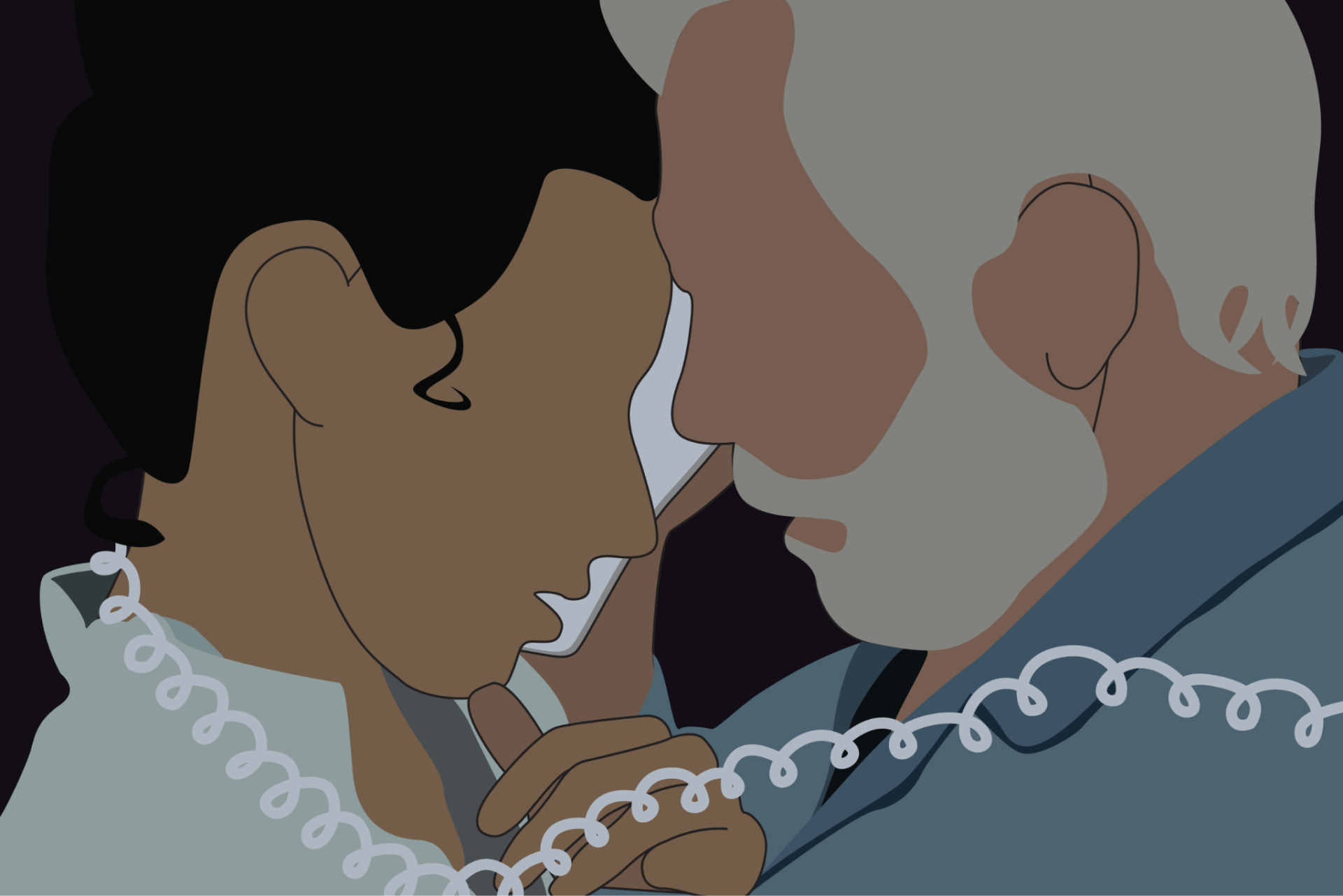

The psychosexual thriller “Night Nurse” released in select theaters on July 10. It is Georgia Bernstein’s directorial debut and premiered at the Sundance Film Festival in January. The film is perverse and perverted. Every moment of it, from its opening scene to its closing, captivates its audience. Whether moviegoers are squirming in their seats from disgust or anticipation, “Night Nurse” is the kind of film people can’t look away from. This indie film is a hidden gem.
Its opening scene sets the tone for a film that is deceptive yet bold. The protagonist, Eleni (Cemre Paksoy), is introduced in brief flashes as the camera follows a telephone cord that is coiled around her body. Also entwined with her is an older man, Douglas (Bruce McKenzie). We hear his voice responding to her as she talks to someone, referring to them as her grandfather. This dialogue is later revealed to actually be part of a telephone scam that Douglas is running on his fellow elderly residents of the nursing home he resides in. He enlists Eleni and other nurses to act as the voice on the phone as they pretend to be the granddaughter of the victims in order to get money.
Douglas pulls the nurses in through his unusual charm. He became a patient at the nursing home after being caught hitting on his housekeeper and claiming he thought she was his wife. The question of his dementia is one of the mysterious aspects of the film. It’s uncertain whether his mind is really failing him or if he is only feigning his illness in order to cover up his schemes and manipulate those around him. This is a conflict that spirals into his relationship with the nurses, especially Eleni. They struggle against each other for power. What makes “Night Nurse” such a deeply fascinating watch is that anyone can come away from it with a different opinion on who really pulls the strings.
At first, Eleni takes care of Douglas as part of her job, and he needs her for the simplest of things, like taking a bath. However, their dynamic changes when he tells her, “I should be taking care of you.” She replays these words over and over in her head as her obsession with him blooms. The uneasy intimacy between them grows more and more inappropriate until it peaks on the night of the first scam call that she takes part in. He kisses her, then retreats when she tries to take control, leaving her desperate for more.
The film creates a visceral atmosphere of yearning. Any advancement in their relationship happens painfully slowly, leading to overwhelming suspense. “Night Nurse” achieves this through its pace as it lingers on mundane moments and emphasizes the spell the nurses are under through gorgeous cinematography. The camera captures scenes of Eleni, her fellow nurse Mona (Eleonore Hendricks) and Douglas as they smoke on a patio or go on car rides in his convertible. These shots capture the essence of youthfulness that Douglas is desperately trying to hold on to. Eleni disrupts this fantasy when she tells him he is too old and disgusts her, showing that she has some power over him and is not just helpless in love. Both characters want to take control and are willing to hurt others to get it.
Another part of their relationship dynamic is revealed through these artistic, lingering scenes: jealousy. Douglas brings several other nurses into his web of lies and showers them with attention while Eleni starves for it. In one scene, this is portrayed when Eleni asks for a draft of his cigarette and he refuses, instead placing Mona in between them — it’s enough to drive the woman mad.
“Night Nurse” focuses on painting portraits of its characters and atmosphere over plot, which is one of the common criticisms of it. While there are plot developments, they happen slowly as the film spends more time showcasing the psychological parts of the characters; the line between protagonist and antagonist and villain and victim is blurred. The film examines the power dynamics that arise with age and in the relationship between nurse and patient. This allows for something truly unique.
“Night Nurse” might not be for everyone. Bernstein did not make the art-house film with a mainstream audience in mind. It does not aim to appeal, but is instead determined to disturb. It forces viewers to question their perspective and beliefs, finding its strength in ambiguity. “Night Nurse” intends to make the audience uncomfortable. It never shies away from the taboo, but instead revels in its deviancy.
Ayiana Grana is an Arts & Entertainment Staff Writer. She can be reached at angrana@uci.edu
Edited by Avani Kumar and Riley Schnittger.

