


Editor’s Note: This article contains spoilers for ‘Michael.’ This article was edited on May 7, 2026 in order to link the writer’s author page.
Since the release of the Queen biopic “Bohemian Rhapsody” in 2018, the commodification of the musical biopic has been in top gear. From forgettable copycats like “A Complete Unknown” to decent films like “Elvis,” Hollywood has increasingly ridden the coattails of groundbreaking musicians by producing less-than-stellar cinematic recaps of their careers. Save for a couple exceptions, such as the Robbie Williams biopic “Better Man,” it began to appear as if the art of the musical biopic had declined to a point beyond saving.
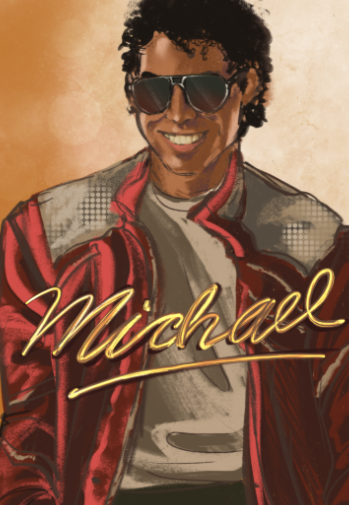
In comes “Michael,” the flawed yet frenetic portrayal of musician Michael Jackson, played by his real-life nephew Jaafar Jackson, which was released in theaters on April 24.
Set between 1966 and 1988, the film documents the King of Pop’s life from his involvement in The Jackson 5 as a child, up until his tour in support of the album “Bad” in 1988. Much of this period in Michael’s life is commanded by his abusive father and manager, Joe Jackson (Colman Domingo), whose cruel influence is a double-edged sword that shapes both Michael’s lifelong trauma and his signature style.
It is neither a transgressive film nor a comprehensive record of Jackson’s life, but rather an entertaining portrayal of the highest points in Jackson’s career. While still somewhat polluted by typical biopic conventions, the sheer charisma of Michael Jackson’s stage presence is almost enough to transform this otherwise by-the-books narrative into a unique crowd pleaser indicative of a larger shift in musical biopics as a whole.
It’s unfortunate, then, that this film’s flaws hold it back from achieving the same singularity as its subject. Most notably, this story has no mention of the child sexual-abuse allegations made against Jackson throughout his career. While a sequel film meant to cover that part of Jackson’s life is currently in development, it is nevertheless jarring to see Jackson portrayed as a man who’s still a kid at heart when the real-life story goes far beyond that. It is an oversight at best and a deeply unethical creative decision at worst.
Regardless of its sanctioned, spotless narrative of the life and times of Michael Jackson, there is still much to enjoy in the film. Jaafar nails his late uncle’s personality in a performance that is about as good as one could ask for. Beyond capturing his bold sense of artistry and glitzy stage presence, Jaafar also nails the subtler parts of Jackson’s personal life, namely his tense dynamic with Joe. Domingo’s menacing turn equally contributes to this and makes for an interesting exploration of how domestic abuse fundamentally shapes a person.
Unsurprisingly, the soundtrack is also quite good. Many of Jackson’s greatest hits make an appearance, such as “I’ll Be There” by The Jackson 5 and later solo hits like “Billie Jean.” Much of the second half consists of live renditions of these songs and more, which has mixed effects due to these spectacular musical numbers stalling any meaningful progression in Jackson’s character development.
This incomplete portrait of Jackson represents the fatal flaw present all throughout “Michael.” Because of Lionsgate’s decision to split this film into two parts, it feels as though something is missing — as if, even after two whole hours of rose-colored fan service, nothing new or noteworthy has been divulged about Jackson’s life. It’s an objectively unfinished film that lacks substance but delivers an overwhelming amount of bops straight into audiences’ ears.
For most Michael Jackson fans, this approach will suffice. It’s a solid enough film that highlights most of what made Jackson’s life great whilst consciously choosing to omit everything else. For those seeking a more nuanced portrayal of Jackson and his family, there’s also the mini-series “The Jacksons: An American Dream,” although that too concludes around the “Bad” era. While the question of which approach is the best is entirely subjective, one thing is for certain: fans of “The Wiz” and “Captain EO” are in for a disastrous time no matter what.
Jacob Bernardino is an Arts & Entertainment Staff Writer. He can be reached at bernarj2@uci.edu
Edited by Avani Kumar and Tracy Sandoval

