

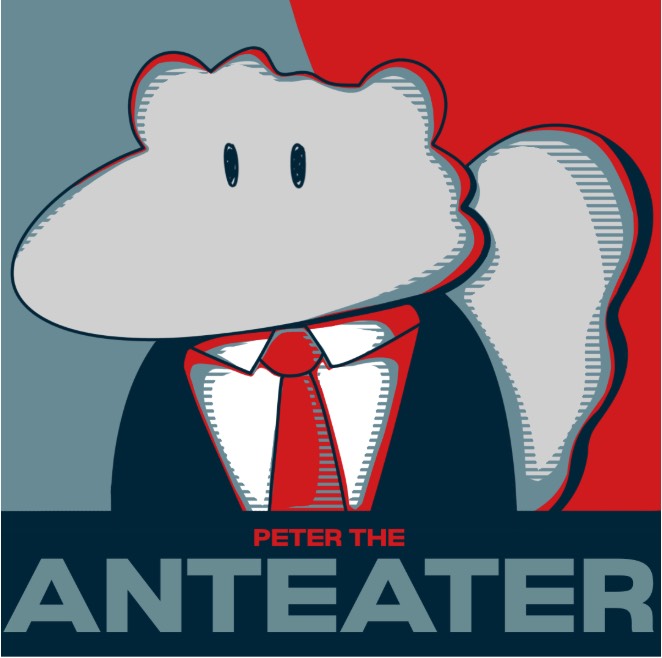


The Supreme Court of the United States (SCOTUS) made a few rulings in late June , from transgender athletes in sports to birthright citizenship. One of those rulings was National Republican Senatorial Committee v. Federal Election Commission. The case struck down the campaign spending caps that regulated campaign activities and their ability to coordinate with the candidates directly.
The National Republican Senatorial Committee (NRSC) argued that the caps were unfair because they limited their political speech and the court agreed with them in a 6-3 ruling. SCOTUS argued that, under current First Amendment doctrine, the governmental interest of restricting campaign finances to prevent quid pro quo corruption, is not a justified basis to limit party coordinated expenditures. This ruling supports the idea that campaign spending and party-candidate coordination involve protected political speech and expression.
Without these caps, political campaigns can easily be dominated by the wealthy and powerful, leaving third parties with little chance against the bipartisan system. The decision is a reminder that campaign funding should have limits to prevent deep-pocket influence and help third-party candidates achieve publicity during election season.
Super Political Action Committees (Super PACs) allow billionaires to devote substantial amounts of money to political campaigns. This problem has existed since the 2010 case Citizens United v FEC, a landmark decision by SCOTUS.
Donors can contribute anonymously with dark money, and under decisions like Citizens United and NRSC v. FEC, the U.S. government has no regulation on their spending. With this, the shadowy elite of America can fully support their candidates with little public attention.
The elites behind the Republican and Democratic parties have used the removal of campaign spending caps to monopolize the media, creating distinct political polarization. Almost $16 billion was spent during the 2024 presidential election season by Super PACs and other related donors of both parties. In such large quantities, money isn’t a form of political speech but political power. With the Citizens United ruling, that power cannot be realistically challenged without an upheaval of legal precedent by the highest court.
One example is the United Democracy Project (UDP) that overwhelmed Rep. Jamaal Bowman, D-N.Y., in the 2024 primary election. The pro-Israel group launched the project because of Bowman’s criticism of Israel’s military campaign in the Gaza conflict. His platform relied on a simple, volunteer-based grassroots campaign that raised around $4 million. However, the UDP poured nearly $15 million into unseating him, making it the most expensive House primary in U.S. history. Bowman’s local candidacy didn’t stand a chance against the sudden surge, as UDP spent that money on aggressive advertisements that attacked him directly, and Bowman subsequently lost the primary. If campaign finances have a proper ceiling, political power will be returned from the political organizations to the people.
Political spending should also be regulated so that third-party candidates and platforms can reach their audience without facing crushing competition from the two-party system. Approximately 47% of Americans don’t align with the extremist views from either the left or the right, so they reluctantly side with the majority leaders because they rarely see ads for candidates that align with their beliefs. This is because third parties need 15% across five national polls to get into the Presidential Debates for screen time, which is hard to get from a heavily entrenched two-party system.
In the 2020 case Level the Playing Field v. FEC, advocates for third parties rallied against the Commission on Presidential Debates. The parties argued that the 15% requirement was biased and unfair, as third parties get easily outspent by Super PACs supported by corporate interests. Level the Playing Field believed that the founders of the commission were fundamentally biased toward the Republican and Democratic parties, calling for the body to rewrite the FEC standards with a more objective outlook. The District Court and the Court of Appeals denied all requests, and SCOTUS refused to hear it for further review, showing even greater bias toward wealthy interests.
Without any equitable processes to make non-corporate candidates viable, the United States’ presidential campaigns are gridlocked between two parties that have extremist views. If there is proper campaign finance regulation, then there can be reasonable limits that allow third parties not only to survive, but to thrive by allowing them to garner enough support to make the polls and fight against the two-party system.
SCOTUS’ decision-making on campaign finances has evidently allowed billionaires to continue funneling their wealth into media coverage, thus restricting access to third parties. If the FEC imposed proper regulation, alternative opinions could be heard on the debate floor, and the people could once again influence America’s political options.
Aarya Banerjee is an Opinion Intern for the summer 2026 quarter. He can be reached at asbaner1@uci.edu.
Edited by Ruby Goodwin.

Interested in becoming an intern or a contributing writer for the Opinion section?
Contact us at opinion@newuniversity.org!