



By: Jungmin Lee
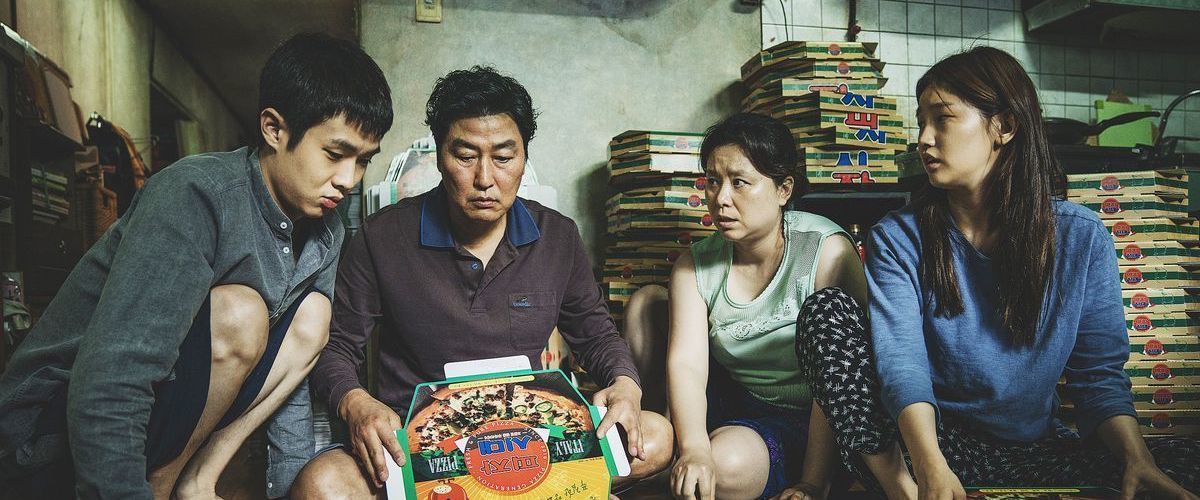
Photo Courtesy of: NEON/CJ Entertainment
“Parasite,” the latest masterpiece of Korean auteur Bong Joon-Ho—the director behind “Okja,” “Snowpiercer” and “The Host”—was released in U.S. theaters Friday, Oct. 11. Already boasting rave reviews from critics, a 99% rating on Rotten Tomatoes and the prestigious Palme d’Or at Cannes—the international film festival’s highest honor—the genre-bending satirical thriller has created a buzz among cinephiles everywhere. I headed to the Arclight Hollywood on Saturday, Oct. 12 for the 4:30 p.m. showing. Seats were sold out until two showings later.
On its surface, “Parasite” looks like a classic story about the haves and the have-nots—and what happens when the two collide. The movie opens with the Kim family who are struggling to get by in present-day South Korea. To make ends meet, they pick up odd jobs like folding pizza boxes. They do this while piggybacking off of a neighbor’s WiFi in their grimey semi-basement apartment. The Kims are outsiders to the tech-driven prosperity that the country has seen in recent decades. Ki-Taek (played by Bong’s longtime collaborator, Song Kang Ho) and his wife are loving parents but they are characterized mostly by their unemployment. In such conditions, necessity becomes the mother of invention when their son, Ki-Woo, gets a serendipitous opportunity to work as a private English tutor for a wealthy family. His younger sister Ki-Jung, a crafty artist with a knack for Photoshop, sends him off to his interview with a fake university diploma.
Ki-Woo’s new employers, the Parks, are also a family of four with a teenage daughter named Da-Hye and young son named Da-Song. That’s where the similarities stop. Ever the sophisticated patriarch, Mr. Park brings home the bacon as a software executive while Mrs. Park, a doll-faced, ditzy housewife, spends her days leisuring about in their lavish mansion. Their architecturally perfected, three-story hilltop home may as well be worlds away from the Kims’ almost subterranean residence. In a stroke of genius, Ki-Woo—or Kevin, as Mrs. Park likes to call him—devises a plan for Ki-Jung to also get hired as an art therapy teacher for the rambunctious little Da-Song. Feigning as an in-demand expert with children, “Jessica” cons her way into the good graces of the gullible mother. One by one, the Kims infiltrate the house, hiding their true identities. Dad steps in as Mr. Park’s chauffeur and mom takes on the role of housekeeper after getting the original staff fired in a series of entertaining ploys. Reaping the benefits of their new gig, everything seems to be going smoothly for the crew. Ki-Woo and Da-Hye even start falling for one another, much to his parents’ delight. Splayed out in the mansion’s living room when the Parks are away, the family wonders drunkenly if this could all be theirs one day.
Unlike most other films centered around class inequality, the rich—however frivolous and self-centered—are not depicted as villains. The haves in the movie arguably cause no real unjust harm. Yet as Bong seems to point out, their very existence is sinister and reveals the dark underbelly of the kind of privilege built on a system that will always exclude folks like the Kims. So while the wealthy family treats their employees well, “they’re nice because they’re rich,” not the other way around, as Mrs. Kim remarks. “Money is an iron,” she elaborates. Indeed, the Parks’ social status conceals the wrinkles in their lives—that is, until one night, the polished exterior unravels completely, jolting our protagonists and viewers into a waking nightmare.
Aided by a killer soundtrack that punctuates the film with levity and suspense in just the right spots, “Parasite” will have theaters cracking up at its witty dialogue in one scene and then on the edge of their seats during another. Brace yourself for a rollercoaster ride with a particularly hair-raising twist in the second act, when the dark comedy swerves into hellish territory.

Interested in becoming an intern or a contributing writer for the Entertainment section?
Contact us at entertainment@newuniversity.org!