

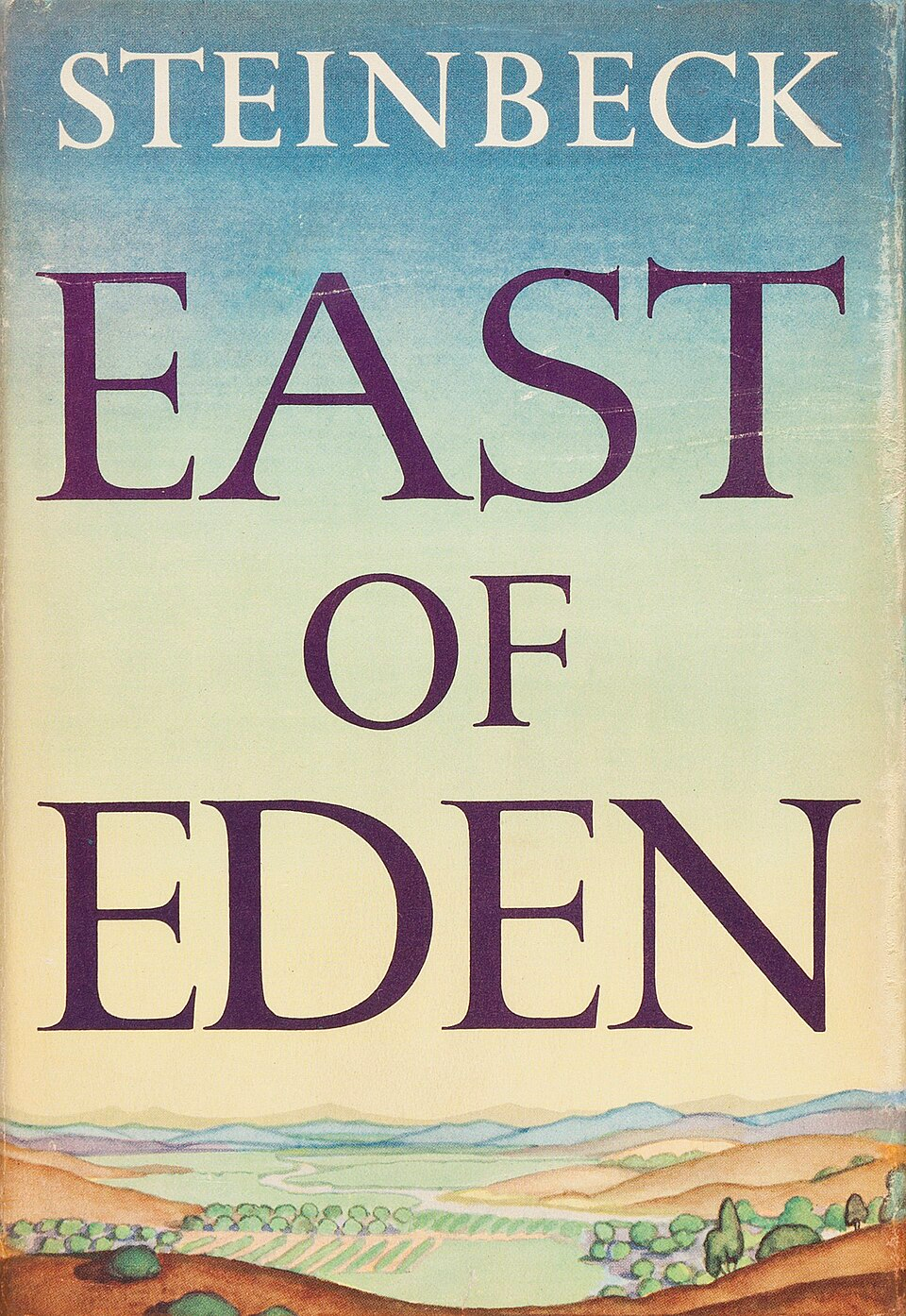


Everyone deals with mommy and daddy issues in Netflix’s newest limited series “East of Eden,” released on Oct. 1. Over the course of seven episodes, the show asks if people can truly grow beyond their sins while the world moves from the Civil War to World War I. Adapted from one of John Steinbeck’s most famous novels, this limited series beautifully follows the Trask family’s dynamics with delicacy while still leaving room for confusion.
Based on Steinbeck’s 1952 allegory of Cain and Abel, “East of Eden” follows Adam (Christopher Abbott) and Charles Trask (Mike Faist) as they fight for their father’s approval. A civil war veteran, their father taught them that the only way to lead an honorable life was by joining the army. By deciding to send Adam to the military, he marks him as the favorite child and leaves Charles to tend to their farm. In a rage, Charles beats up Adam, causing him to not return home until after the death of their father. After being reunited, a bloody young woman, Cathy Ames (Florence Pugh), appears on their doorstep.
Cathy always wanted freedom in her life. As a girl going to school in the 1890’s, she was never taken seriously and only ever received male advances. She quickly learned that her attractiveness and beauty was her only real way to gain freedom, so when she runs away from home, she joins several brothels. When one of the managers suspects that she’s stealing money from him, he beats her up and leaves her lying on the road where she crawls her way to Charles and Adam’s barn.
Despite not knowing where she came from or why she’s injured, Adam wants to help Cathy heal and let her stay although Charles doesn’t trust her. Through caring for Cathy, Adam falls in love with her, marries her and moves them from their Connecticut farm to Salinas, California. Once again feeling trapped in her life, especially now because she is pregnant with twins, Cathy tells Adam she is going to run away again the minute she can. Adam brushes it off, but Cathy does just that and runs away right after healing from giving birth, once again joining a brothel.
The story then splits to show Cathy’s dark past and evil ways of getting what she wants within the brothel as well as Adam’s grief and attempt to raise his sons, Cal (Joseph Zada) and Aron Trask (Joe Anders). As the boys grow up, they struggle for approval from Adam, drawing parallels between them and Adam and Charles’ own experience with their father.
Visually, the show’s depiction of California developing from the late 1800s to World War I is stunning. Scenic shots of empty hills and stand-alone barns make up much of the show’s cinematography. Characters having conversations in a beautiful flower field in the late-afternoon; the setting puts viewers into the mood of a warm yet dark story, matching the overall serious tone of the show.
However, a multigenerational story like “East of Eden,” originally a 600 page novel, takes more than beautiful landscapes. It needs character development that is methodically timed and thorough. This adaptation feels long and yet still doesn’t give its characters enough time to breathe. Adam gets the most development,yet is still hard to understand. Long, still shots of Adam staring out of his porch in silence makes up a significant portion of his screentime. This stoicism leaves gaps in the audience’s knowledge of how he operates, leaving them ultimately unconnected to such an important character to the story.
On the other hand, Pugh uses her minimal dialogue to make Cathy feel like the real star of the show. Similarly to her previous films, like “Midsommar” and “Little Women,” Pugh’s facial expressions bring life to her character, which is especially important for a role like Cathy, who represents sin and evil for most of the story. Pugh’s acting and the show’s writing brings humanity to someone who is described as a “monster born to human parents,” as it goes deep into her traumatic childhood. This much attention to her character coupled with Pugh’s acting makes Cathy someone you might not root for, but you’re on the edge of your seat wondering what she’s going to do next.
Similarly, Charles, Adam’s brother, takes on an interesting role towards the beginning of the show, seeming like a darker and more sinister version of Adam. However, by the fourth episode, he virtually disappears from the story when Adam moves out to California. He doesn’t come back until he dies off-screen and appears in Cathy’s mind as almost ghost-like visions while she runs her brothel. Acting like a little devil on her shoulder, Cathy’s imaginary Charles motivates her to distrust those working for her, like Charles distrusted her. This is because, as he says in the second episode, “kind recognizes kind.” But Charles’ minimal role lacks the attention it needs to actually explore his character, making his reappearance confusing for audiences that barely know him.
Like Charles, Cal and Aron, Adam’s sons, leave something to be desired since they’re not fully introduced until the second to last episode, audiences have to adjust to these new descendants quickly, which contrasts the overall slow pace of the rest of the show. Acting as parallels to Adam and Charles, these two brothers carry the heavy thematic weights of their virtually absent father. Aron symbolizes Adam, the favorite son who is successful at what his father wants for him. On the other hand, Cal is the more commonly criticized brother who can’t seem to do anything right and is described as having some inherent badness, mirroring Charles. However, since their development is so quick, their own family trauma gives the audience whiplash all the way to the end of the series, making its final conclusions hard to digest until long after credits have finished rolling.
Overall, despite these issues, “East of Eden” remains a deeply interesting story. Every character intentionally represents something, even when that something is another character, like Aron and Cal representing Adam and Charles themselves. Practically every action or decision a character makes is symbolic often because the characters are so interconnected. All this symbolism makes the story an intriguing one that you continue to think about and digest after watching. Audiences may be left filling the gaps the show leaves on their own time to fully understand character motivations and the meaning behind their actions. But, like the source material, “East of Eden” is still a captivating story about brothers, family, love and people’s inherent good vs evil nature.
Shannon Kunz is an Arts & Entertainment Intern for the fall 2026 quarter. She can be reached at skunz1@uci.edu.
Edited by Avani Kumar and Geneses Navarro.

Interested in becoming an intern or a contributing writer for the Entertainment section?
Contact us at entertainment@newuniversity.org!