



Editor’s note: The article was originally published on April 26, 2026. An editor’s note was added July 10, 2026. An author title was added to this article on June 29, 2026.
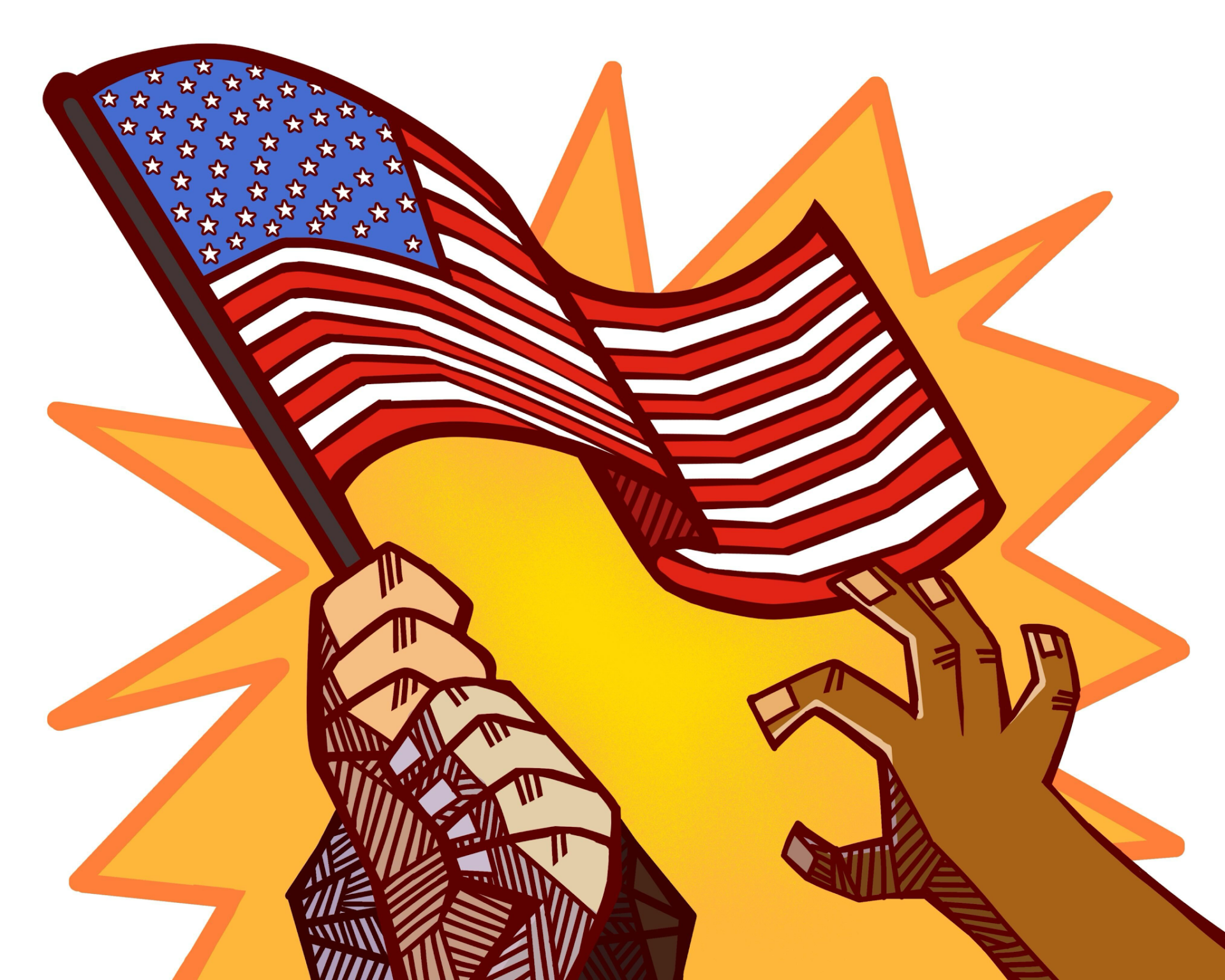
With the recent end of the 2026 Winter Olympics, sports often seem like one of the only times young U.S. citizens will outwardly display their support for their country. The Super Bowl, the World Series, March Madness and, of course, the Olympics bring out a level of nationwide pride that we rarely see elsewhere.
What usually airs on the mainstream media is not Americans being proud of their country, but rather them criticizing their government and politicians. In a country where people strongly disagree politically and often still feel divided culturally, sporting events let people temporarily set aside their political affiliations as they unite for a national win. But if being American is their nationality, why do people often feel disconnected from their American identity?
For younger generations, like Gen Z and Gen Alpha, national unity is something that hasn’t been experienced as frequently or intensely as prior generations — other than during seismic, yet fleeting, events. Historically, older generations have united across the political aisle in times of war and violence. This modern-day disconnect may be why the younger generations feel unprideful and more disconnected from their American nationality. Today’s youth may not have had that moment yet. Instead, they have grown up with a politically polarized world fragmented by social media. A world that constantly exposes them to every criticism of American institutions, causing them to witness more disagreement and division than ever before.
The times when Americans have historically felt most patriotic typically coincided with tragic yet unifying moments. For Millennials and Gen X, this was the 9/11 attacks. In the event’s immediate aftermath, Gallup found that the percentage of Americans who said they were “extremely proud” to be American jumped from about 55% before the attacks to around 65–70% in the years that followed, marking one of the highest levels ever recorded. Americans were largely united around that one narrative and they were not divided by the media, making them feel more unified.
For Baby Boomers, the Cold War caused unification within their generation and the nation at the time. Americans did not want to be associated with communist “phenomena,” and made it explicitly known that they were “pro-American” and “anti-communist.” Naturally, they became more nationalistic and patriotic in wanting to ally with capitalism and America over the Soviet Union. There was no opportunity to fragment these narratives by the media, and Americans were able to unify as one.
As for the “Greatest Generation,” the unifying event was World War II. The propaganda that convinced Americans to buy into consumerism, selling the idea of being nationalistic and demonizing the enemy, was sold. Over 16 million Americans served in the military, and by the end of the war, about 85 million Americans, which had been roughly half the population, had purchased war bonds. People were sold on the idea. These messages were widely shared across the more unified media landscape, unlike today’s individualized digital feeds that often produce entirely different realities for different groups.
These generations experiencing historic events brought them closer together and made them feel more united to their nation as a whole. Younger generations in the U.S, however, have grown up amongst a more divided political climate, which makes it harder to sustain a cohesive national identity. While the current U.S.-Iran conflict could produce similar moments of unity, the long-term effects remain unclear at this point.
But when it comes to sports, Americans will often stand on the same side –– unless they’re cheering in support of their home countries –– and overlook their differences in political views for that event. But because of this, the unity created through sports is only temporary and disappears as soon as the event ends.
U.S. pride does not come from status alone, but from the shared experiences people have that make them feel connected and part of something larger. For many of the older generations, this included feeling united after a war or national crisis. Today, younger generations have largely only experienced that sense of unity through temporary nationwide successes, such as sports.
As a result, younger generations simply feel less prideful. They’ve grown up in a politically polarized digital world that has yet to unite them in the same lasting way.
Julia Kremenetsky is an Opinion Apprentice for the spring 2026 quarter. She can be reached at jkremene@uci.edu.
Edited by Joshua Gonzales

Julia Kremenetsky is in her final year majoring in Political Science! She is an Assistant Opinions Editor for the 2026-27 year. Since joining in April of 2025, she has written stories ranging political issues, social media and trends, current events, and more. Outside of the New U, Julia loves spending time with her dogs, spending time in nature, and watching YouTube video essays about obscure topics.