

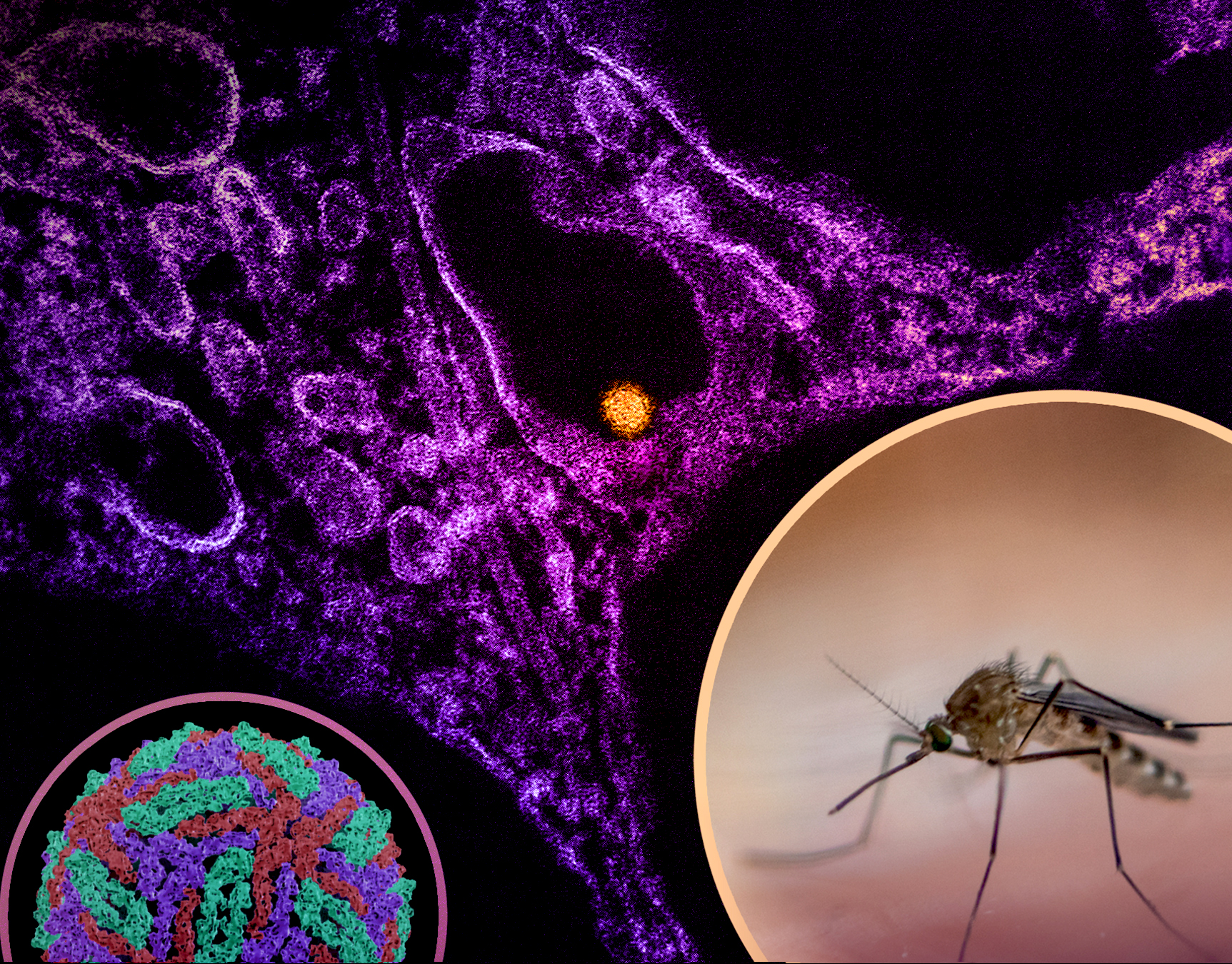

West Nile virus has been detected in mosquito samples from 13 Orange County cities as of July 8. Fullerton has the largest share of positive samples, and officials sprayed parts of the city last week to reduce mosquito populations, according to KTLA.
According to the Orange County Mosquito and Vector Control District, 38 mosquito samples tested positive for West Nile virus this season, which is more than double the 18 positive samples reported just one week earlier. Fullerton alone has recorded nearly 40% of all West Nile-positive mosquito samples detected this year. Because of this increase, the district conducted truck-mounted mosquito control treatments across a 4.5-square-mile area of Fullerton.
The surge in Orange County mirrors a national trend. Federal health officials say West Nile virus is off to its earliest start in the United States in the last 20 years. As of June 30, at least 48 human cases had been reported nationwide, including 38 cases of severe neuroinvasive disease, which can lead to permanent neurological damage or death, according to the Los Angeles Times. That is the highest number of human disease cases reported at this point in the year since 2004, according to the Centers for Disease Control and Prevention.
Orange County’s own numbers reflect the same increase. The county’s vector control district detected West Nile virus in just four mosquito pools in 2025, five in 2024 and one in 2023, compared with 38 pools so far this year.
“We are above-average for this time of year,” Miquel Jacobs, director of communications for the Orange County Mosquito and Vector Control District, told the Los Angeles Times.
This season’s surge traces back to mosquitoes feeding on more infected birds, according to Anthony James, a UCI professor of microbiology and molecular genetics who has spent decades researching mosquito-borne disease.
He added that Orange County’s shifting climate may be compounding the problem: “It is becoming more temperate here, warmer winters and more water used around houses and other landscaping.”
Despite the spike in positive mosquito samples, the district’s current risk rating for the county remains listed as low, according to OC Vector Control. Only one human case has been confirmed in California this year: a Long Beach resident who was hospitalized with neuroinvasive illness, according to the Los Angeles Times.
West Nile virus spreads through the bite of an infected mosquito that has fed on an infected bird, and it cannot be transmitted through casual contact. Most people who become infected never develop symptoms. According to the Orange County Health Care Agency, about one in five infected people develop mild symptoms including fever, headache, body aches, joint pain, vomiting, diarrhea or a rash, which usually resolve on their own. Approximately one in 150 infected people develop severe disease affecting the central nervous system, including encephalitis or meningitis, and roughly one in 10 of those severe cases are fatal.
“West Nile virus is something we monitor and prepare for, but it is not a common diagnosis that we see in our Student Health Center,” Dr Albert Chang, medical director of the UCI Student Health Center, said in an email to New University. “Our role is really one of early recognition, evaluation of compatible illness, prevention education and coordination with public health partners.”
Chang said the Center has received a handful of student questions as coverage of the outbreak has grown, particularly from those who spend time outdoors. He added that providers routinely ask about recent travel, environmental exposure and symptoms during evaluations while also ruling out other illnesses with similar symptoms, such as influenza, COVID-19 and mononucleosis.
With no vaccine available for humans, Chang said prevention remains the most effective protection against West Nile virus.
The Center recommends using an EPA-registered insect repellent, particularly around dusk and dawn when mosquitoes are most active; wearing lightweight long sleeves and pants during extended evening time outdoors; eliminating standing water around apartments, patios or balconies; and keeping window and door screens in good repair. Chang also urged students to seek medical evaluation if they develop a high fever, severe headache, confusion, neck stiffness or muscle weakness following mosquito exposure.
“One of the strengths at our UCI SHC is our close collaboration with local public health experts,” Chang said. “While mosquito surveillance is led by the Orange County Mosquito and Vector Control District, we maintain close communication with the Orange County Health Care Agency’s Communicable Disease Control Division whenever there are significant infectious disease concerns.”
He added that college students often spend significant time outdoors during the summer and early fall, making basic precautions especially important.
“One of the lessons we’ve learned from public health is that early awareness and prevention are almost always more effective than reacting after illnesses begin to appear,” Chang said.
Aadya Mishra is a News Intern for the summer 2026 quarter. She can be reached at aadyam2@uci.edu.
Edited by Anika Denny.

