

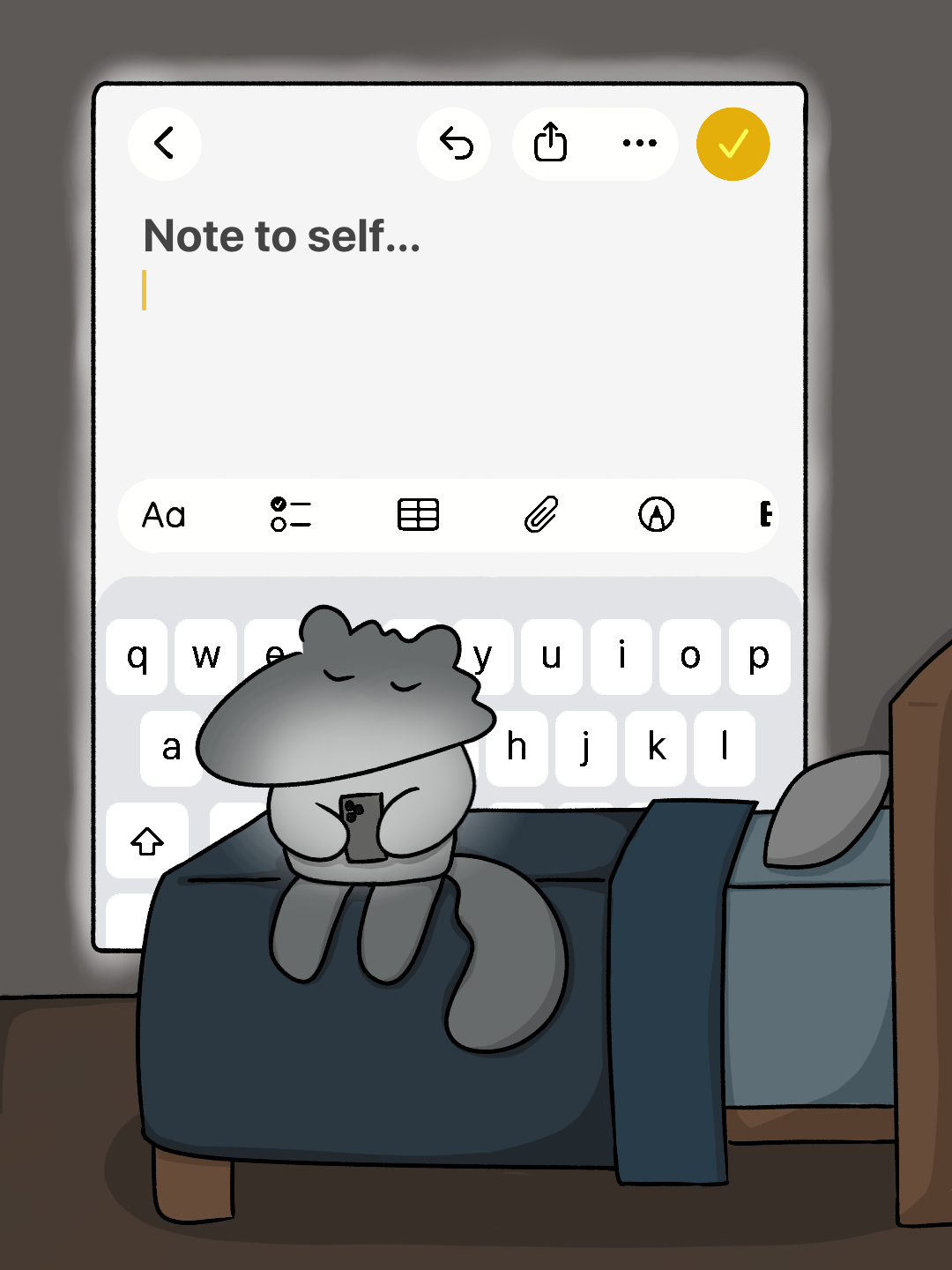

The Notes app has become a private room for feelings people may never say aloud. Apple even builds privacy into the app through features for locked notes, which makes the app feel like a protected container for unfinished versions of the self. The problem is that the Notes app can make people confuse emotional clarity with courage. It helps a person turn feeling into language, yet it can also provide the illusion of communication while protecting the writer from the risk of being answered.
Private writing feels meaningful for real reasons: a person may write a note to themselves after an argument because writing down a private thought is easier than communicating with someone who can respond to and refute it. Emotion is given a place to settle before it becomes conversation. Many people do need distance from their first reaction before they can speak responsibly. However, when the note becomes the whole encounter, a person may be honest with themselves and performs transparency, but dishonest to others, where it matters the most. in
In Jacques Derrida’s book “Of Grammatology,” he explains why this habit is more of a modern quirk through his critique of phonocentrism, the Western tendency to privilege speech as more immediate and truthful than writing. Speech often seems more authentic because the speaker appears present with the words, while writing seems delayed and separated from the body that produced it. Derrida shows that speech also depends on interpretation and context, as a person can speak face to face and still conceal what they mean. On the other hand, a person can write alone and reveal more than they intended.
A note can feel more honest than speech because it removes the pressure of another person. It allows the writer to become both the speaker and the listener. Inside the closed space, no one interrupts the story or offers a competing memory of what happened. The note gives the feeling of communication without its demands, creating an audience while removing the other person.
Derrida’s later work “Limited Inc,” which includes “Signature Event Context,” develops the idea that meaning cannot be held within one stable context, since language continues to function after it leaves the person who produced it. A sentence written for no audience still begins to work on the writer by calming anger or making longing sound controlled. The writer may feel changed by the note, even if the person being addressed never receives a word.
The sense of relief that follows private writing is more than a personal impression and has psychological support. Psychology, through research on expressive writing, has found that written emotional disclosure can produce small beneficial effects across several outcomes. Research by Matthew Lieberman et al. on affect labeling found that putting feelings into words can reduce emotional reactivity, with brain imaging showing reduced amygdala response during labeling tasks. Language makes emotion easier to hold because it gives feeling a form outside the body.
Private writing also has a long history, with scholars having described diaries as tools for sense-making and personal transformation during vulnerable periods. The Notes app is a modern version of this older tradition, although it changes the speed and intimacy of the practice. Constant phone access means private writing can happen at the exact moment when a person is most tempted to confuse reaction and revelation.
Derrida’s concept of the supplement is that an addition to something original can actually reveal that the original needed support. Notes support speech because prepare what might eventually be said. At the same time, they reveal that speech was never as complete as people imagined, since many people need written rehearsal to discover what they mean. The note can help speech arrive, or it can replace speech entirely.
A person can make a wound sound graceful on the page and still remain untouched by the person the sentence is for. The note may be the first place a feeling becomes honest, and its value depends on where it carries that honesty next. Once a feeling has found words, it asks something of the writer. The self inside the note may sound clear, even beautiful, yet clarity alone leaves it half-born. A sentence becomes real when it steps out of rehearsal and enters the fragile life of another person’s reply.
Jacqueline Lee is an Opinion Staff Writer. She can be reached at jacquhl3@uci.edu.
Edited by Ruby Goodwin

