

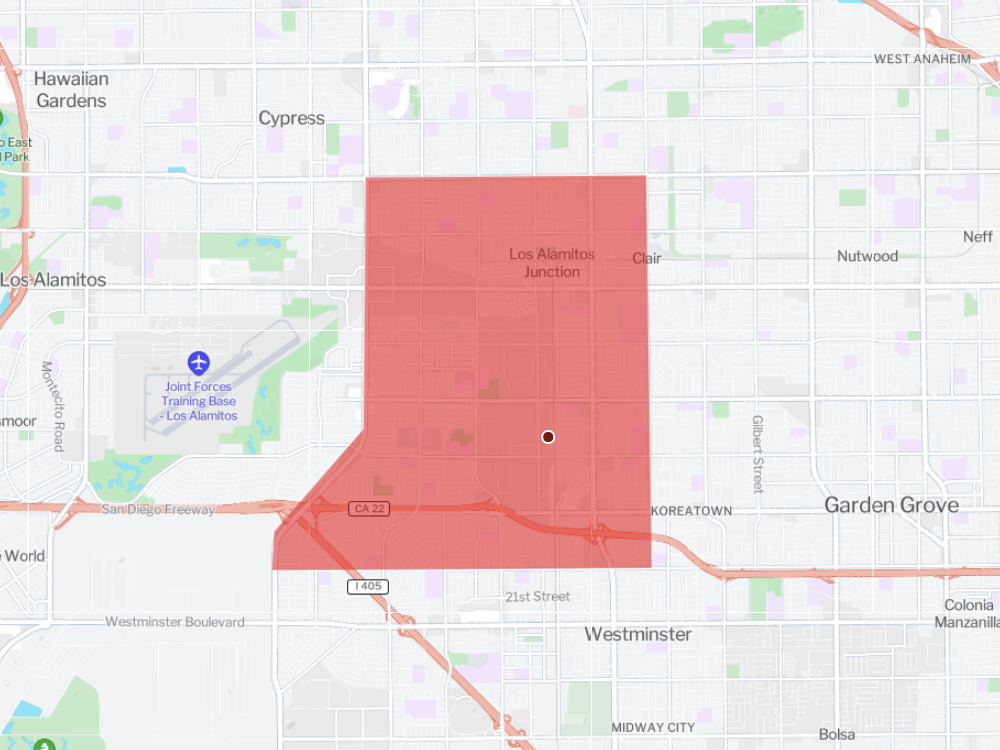

More than a month after an overheating chemical storage tank forced the evacuation of approximately 50,000 residents across north Orange County, cleanup crews began removing hazardous chemicals from the GKN Aerospace facility in Garden Grove, CA, the week of June 29, following a nearly three-week delay.
The cleanup operation marks the first phase of removing neutralized methyl methacrylate (MMA), a flammable industrial chemical used to produce acrylic plastics and aerospace components. According to the Orange County Health Care Agency, the operation was originally scheduled to begin in early June but was postponed after crews “didn’t receive all the resources needed in time to start the removal process,” agency spokeswoman Salma Elshakre said to FOX 11 Los Angeles.
County officials said the delay resulted from a shortage of specialized transportation equipment needed to move the neutralized chemical safely.
Crews are removing the neutralized chemical from two of the facility’s three storage tanks using specialized temperature-controlled containers before transporting it to a licensed hazardous waste disposal facility. The third tank, which was damaged after overheating and developing a pressure-relieving crack during the emergency, requires a separate removal strategy and will be addressed in a later phase of the cleanup. County officials said the work will take several days and multiple safety protocols, environmental protections and continuous air monitoring.
The cleanup follows an emergency that began on May 21 after GKN Aerospace reported a failure in the cooling system for one of its chemical storage tanks. The 34,000-gallon tank contained approximately 7,000 gallons of MMA and began overheating, raising concerns that it could either rupture or explode.
As the tank’s temperature continued to rise, evacuation orders expanded across portions of Garden Grove, Anaheim, Cypress, Stanton, Buena Park and Westminster. At the height of the incident, approximately 50,000 residents were displaced while firefighters, hazardous materials teams and industry experts worked to stabilize the tank.
During a May 22 news conference, Orange County Fire Authority Incident Commander Craig Covey described the difficult situation that emergency responders faced.
“That is what we were handed: A leaking tank or a tank that blows up,” Covey said.
Fire crews spent several days cooling the tank while monitoring temperatures and surrounding air quality. Officials said responders anticipated one of two outcomes: either the tank would experience a boiling liquid expanding vapor explosion (BLEVE), or pressure inside the tank would be relieved by a crack forming in the steel shell. A crack eventually developed, lowering the internal pressure and eliminating the immediate explosion risk. No significant chemical spill was reported, and all evacuation orders were lifted by May 26.
Although the immediate emergency had ended, officials said removing the remaining chemicals required additional planning. Cleanup was postponed earlier this month before county officials announced the operation would resume during the week of June 29.
Health officials have advised nearby residents that temporary odors may be noticeable while the chemicals are transferred from the storage tanks.
“The product has a very low odor threshold, meaning people may notice a scent even when concentrations are well below levels associated with health concerns,” the Orange County Health Care Agency said in a public statement.
The agency said air quality, odors and wind conditions will continue to be monitored throughout the cleanup using both fixed and mobile monitoring equipment. Monitoring data is available through the county’s online air quality dashboard.
The incident has also prompted multiple investigations. The Orange County District Attorney’s Office and the California Division of Occupational Safety and Health (Cal/OSHA) launched separate investigations following the May emergency. Federal authorities also became involved when the FBI and the U.S. Environmental Protection Agency executed a search warrant at the Garden Grove facility on June 10 as part of an ongoing investigation. The investigations remain active as cleanup operations continue.
In the weeks following the evacuation, GKN announced a $3 million community relief fund on its website and later addressed residents during a Garden Grove City Council meeting. In a company statement, GKN Aerospace apologized “for the uncertainty and disruption this situation has caused” and thanked local, state and federal agencies that responded to the emergency. Some residents and local officials, however, continue to express concerns about the incident’s impact and whether the company’s response has been sufficient.
County officials said cleanup activities will continue through the week as crews remove the remaining hazardous material from the site. Air monitoring will remain in place throughout the operation, and residents can continue following updates and monitoring data through the Orange County Health Care Agency.
Alexia Hawley is a News Intern for the summer 2026 quarter. She can be reached at adhawley@uci.edu.
Edited by Anika Denny and Joshua Gonzales.

