



Editor’s note: The article was originally published on May 8, 2026. An editor’s note was added July 10, 2026. An author title was added to this article on June 29, 2026.
Within every UCI class, there’s always one person who downplays the hours of studying they put in before the midterm or final by saying, “I barely tried,” and minimizes their achievement with an “it was easy,” or an “anyone could do it,” comment.
When making plans, many people in Gen Z will wait 20 minutes to respond to a text, even while they’re actively on their phones, saying they’re “down for whatever,” when you know they have a clear preference. Nowadays, people will avoid showing any sort of excitement about hanging out with you — texting without exclamation points, using all lowercase letters and a dry tone — even if this is the most social excitement they’ll get all week.
But when did this shift happen?
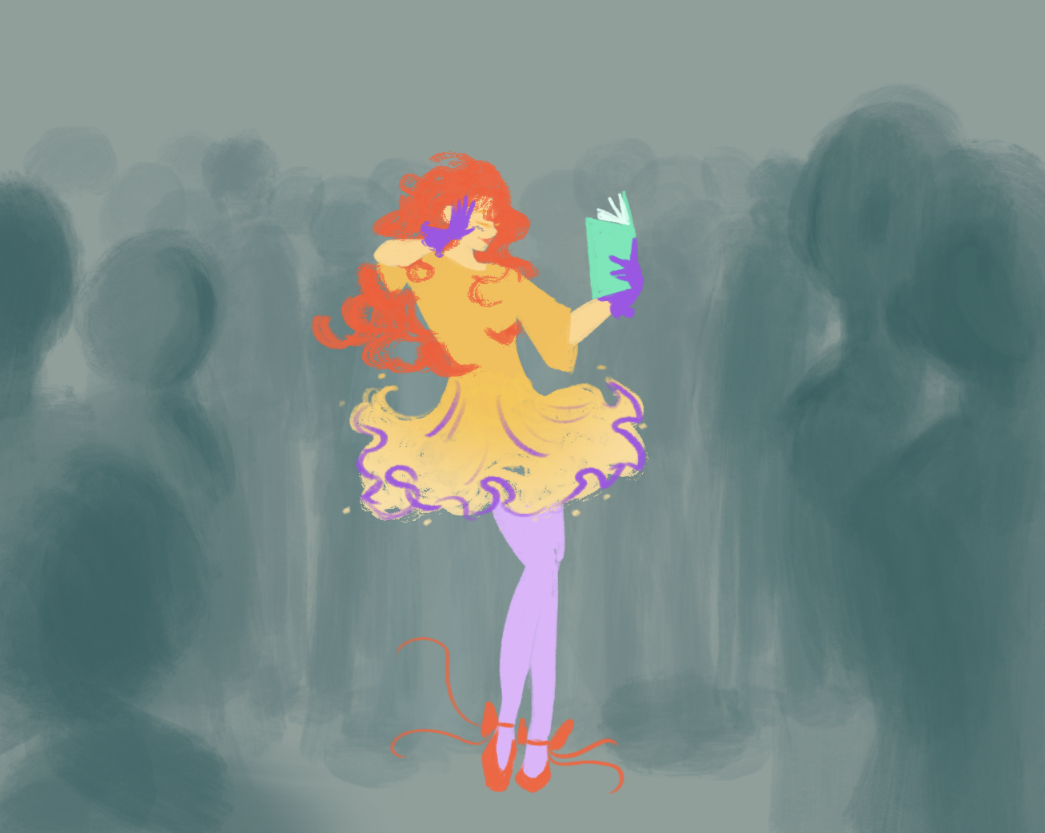
Somewhere along the way, our generation decided that caring too much was the worst thing you could do. Young men “aura-farm” and young women strive to be the “effortless cool girl,” all to avoid being seen as “cringe.” And while it may seem cool to hold back your excitement, especially in a culture that praises being nonchalant, it comes at the cost of being authentically yourself and connecting with the people around you. We’re only on this planet for so long, and naturally, people need affection and affirmation in their relationships. We are not meant to thrive in solitude and nonchalance.
When young men aura-farm, they perform as if disinterested in order to appear cool and seem like they’re not trying too hard. As for young women, the equivalent is the effortless cool girl — she is fun, pretty and easygoing. She never looks like she is overdoing it. They both fall back on being nonchalant. Now, “putting in too much effort” is cringe and being ambitious is no longer cool.
Take Diya Joukani, a social media icon who went viral for strolling through the crowded streets of India while showcasing her fashion designs with total nonchalance and a laid-back Frank Ocean song playing underneath. There is ease to her content, and people have followed suit. Many from different parts of the world began recreating it in their own cities, and in their own outfits because she made effortlessness look like something worth aspiring to.
Joukani is clearly passionate about her designs, but the way her nonchalant demeanor is interpreted online creates a distorted blueprint for what passion is supposed to look like. Thus, our generation begins to model themselves after her and act nonchalant in contexts where they should be expressing their authentic selves.
That creates an even deeper issue, and now being chalant has become coded as cringe. People throw the word “cringe” around too freely, directing it toward anyone who tries too hard, wants too openly or dares to be visibly enthusiastic about something.
When you’re chalant and open about the things you love, you begin to rebuild the very connections that nonchalance strips away. Even “faking it until you make it” can make being enthusiastic a habit. Over time, being chalant and expressing how you truly feel — whether it’s real or forced — will bring out the authentic you.
The truth is, people are drawn to sincerity. They remember the friend who was genuinely excited to see them, the classmate who admitted they worked hard, the person who cared enough to say what they actually meant. Being chalant doesn’t make you look desperate, but it reveals the most honest you, truly.
It’s okay to want things and be visibly excited about your life. We all have one life to live and being unapologetically yourself, on a planet you’re only on for so long, is not cringe.
Julia Kremenetsky is an Opinion Staff Writer. She can be reached at jkremene@uci.edu.
Edited by Rebecca Do and Riley Schnittger

Julia Kremenetsky is in her final year majoring in Political Science! She is an Assistant Opinions Editor for the 2026-27 year. Since joining in April of 2025, she has written stories ranging political issues, social media and trends, current events, and more. Outside of the New U, Julia loves spending time with her dogs, spending time in nature, and watching YouTube video essays about obscure topics.