

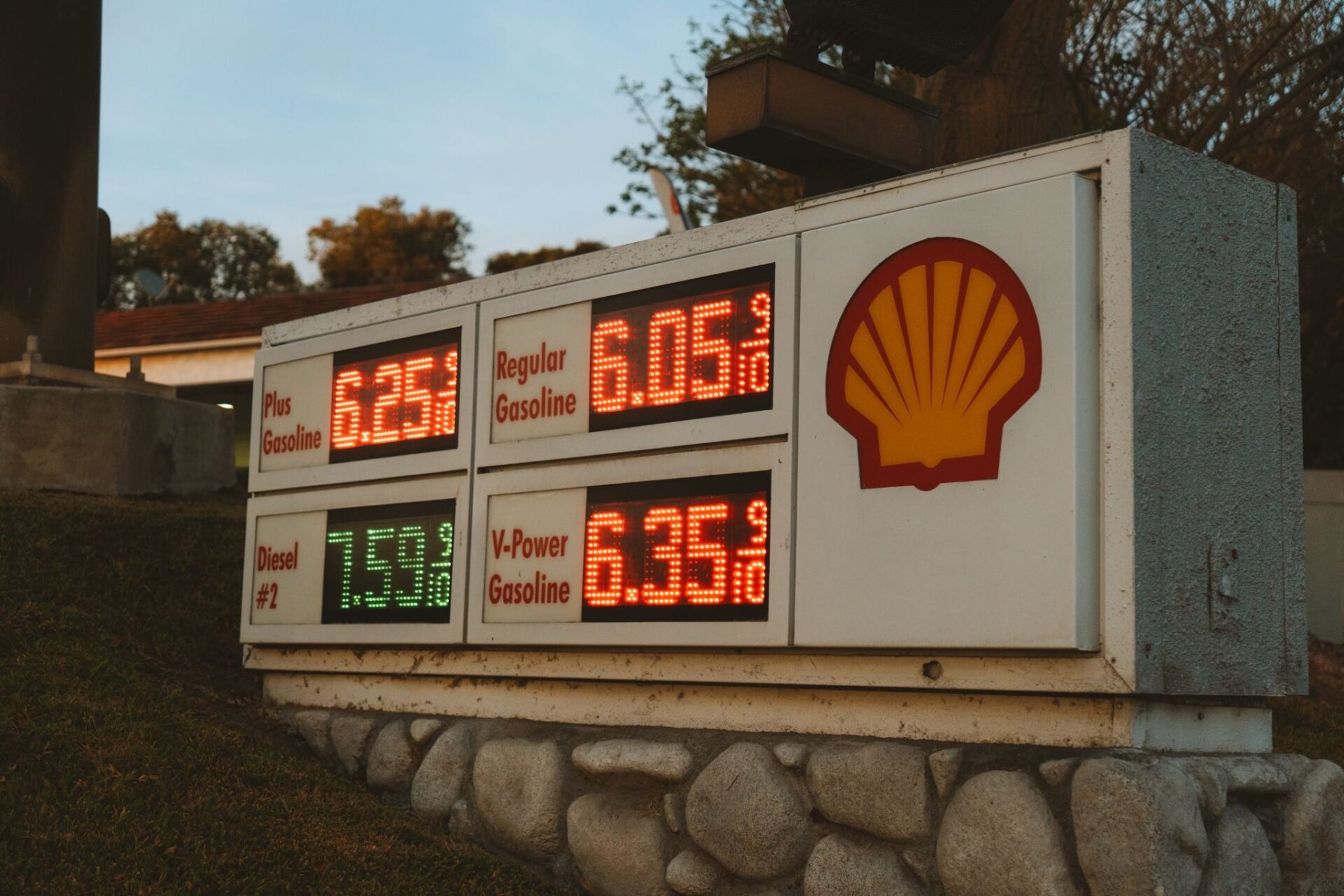


As California gas prices reach the highest in the nation, expenses for student commuters are facing an additional financial strain. Gas prices in the state rose to an average of $5.95 in April 2026 — an increase from the average of $4.79 per gallon in 2025 — according to motor club AAA.
Over half of UCI undergraduate students enrolled during the 2025-26 school year lived off campus or commuted to class this year. Commuters at UCI already pay $81 per month for the “S” Zone Commuter parking permit, the less expensive of the two commuter parking permits available. They now have to account for the extra dollar per gallon in gas prices too.
Second-year biological sciences student Adriana Dang commutes to school around three times a week. She noticed a considerable change in the amount she pays for gas.
“[When] I fill up my tank, and it’s usually never above $50 but I’ve been going and it’s like $75-$80 and I go to Costco because it’s a little less, but I can still see that the gas prices are really high,” Dang said.
Dang found herself staying in the library during gaps in her schedule to reduce the amount of gas she uses. Previously, she would drive to get lunch or coffee.
Other students have also noticed this increase in gas prices. Tiffany Doan, a second-year biological sciences student, notes the social impacts current gas prices have made on her life.
“A lot of my friends, they stay in Irvine, either at apartments or they live around the Irvine area,” Doan said. “If I want to hang out with them, I have to drive from Garden Grove to Irvine and then drive back after. So then I started being more conscious about that too, whereas in the past the drive was nothing for me.” Doan now spends about $20 more on gas commuting from Garden Grove.
Students also have to budget due to increased gas prices. Many are avoiding buying food and drinks.
“I think that because [gas] is more expensive, I am trying to spend less on a lot of unnecessary things, if that makes sense,” Sabrina Espinoza, a fourth-year neurobiology student and a commuter from Lake Forest, told New University. “So, like clothes, or like a drink or something.” Espinoza has to plan her spending accordingly since she only works part time.
In addition to budgeting, gas prices have also affected students’ involvement in campus activities and participation in lectures. Some students have found themselves skipping non-mandatory classes to avoid spending money on long commutes.
“I have class every day, but I guess not many of them are mandatory and while I’d like to go to class every day just because I’m paying tuition to get these classes,” Doan said, who commutes 30 minutes to campus. “For example, I have one class on Friday that’s not mandatory. I would usually be the type to go to all my classes, but I just decided to stay home that day, just because I don’t think it’s worth it anymore for me to commute to campus for one class.”
When asked about using public transportation instead, Doan and Dang both noted that it is unrealistic, as the timing of public transportation does not align with their schedules. They believe it is more efficient to drive. However, to take some action against these high costs, Dang has started carpooling with more people.
Increased prices have also changed the way some students think about their commute.
“Now, rather than being worried about, oh, it’s gonna take me 30 minutes to get to campus, I’m like, oh, it’s going to take me another 15-30 miles and stuff like that,” Doan said. “So I started thinking [in] miles rather than time, which is a weird change for me.”
Ayeza Shaur is a News Intern for the spring 2026 quarter. She can be reached at ashaur@uci.edu.
Edited by Geneses Navarro.

Interested in becoming an intern or a contributing writer for the City News section?
Contact us at citynews@newuniversity.org!