


María Zardoya, the lead singer of The Marías, recently made her solo debut as Not for Radio. Under her solo name, she released “Bloom” — her first extended play (EP) after the release of her 2025 album “Melt” — on April 17. An EP with only three tracks, Zardoya spares no time nailing the emotional turmoil of love and the desire for authentic human connection.
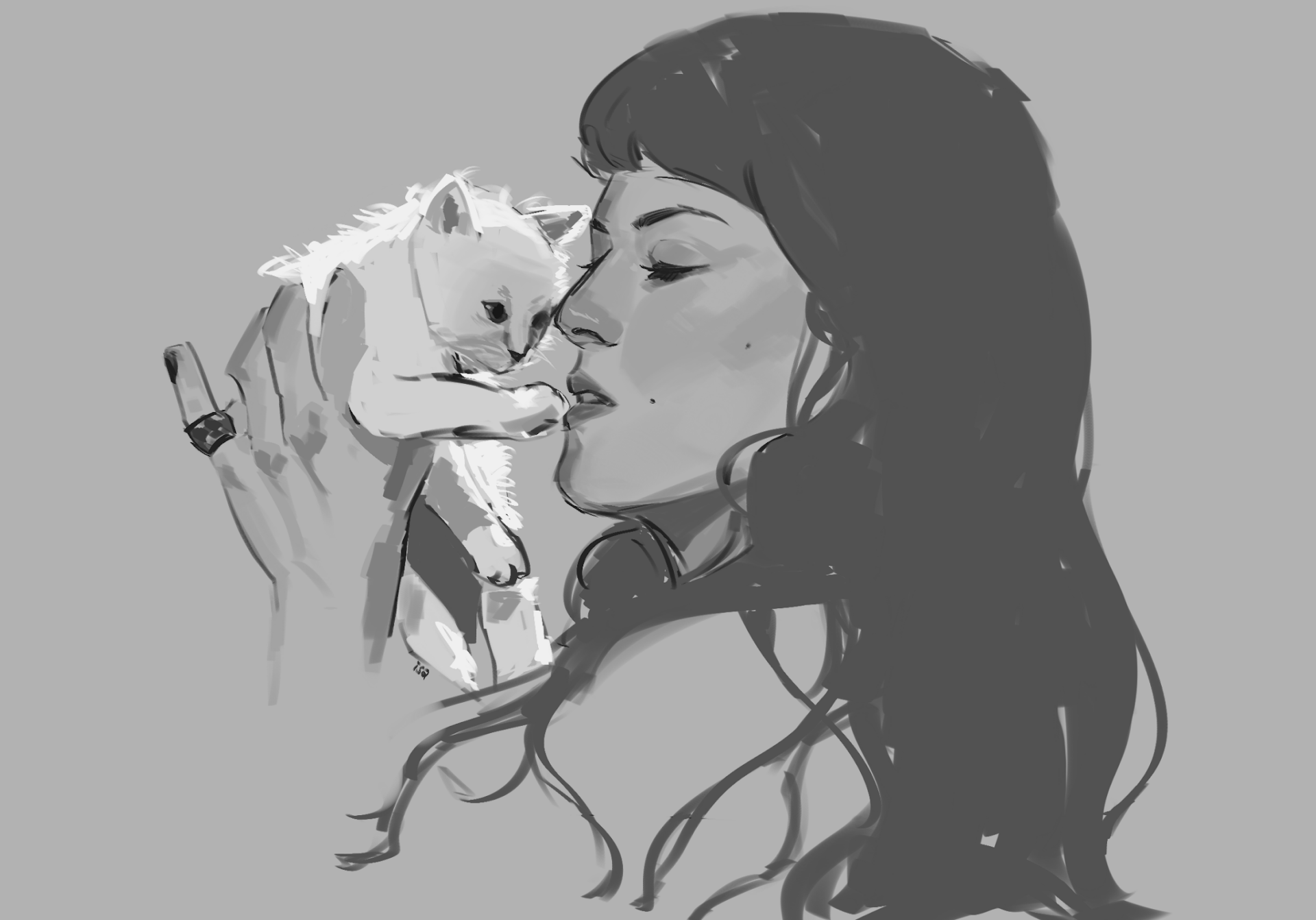
The first track on the EP, “Kitten,” has a simple name that alludes to the song being about a cat. In reality, Zardoya uses the lovable creature as a metaphor to describe herself. She sings, “Your eyes are green just like the forest (Just like the forest) / They hold me like the morning dew (Hold in the morning) / I’m like a kitten in your arms again (Your little kitten).” Zardoya uses numerous nature-related words as metaphors to describe her relationship with her lover as something whimsical.
Implying her partner is the safe habitat whose orbit she chooses to inhabit, she compares herself to a kitten when around them. She describes her relationship as something soft, fragile and gentle, encompassing the tender compassion she feels when with her partner.
However, Zardoya insinuates that her relationship isn’t the peaceful oasis she describes it as. She sings, “A towel wrapped around your waist / As water drips down like the poison / That pulls me closer to your face.” She describes the sight of her partner as poison, something that is bad for her but draws her in regardless, given the attractive guise of her lover. Zardoya implies that her whimsical relationship leads her to obsess over the safety and joy of their intimacy, potentially becoming a venomous codependency on her part.
In the EP’s middle track “Ache,” Zardoya reflects on a past relationship that suffocated her. She sings, “I drive into the lake, my eyes have started filling with weeds / They wrap around my waist, I barely get a second to breathe / But then I think of you / Yeah, I just wanna be near you, mm.” Instead of nature providing respite or a space for her to feel fragile, it’s invasive and suffocating. Zardoya describes her eyes growing weeds to analogize just how long she’s been yearning for this old love — it’s been so long that plants have begun to overgrow them.
She just wants her old love again — a past intimacy that confines her to nature-allegorized heartbreak every time she thinks about it. Her grief is so deep that she feels like she can’t breathe when the daunting prospect of an ended connection consumes her thoughts, which she compares to the weeds that fill her eyes and hinder her breathing.
Zardoya continues to sing about her body in relation to nature, this time correlating nature to her heartbeat. She sings, “Running in circles, losing focus in this crippling heat / Nobody knows, but there’s a hole right where your heart used to be / I’ll lay inside of it / Yeah, I just wanna be held by you.” Her heartbreak is so strong it feels like a heavy heat that weighs her down, leaving a pit where the love for her old partner used to be. She mourns this loss and wishes for it back, allowing herself to wallow in the heartbreak and continue to be suffocated by her desire to return to this fleeting romance.
The final track of the EP is “Living Room,” which follows a similar premise as “Kitten.” Zardoya sings about being in love and finally finding that human connection that makes her feel fulfilled. She sings, “Don’t let me down / I’ve come so far on my own, now that I’m not alone / There next to me, now my house is a home.” She was used to being independent and by herself, but now that she has experienced company she can’t bear to lose it. Having a lover makes her house a home and gives her life more color.
Zardoya emphasizes that even though she grew accustomed to being alone, she longed for this connection for an extended period of time. She sings, “I’ve waited for you for so long, and now that I have you / I don’t know how I could live on without you.” The wait has finally paid off, giving her a beautiful love that makes her feel as if she’s found what she’d always been searching for. In contrast to “Kitten,” which has complex themes of unhealthy love painted as a whimsical relationship, “Living Room” is a more traditional love song about finding that person who makes you feel alive again.
“Bloom” is concise in quantity but measures up to the hypnotic, enchanting musical style that complements the rest of Zardoya’s discography. The themes of heartbreak, fulfillment through human connection and clinging onto obsessive love are all illustrated through connections to nature and her own body. “Bloom” encapsulates the ups and downs of all-consuming romance, where love is a catalyst of both suffocation and purpose in our lives.
Audrey Phoukong is an Arts & Entertainment Staff Writer for the spring 2026 quarter. She can be reached at aphoukon@uci.edu.
Edited by Travis Foley and Geneses Navarro.

