



Editor’s note: The article was originally published on January 9, 2026. An editor’s note was added July 10, 2026. An author title was added to this article on June 29, 2026.
President Donald Trump’s recent renaming of the United States Institute of Peace to the Donald J. Trump Institute of Peace in addition to the even more recent renaming of the John F. Kennedy Center for the Performing Arts to The Donald J. Trump and The John F. Kennedy Memorial Center for the Performing Arts (The Trump Kennedy Center), ignites concern. Not only have these decisions upset Democrats and members of the Kennedy family, but rarely has self-naming been seen in American presidential history — breaking from the long-standing norms.
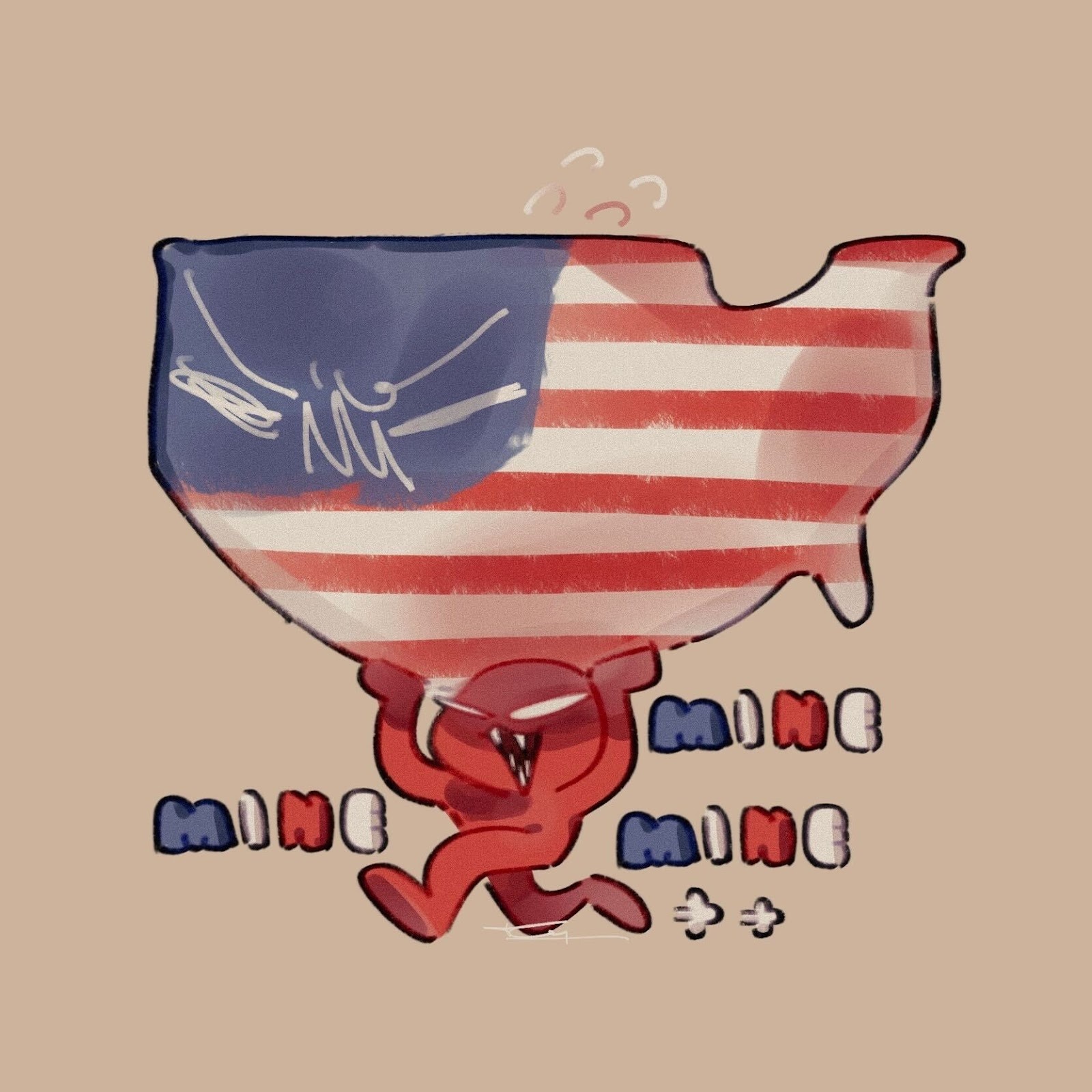
What makes these actions especially troubling is Trump’s fixation on attaching his name to federal institutions and rewriting the narrative of American history in his own image, which reflects the epitome of the nationalist identity. This form of self-branding mirrors what authoritarian leaders, such as Benito Mussolini, Adolf Hitler, Joseph Stalin or Vladimir Lenin, have done in the past to legitimize their legacy through constant public displays and place them on a pedestal above the nation and the people. Trump’s renaming actions exemplify a similar intent.
Authoritarian leaders in the past have, similarly, renamed civic spaces after themselves and the empires they claim to have single-handledly built. Along with the street Viale Benito Mussolini and a town dubbed Mussolinia, Mussolini named Foro Mussolini, the sports and architectural complex now named the Obelisco del Foro Italico, after himself. Hitler renamed many public squares and bridges to honor himself, such as Adolf-Hitler-Platz and Adolf-Hitler-Brücke. Stalin and Lenin, of course, imprinted their names across entire cities: Stalingrad and Leningrad. These examples are not meant to be casual comparisons, nor as claims that Trump is identical to these figures. However, renaming buildings and places has stood as a way for authoritarian figures to institutionalize their power and saturate it into public spaces.
Though it is not a good look for Trump, this behavior is hardly unprecedented for him. Just in the past year, he has casually rebranded the Gulf of Mexico as the Gulf of America, renamed the Department of Defense to the Department of War, and even tried to incorporate First Lady Melania Trump’s name into the Kennedy Center Opera House to signify that he, Donald Trump, is such a transformative and predominant figure to the United States that these national institutions should honor his and his family’s legacy.
It does not stop there. His ongoing, relentless pursuit to achieve a Nobel Peace Prize stands as his next symbolic display of power. Now, more than ever, supporters of Trump repeatedly insist that he “deserves” the prize, with Trump himself claiming that he single-handedly ended up to seven wars since returning to the White House for a second term. This is not a matter of determining whether or not Trump deserves a Nobel Peace Prize, but rather a matter of his fixation and persistence on having one awarded to his name.
A Nobel Peace Prize is awarded because others judge someone worthy of it, as something given in recognition of a meaningful achievement. And for most presidents, this legacy is something that is earned indirectly as a result of their leadership, and it is usually evaluated decades later. However, with Trump seeking to receive immediate praise now, it just seems he wants to project his perceived personal greatness, which doesn’t make it a fitting award.
Yet, Trump has been consumed with visual displays of his power, such as these, and what he cannot achieve in historical praise, he attempts to manufacture through branding. Even before becoming president, Trump licensed his family name on Manhattan skyscrapers like the Bank of Manhattan Trust Building and the Gulf and Western Building, making them into the Trump Building and Trump International Hotel and Tower. By renaming public property, he extended the Trump brand into the American civic space. In other words, it’s self-marketing.
Respected American presidents in the past did not intentionally rename multiple institutions — especially after themselves. Abraham Lincoln did not rename the Capitol. Franklin Roosevelt did not demand that the Washington Monument become the Roosevelt Monument. Dwight Eisenhower did not insist that the Pentagon bear his name. Instead, they earned their legacies and their name being on any institution that is now held in the United States.
When a president assigns their name to a national institution, it goes from being a public space to a method for them to exalt their image. That is where the danger lies: in a democracy, the president should stand with the state, not as a sovereign leader.
As it is, Trump fixating so heavily on attaching his name to federal institutions, buildings and symbols as a way to propel his personal image is concerning. Even if Trump does not rise to the level of many historical authoritarian regimes, overlooking the significance of his efforts to expand his personal power would be naïve. His renaming efforts reveal his intentions to frame the success of the U.S. in his legacy, and it is far from being a democratic move.
These renamings are strategic attempts to assert influence and shape how the public remembers him long after his presidency. In the words of Nameistry CEO Shannon Murphy, “Naming gives you control.”
Julia Kremenetsky is an Opinion Staff Writer. She can be reached at jkremene@uci.edu.
Edited by Rebecca Do and Riley Schnittger

Julia Kremenetsky is in her final year majoring in Political Science! She is an Assistant Opinions Editor for the 2026-27 year. Since joining in April of 2025, she has written stories ranging political issues, social media and trends, current events, and more. Outside of the New U, Julia loves spending time with her dogs, spending time in nature, and watching YouTube video essays about obscure topics.