

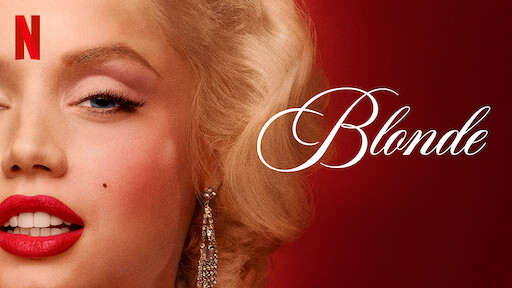


Netflix released their highly anticipated film “Blonde” on Sept. 28. Directed by Andrew Dominik, the film is a fictionalized biopic of the late actress Marilyn Monroe and is inspired by the novel of the same name written by Joyce Carol Oates. While the film and the book are both strictly fictional and not actual accounts of Monroe’s life, they promote an inhumane, sexualized, and desensitized version of the late actress. They prevent the world from truly learning about and appreciating the real Marilyn — the one who was a lover of the arts and literature, who loved to cook for her friends and family, who fought for equal pay in Hollywood, and the second woman to own a production studio. Monroe is portrayed by Ana de Armas, who is placed in the most artistic and cinematically beautiful shots, which are juxtaposed with brutal abuse, assault, and ridicule by a herd of men.
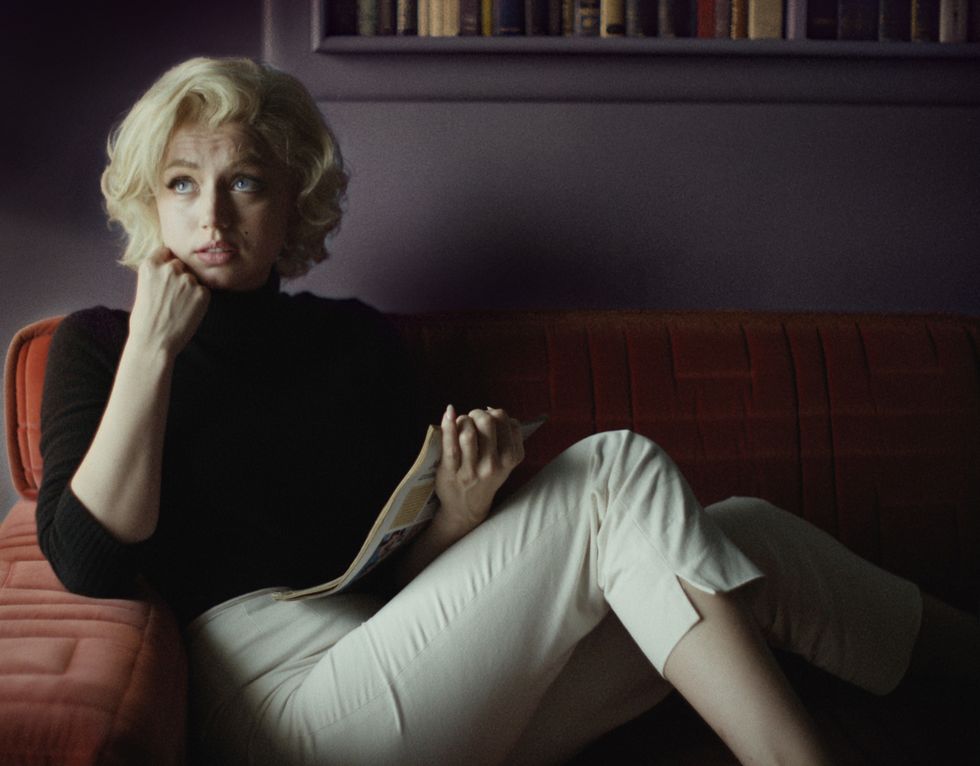
The film commences with a young Norma Jeane (Lily Fisher) — Monroe’s birth name — being verbally and physically abused by her mother, Gladys Pearl Baker (Julianne Nicholson). She submerges her daughter in hot water until young Norma manages to break free and escape to the apartment of her neighbor, Miss Flynn (Sara Paxton). The film then completely shifts to Monroe as an adult being sexually assaulted by a movie producer, who is allegedly the 20th Century Fox studio head, Darryl F. Zanuck. Throughout this grotesque scene, Monroe’s sensual song, “Every Baby Needs A Da-Da-Daddy,” plays in the background as if it is a sexy and intriguing scene rather than a violent one. This scene completely diminishes all the strenuous work she put into starting her career in the sexist world of Hollywood in the early 1950s, especially since afterward, the producer states that she does not need to read for the role as it had already been given to her.
The film sadly continues to show Monroe being repeatedly abused in every scene without any context or reason. For instance, when Zanuck sexually assaults her, there are no further explanations, repercussions, or sentiments from Monroe. The film then enters into another nonsensical scene. This can also be seen later in the film when Monore’s second husband, an ex-athlete (Bobby Cannavale), ferociously and animalistically attacks her after she films one of her most well-renowned scenes: her standing on top of the unmarked subway grate wearing a flowy white dress. The film then shifts, amidst the abuse, to her reading for another potential acting project. It is never shown how Monroe dealt with these traumatizing and damaging situations, or how she managed to overcome them and continue with her career. Monroe’s portrayal and constant suffering makes it seem as if Dominik and other men enjoy watching women suffering on-screen, which crosses all boundaries and conveys the film as a near-pornographic one instead of one that depicted Monroe as the true icon she is.
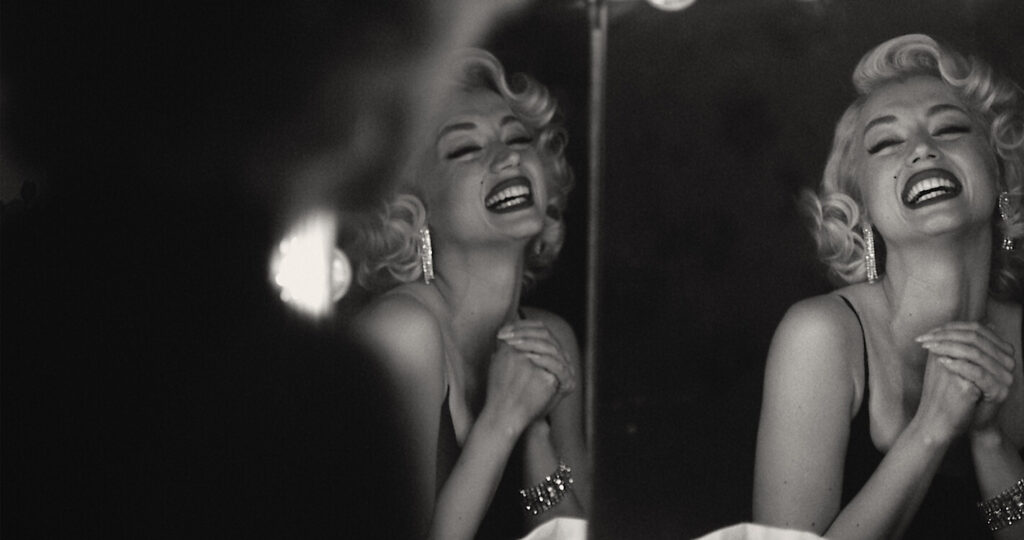
Aside from completely erasing Monroe’s real persona, this fictionalized biopic also manages to make the film completely about the men in Monroe’s life. The entirety of the film is almost solely focused on her latest love interest. It is only when she is free and single that the film ends, implying she is lesser than the terrible men that she encountered throughout her life.
The film centers around three of Monroe’s romantic relationships during her career. Her first relationship at the beginning of the film is with Charlie “Cass” Chaplin Jr. (Xavier Samuel) and Edward “Eddy” G. Robinson Jr. (Evan Williams). While their polyamorous relationship is brief, the film contains multiple explicit, sexually graphic scenes where all three of them are intimate. Initially, this appears to be a genuinely loving relationship, since they appear to truly care for one another. Monroe later excitedly announces that she is pregnant but undergoes an abortion to star in “Gentlemen Prefer Blondes.”
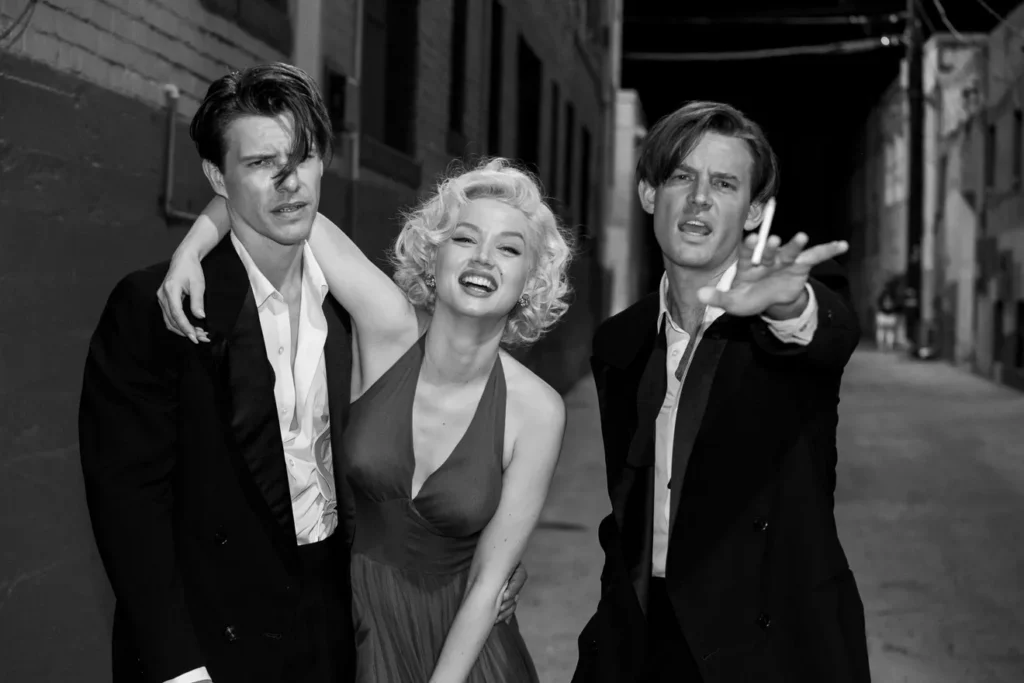
Prominently after one strenuous relationship ends, she is thrown into the arms of another man — a mysterious ex-athlete with a stagnant personality who speaks few words. He is presumably meant to be Monroe’s second husband, former baseball player Joe DiMaggio. Monroe appears tense and uncomfortable during their time together as a couple, which foreshadows the horrifying relationship to come. When Monroe’s ex-partners Cass and Eddy come back into her life, it is only to financially exploit her new husband with nude photographs of her.
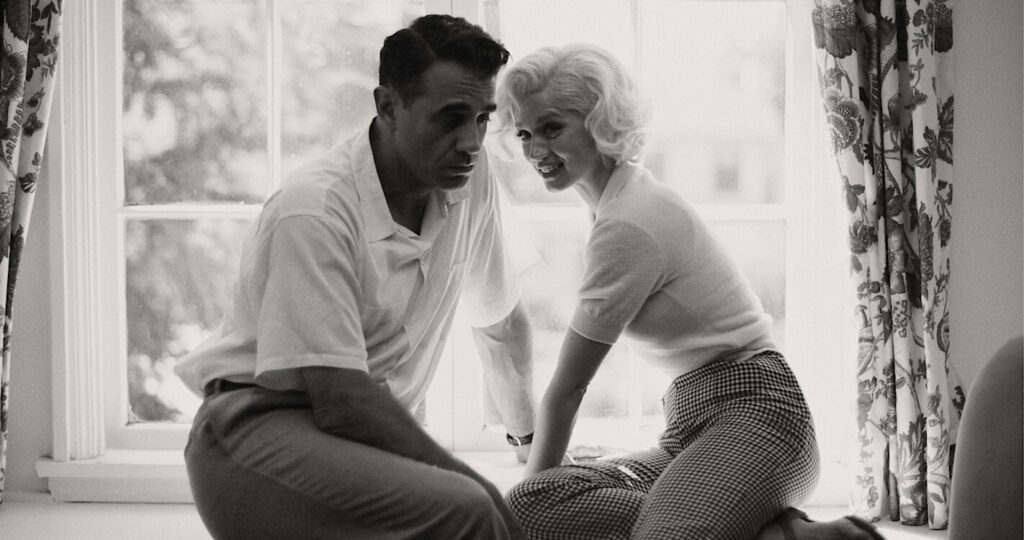
Monroe then has another short-lived but painful romance with playwright Arthur Miller (Adrien Brody) that resulted in three miscarriages. Her last relationship, which concludes the film, is with the president who is meant to be former President John F. Kennedy (Caspar Phillipson). This relationship consists of an extremely foul, grotesque, and violating scene that shows Monroe engaged in eerie, uncomfortable, and non-consensual sexual activities.

Overall, this film is critically insulting and immensely difficult to watch. With the film being three hours long, the extremely violating and dehumanizing portrayal of such an incredible woman will continue to haunt the thoughts of viewers. Despite the film’s continuous attempts to proclaim that the story is about Norma Jeane, Monroe’s character claims, “Marilyn doesn’t exist. When I come out of my dressing room, I’m Norma Jeane. I’m still here when the camera is rolling. Marilyn Monroe only exists on the screen.”
The real Norma Jeane is never shown. She is not once shown to be smiling or happy. The camera is rolling, but viewers can only see the disturbing fantasy of the male-curated version of Marilyn Monroe —the one the media invented, sexualized, and objectified. The media took complete advantage of her during her life and continues to profit off her name by producing harmful biopics that completely fail to honor her respectfully and accurately.
While the film is centered around the extravagant life of one of America’s biggest celebrity icons, the real Marilyn Monroe was never truly seen. The real Norma Jeane was never truly seen.
Monica Gomez is a Contributing Writer for the 2022-23 school year. She can be reached at gomezmc1@uci.edu.

Interested in becoming an intern or a contributing writer for the Entertainment section?
Contact us at entertainment@newuniversity.org!