

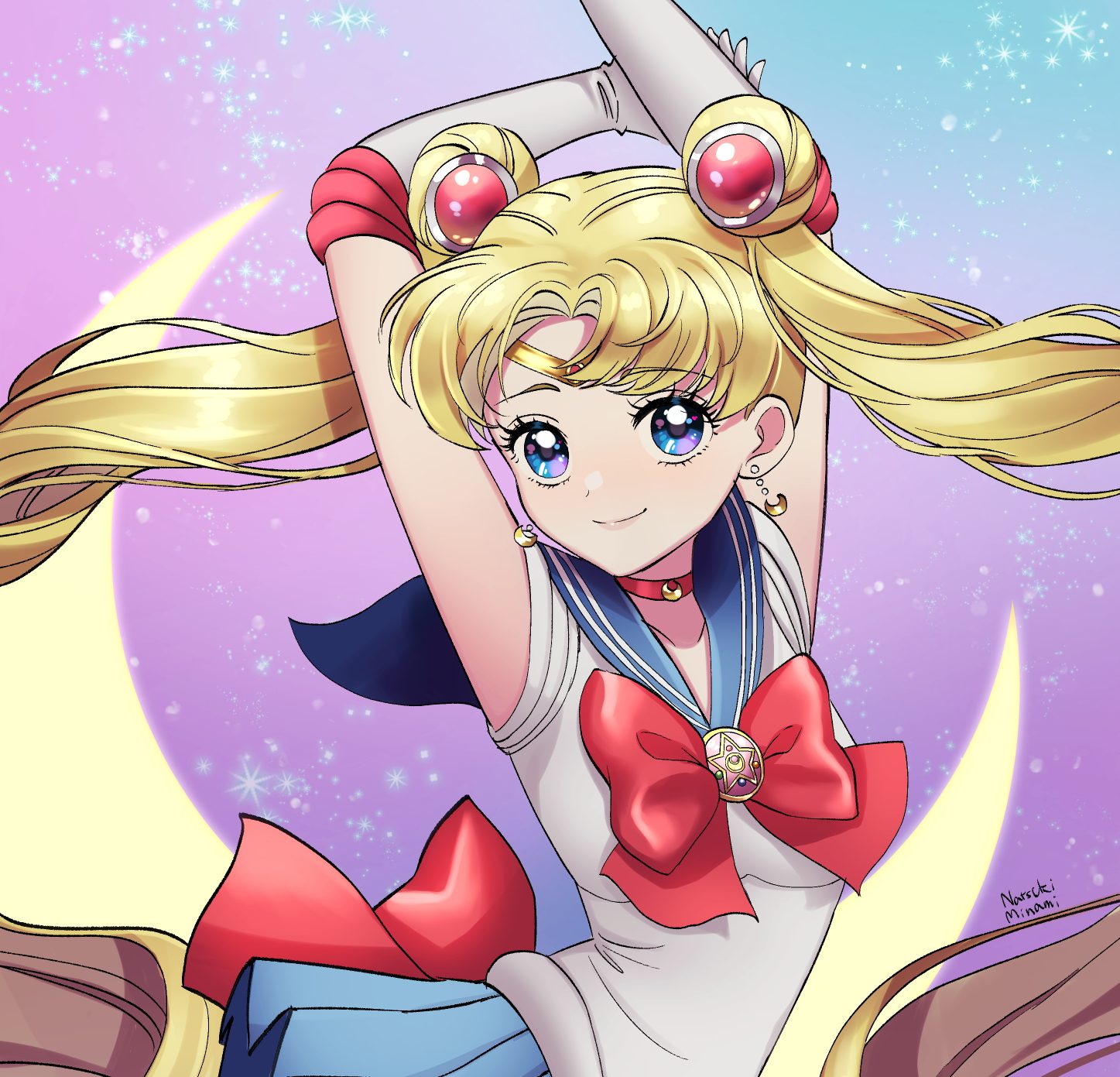


The first episode of the popular Japanese anime series “Sailor Moon” aired on March 7, 1992. Since then, the show has successfully amassed a large fandom around the world, becoming one of the three main pillars of Japanese anime alongside “Pokemon” and “Dragon Ball Z” in late 1990s America.
Plot
“Sailor Moon” is about a clumsy, crybaby girl known as Usagi who meets a cat named Luna that tells her that she is actually a magical warrior known as Sailor Moon and must defeat an evil sorceress known as Queen Beryl. Along the way, she meets various friends who help her in her quest, such as intelligent female fighter Sailor Mercury, Shinto shrine priestess Sailor Mars, tomboyish girl Sailor Jupiter and Sailor Venus, who already has a career fighting villains as “Sailor V” along with her own cat, Artemis. Collectively, they are known as the Sailor Guardians. Usagi also has a boyfriend named Momoru who usually tries to help the heroes as “Tuxedo Mask” by posing as a mysterious figure who not only gives motivational speeches to the girls but also helps distract the villains.
In terms of its episodes and story structure for its five seasons, “Sailor Moon” is formulaic. The seasons are centered around evil villains who want to capture some sort of supernatural energy for nefarious purposes. As the villains target corrupt humans and turn them into monsters by taking advantage of their anxieties, desires and fears, it is up to Sailor Moon and her friends to fight off these monsters.
Sailor Moon’s battles are similar to the fighting scenes depicted in “Power Rangers,” but they include more magical powers and less punching. Moreover, both are team-oriented shows featuring color-coded characters licensed by Toei, a famous Japanese company founded in 1948 known for producing both live-action and animated media, usually with a toyetic mindset.
Changes and Versions
In subsequent seasons, many additional characters are introduced. These include Chibi-Usa, Usagi and Momoru’s daughter from the future, athelete Haruka and violinist Michiru, a lesbian couple and boyband lead singer Seyia, Usagi’s new love interest in season 5. All of these characters become new heroes who help Usagi.
The series also has many different villains, each with their own gimmick. After defeating Queen Beryl and her group of mineral-based royalty, the Sailor Guardians fight the Black Moon Clan, a family of gem-based sorcerers, the Death Busters, the Dead Moon Circus, and the Shadow Galactica.
While there are multiple versions of the series, each comes with slight variations. For instance, the original 1992 anime has 200 episodes, with most of those consisting of nonessential “filler” plots. On the other hand, both the manga and the 2014 anime — known as “Sailor Moon Crystal” — have cut the plot down to about 50 episodes, containing only those storylines that are important to the overall plot.
In addition to the many versions of the show, American companies have also altered the franchise in many ways. The first attempted — and failed — version of the show was a 1993 version by Toon Makers. This version would have featured the Sailor Scouts as a multiethnic force who spent their civilian lives in live-action and fighting monsters in an animated form. The fandom referred to this version as “Saban Moon” because it was intended to resemble “Power Rangers” and be pitched to the animation company that created it, Saban Entertainment. However, it was eventually deemed too expensive to produce, and a dub of the original anime was created instead.
The job of dubbing the anime fell to Dic Entertainment with a Canadian cast, resulting in several notable changes.
First of all, most of the characters’ names were changed— Usagi became “Serena,” Momoru became “Darien” and Ami became “Amy.” Many episodes and aspects were also edited for cultural and content standards. In the first episode, Serena eats her sorrows with donuts after getting a bad grade on a test whereas in the original, she eats dumplings.
This dub also added in moral segments known as “Sailor Says,” which were short public service announcements that were vaguely connected to the episode. This dub went on for two seasons, airing initially in syndication before Cartoon Network’s Toonami block began broadcasting it. Because the Toonami showings were a success, they eventually commissioned Toei Animations’ North American branch Cloway to dub subsequent seasons.
With a new cast, the Cloway dub covers seasons three and four, though they kept the name changes that were established in seasons one and two. Perhaps most infamously, this version of the anime censored Sailor Neptune and Sailor Uranus’ lesbian relationship and turned them into cousins. Unfortunately, after the season four dub was released, the license ran out and Season 5 would not be dubbed for 13 years.
When Viz Media took over the license in 2014, audiences enjoyed easier access to the Japanese original, a North American release of “Sailor Moon Crystal” and a new, less-censored dub. This version featured many anime luminaries, such as Cristina Vee as Rei and Veronica Taylor as Sailor Pluto.
Being a popular anime, it is no surprise to find out that “Sailor Moon” spawned countless merchandise. During the anime’s initial run in syndication and Toonami, various merchandise were sold including dolls, soundtrack albums and a translated version of the manga. Coinciding with the manga’s re-release in 2011 and the revised anime dub in 2014, Toei licensed more merchandise to appeal to the franchise’s adult fanbase, such as swimwear, jewelry and mugs.
“Sailor Moon” evidently popularized the magical girl genre. Not only did it gain fame in America, introducing the country to shojo anime, series targeted towards young females, but its influence can be seen today in shows like Toei’s Precure, which has a similar structure and character archetypes.
Bailey Kanthatham is an Entertainment Contributing Writer. He can be reached at bkanthat@uci.edu.

Interested in becoming an intern or a contributing writer for the Entertainment section?
Contact us at entertainment@newuniversity.org!