

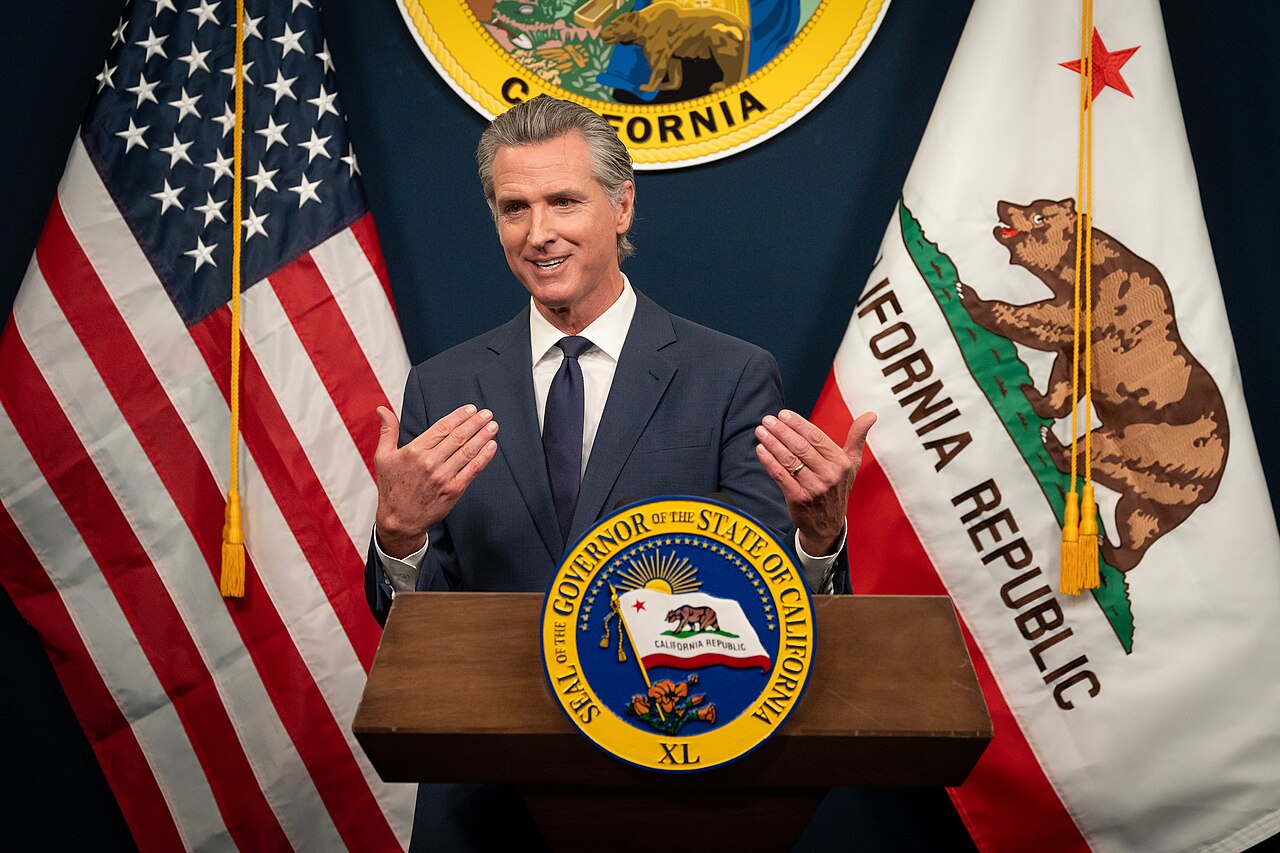

Gov. Gavin Newsom signed executive order N-5-26 to regulate artificial intelligence implications prior to California government contracts, emphasizing public safety and misuse, on March 30.
This order requires entities who wish to conduct business with the California state government to explain their AI usage and policies to prevent the distribution of illegal content, violations of civil rights, discrimination and harmful bias.
The main feature of this order is its focus on AI procurement. This allows for regulation of what AI models are purchased or contracted which ensures safety prior to implementation.
According to the order, this allows government officials to avoid technologies that disseminate illegal content, including “child sexual abuse material and non-consensual intimate imagery.”
The executive order requires that errors and biases are monitored over time, even after state approval, to ensure long term accuracy.
In a statement released by the office of Gov. Gavin Newsom, California houses 33 of the top 50 private AI companies worldwide. The state also leads in AI job opportunities and global funding.
In February 2025, Newsom launched Engaged California –– the country’s first digital democracy platform where Californians are encouraged to have “honest, respectful discussions on important topics.” The platform started out as a pilot program in response to the Eaton and Palisades wildfires in Los Angeles and continues to serve as an online community for the residents of California to interact and engage in conversations regarding government services and policies.
“After years of development, I am excited to launch this new pilot program to help create a town hall for the modern era –– where Californians share their perspectives, concerns and ideas geared toward finding real solutions,” Newsom said in a statement alongside the launch of the platform.
The executive order mentions that Engaged California will now be used to assess statewide responses to AI. This will allow legislators to gauge the public’s response to AI impacts in different areas, like the workforce. It provides Californians a direct opportunity to provide feedback on their experiences and input on how AI should be used in government.
The executive order also mentions the development of an AI-powered website or application pilot to provide Californians easy access to organized government services organized by life event, such as “disaster relief, starting a business, and finding a job.”
Additionally, the order requires departments and agencies to watermark AI generated videos and images to limit the spread of misinformation. This will help the public’s awareness and exposure to AI-generated content and generative AI capabilities.
“California leads in AI, and we’re going to use every tool we have to ensure companies protect people’s rights, not exploit them or put them in harm’s way,” Newsom said in a statement. “While others in Washington are designing policy and creating contracts in the shadow of misuse, we’re focused on doing this the right way.”
Ayeza Shaur is a News Intern for the Spring 2026 quarter. She can be reached at ashaur@uci.edu.

