

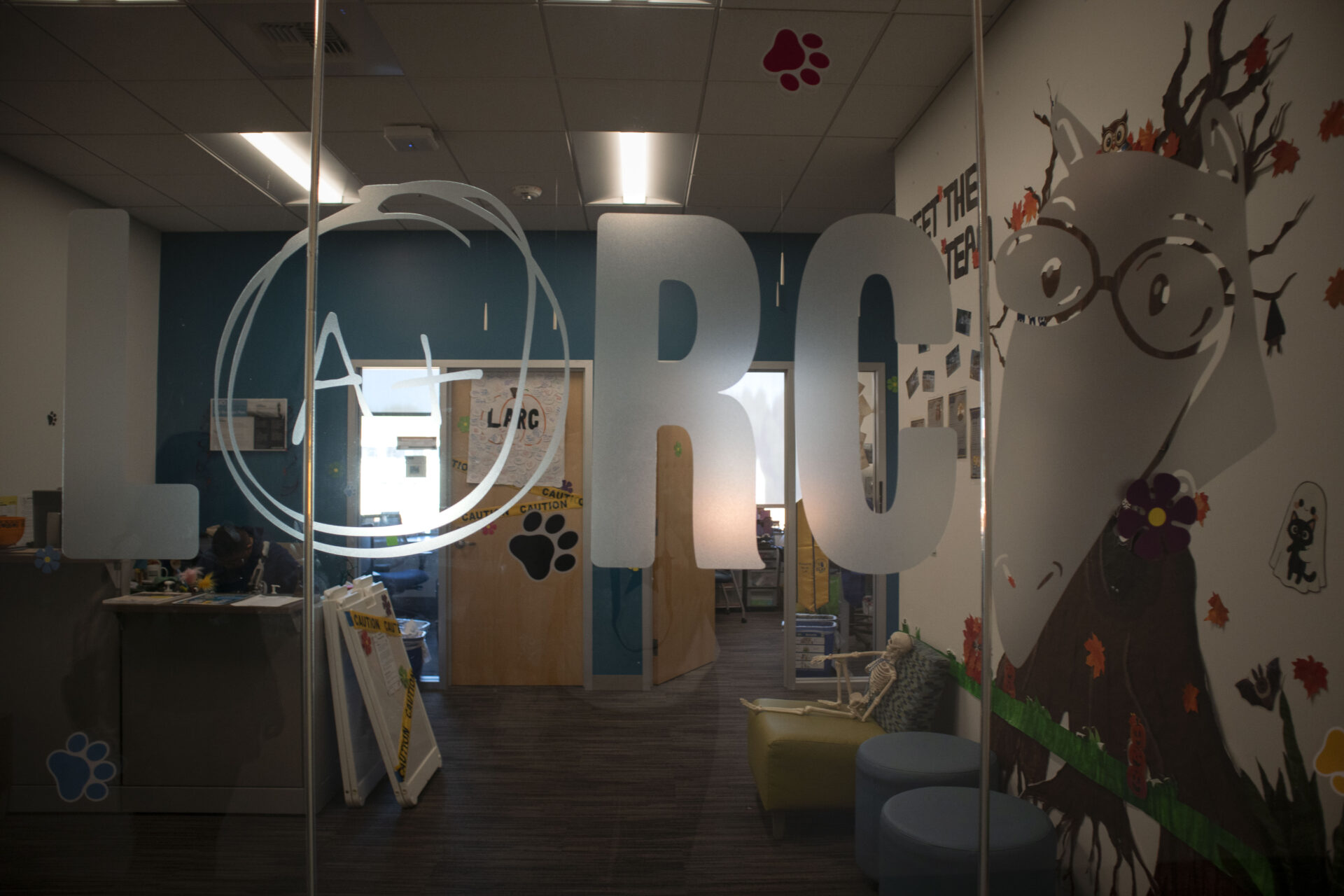

The Learning and Academic Resource Center (LARC) will transition into the Undergraduate Learning Hub beginning in summer 2026.
The new Undergraduate Learning Hub will move away from “specialized, quarter-long LARC tutorials to a campuswide center for learning excellence,” according to a ZotMail announcement released by the Division of Undergraduate Education (DUE) on Feb. 25.
The LARC currently provides supplementary instruction or tutorials, drop-in tutoring, workshops and consultations focused on improving students’ academic skills and leadership development.
Following the transition, school-based tutoring programs will replace current LARC tutorials. Instead, the Hub will be focused on training tutors on tutoring quality, coordinating tutoring efforts and promoting academic skill building “across the university,” according to the ZotMail announcement.
The change to the Undergraduate Learning Hub marks the end of LARC in its current configuration. The center was first established in 1975 as the Learning Skills Center and celebrated its 50th anniversary last year.
Decreasing demand for paid tutorials following the pandemic — alongside resource constraints — motivated the changes to LARC.
“The LARC model for tutorials is known as supplemental instruction (SI). SI is resource intensive but shown to be effective for student outcomes,” LARC Director Trace Yulie told New University via email. “But we also provide free drop-in tutoring, academic coaching, training and consultation for other program leaders across campus.”
According to Yulie, improved student engagement, feedback and strong outcomes for these no-cost programs supported a move away from under-enrolled tutorial sessions.
“The specific transition away from SI is based on participation and resource considerations. The primary driver of the transition is [the low] student engagement with tutorial groups, which has dropped significantly since 2020,” Yulie said. “The budget for these groups is dependent on student fee-for-enrollment. We have elected not to increase the fee for those groups, and instead the Division of Undergraduate Education has absorbed the true cost.”
LARC tutorial leaders have also seen changes in enrollment, expectations and paid hours.
“I think that in recent years, the demand for LARC has been going down. I think that that’s a big reason why it’s being transitioned into a new format,” Julia Hernandez, a LARC leader and fourth-year microbiology and immunology and economics major, told New University.
Hernandez said that LARC leaders were no longer required or paid to attend their associated course lectures at the start of the 2026 winter quarter. Despite this, many LARC leaders who are passionate about their tutoring attended lectures anyway to better support their students.
“A lot of leaders have stopped going to lectures, but I know one of my coworkers still continued to go, even though he was not getting paid for that time, just because he was extremely passionate about the job,” Hernandez said.
In addition to budget concerns, the presence of school-based tutoring programs and an effort to standardize tutoring quality and training is another reason for the transition.
“One of the accessory reasons that they mentioned is that fact, like we’re going to kind of tear down LARC and we’re going to build a new one,” Hernandez said. “So that way every tutor gets those same resources and they’re all on the same level.”
School and student-run programs like the Economics Learning Center, the School of Biological Sciences Peer Tutoring program and the General Chemistry Peer Mentoring program have varying recruitment policies and training for tutors. LARC tutors must attend a dedicated University Studies (UNI STU) course in pedagogy when starting out. Similar to the Certified LA Program, UNI STU 175 gives LARC leaders formal instruction on small group instruction.
According to Yulie, the new Undergraduate Learning Hub will focus on providing tutoring standards, training and evaluation, assisting individual schools with their own tutoring programs to improve services at the university level.
“Tutor training and quality assurance are particular places where Hub expertise can save them a lot of effort,” Yulie said. “Specifically, starting in Fall 2026, the Hub will offer a peer tutor training course that tutors from across campus can take together.”
An advisory board of students, staff and faculty has been established for decision making and collective oversight over Undergraduate Learning Hub programming and training, according to Yulie. The Hub will still employ a small number of subject mentors and academic coaches to hold review sessions, exam study jams and skill-building workshops.
“For students, this means that while regular [LARC] tutorials will no longer be offered, other options will expand,” Yulie said.
Despite the recent lean budget, Hernandez said that LARC staff worked with what they had. Her supervisors extended one of her sessions in fall quarter into the final few weeks, even with it being under-enrolled.
“So [for a session] to break even is eight [students]. They close it only when it’s less than three. Because they want students to have that resource,” Hernandez said. “And they want us as leaders to have that working hour time because they know that things are expensive.”
LARC leaders were told of the transition to the Undergraduate Learning Hub in week two of winter quarter. They knew six weeks before the ZotMail announcement.
“I feel like it was definitely abrupt,” Hernandez said. “It was already evident to us that they were doing some budget cuts because the funding for this program, to my understanding, is declining. I think that LARC has been operating at a deficit for a few years.”
Budget issues for LARC are not new. The center was significantly downsized in 2011 after a budget reduction for the DUE forced the department to eliminate services provided by professional staff and reduce LARC’s peer tutoring operation. The cost of a LARC tutorial also rose in the 2012-13 school year from $80 to $100, drawing criticism and prompting a meeting between students and DUE leaders. The cost of a LARC tutorial this school year is $125.
As for the transition, LARC will continue to provide the same services for the rest of the school year. According to Yulie, a celebration of student staff contributions and LARC alumni will also be held in the coming months.
Continuing LARC student staff will be contacted with details about roles for the upcoming school year. This will be “including opportunities in school-based programs” Yulie said.
Hugo Lai is a News Staff Writer. He can be reached at hlai7@uci.edu.
Edited by Grace Hefner and Annabelle Aguirre

