

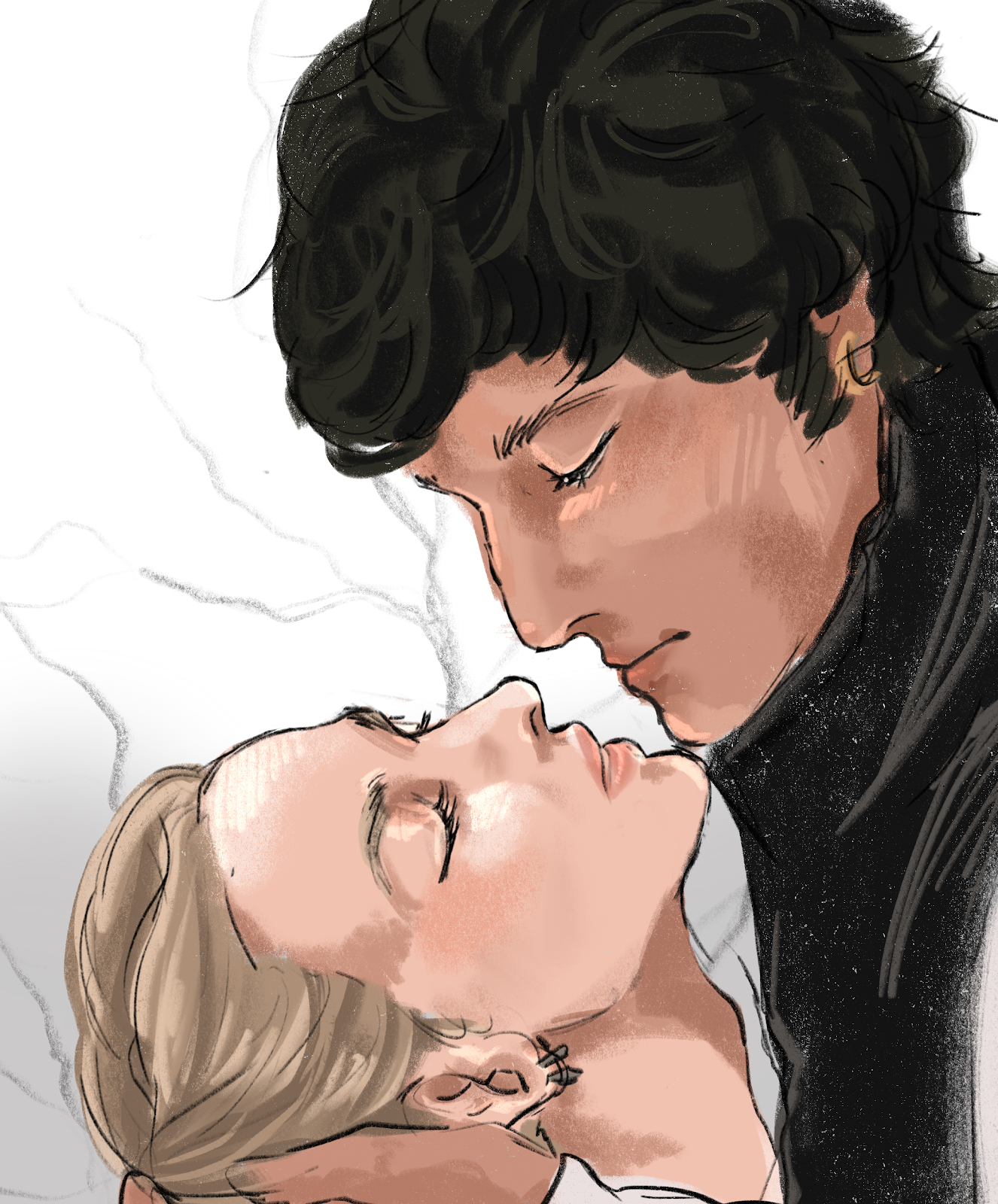

Director Emerald Fennell’s “Wuthering Heights” is lush with contemporary carnality and Charli XCX tracks. The film is an adaptation of Emily Brontë’s 1847 gothic romance novel of the same name and opened on Feb. 13. Fennell’s adaptation is making waves — especially raising the eyebrows of Brontë book purists.
The film immediately operates upon an angle of disorientation by establishing a tone of morbidity married with sexuality. The opening’s black screen accompanies audible creaking and groaning, which transports the minds of the audience to the gutter. As light enters the scene, the audience realizes a hanging is taking place. The town seems steeped in depravity, with children giddily drinking in the death of the man, and townspeople publicly participating in intimate affairs.
The narrative’s beginning focuses on a young Catherine Earnshaw in her home, Wuthering Heights. One day, her father Earnshaw brings home a young boy, whom she names Heathcliff. They form a bond, developing an intense loyalty to one another and vowing to never abandon one another.
After a time skip, Catherine, or Cathy (Margot Robbie) decides to marry the wealthy Edgar Linton — proclaiming to her servant Nelly that marrying Heathcliff (Jacob Elordi) would degrade her. Unbeknownst to her, Heathcliff overheard this but missed the portion where she confessed her love for him. Heathcliff makes off with a horse and disappears until they reunite five years later. Heathcliff is a wealthy, remade man, and Cathy is married and pregnant.
Their dynamic is turbulent; they constantly quarrel and play petty games, knowing precisely how to get a rise out of the other. However, their chemistry is palpable, albeit toxic. As they both acknowledge in the movie, ruin will lie in their wake if they choose to fully love each other. However, this boundary has the opposite effect, pulling the pair together onto a collision course by a magnetic force.
Perhaps the most disorienting thing about the film is its anachronisms. As soon as Cathy reaches the upper strata of society through her marriage to Linton, the film delves into a modern, and at times surrealist, aesthetic. From modern jewelry, sunglasses, cellophane drapes, and dresses to hand sculptures emerging from the walls, Linton’s estate feels akin to a present-day contemporary art museum. The film also refers to art history; when Cathy reunites with Heathcliff for the first time in five years, the imagery is likely a reference to “Wanderer above the Sea of Fog.” His well-tailored figure wields a cane and is shrouded in mist. At this point in the film, the couple mirrors the themes of the 1818 painting; they are embarking on unknown territory.
The strange contemporary elements and music represent the divide between Cathy’s childhood life and her adult one with Linton — one drenched in unimaginable riches. It signifies how she feels out of place in this new world, which she only embraces after the confirmation that Heathcliff left Wuthering Heights. In one scene where she visits her father, she looks like a misplaced, gaudy Christmas present in the drab, archaic surroundings of her former home.
Critique of the film typically surrounds Fennell’s aesthetic and period liberties, targeting the aesthetic historical inaccuracy, oversexualization of the narrative, and a white actor being cast as Heathcliff — whose race in the book is widely interpreted as ambiguous. In the novel, Heathcliff experiences discrimination for his dark skin, which signifies that he is not viewed or treated by society as a white man. The film adaptation also differs in that some characters are removed, and it only covers the content of the book up until Cathy’s death.
In response to the criticism, Fennell said that she focused less on being accurate to the book and more on capturing the essence of the story, the human feeling at the heart of the romance. In short, she explained that she directed the film in accordance with her own interpretation, which doesn’t nullify other readings.
While Fennell chose not to explore these racial implications in her take on “Wuthering Heights,” removing Heathcliff’s non-white identity disregards how the abuse he received being seen as racially “other” in Victorian society implicates his romance with Cathy and motivates his later vengeful actions. Fennell’s decision to cast Elordi changed Brontë’s portrayal of Heathcliff’s isolation, and erased a major plot device that drove the story — as it doesn’t make sense why a Heathcliff in the image of Elordi would be ostracized in “Wuthering Heights.”.
Nonetheless, one thing is uncontestedly certain — Fennell’s version will be the one solidified in history as the adaptation with its own original Charli XCX original soundtrack.
Tessa Kang is an Arts & Entertainment Staff Writer. She can be reached at tokang@uci.edu.
Edited by June Min and Joshua Gonzales

