

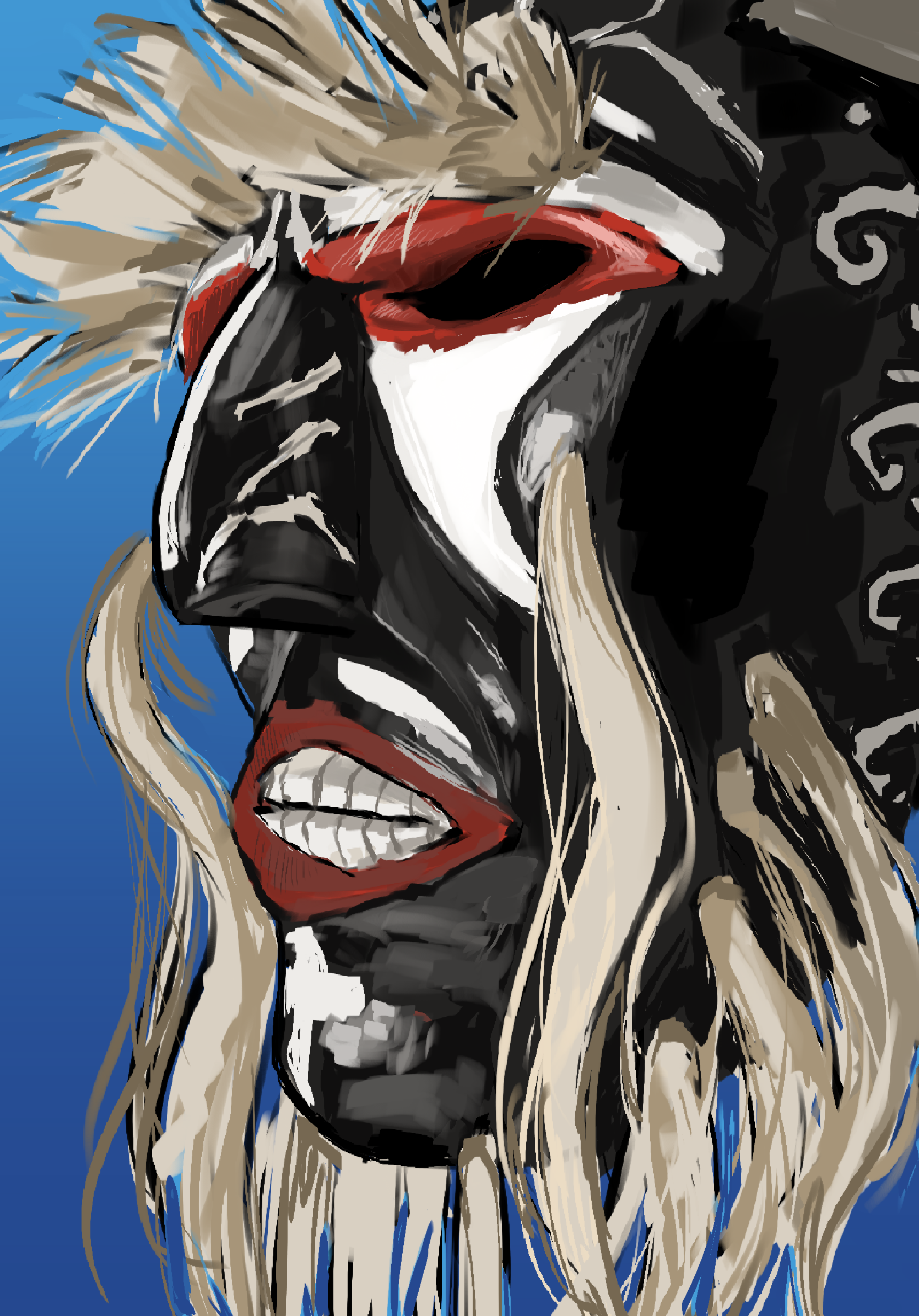

Dr. Adriana Briscoe, distinguished professor of ecology and evolutionary biology, hosted Indigenous artist Merced Maldonado in her insect ecophysiology class on April 7. Maldonado showcased different garments made with silkmoth cocoons and explained how they are used in pascola dances and within the Pascua Yaqui Tribe’s culture.
The pascola dance features ankle rattles made of the silkmoth cocoons that extend from the ankle to the knee. As the dancers perform, the sound of the rattling is accompanied by a harp and violin, while the dancers attempt to stay in rhythm with the musicians. At times, the musicians switch notes to throw the performers off. The performance also engages the audience, as members may throw money at the dancers’ feet. The dancer must then use their toes to pick it up and toss it toward the harp while continuing to dance — a difficult task.
Silkmoth cocoons have traditionally been used in similar dance rituals. The objects placed inside the cocoons to produce sound often hold a meaningful connection to the person wearing them.
“And so we can use stones from an ant hill, [and it] connects us to the stories of the ant people … We can give it a different meaning. We can bring in things from the ocean … for us to feel this ocean connection,” Maldonado told New University.
The silkmoths Maldonado incorporates into his art form are threatened by environmental changes, especially as more animal species face extinction. In response, Maldonado created eight gardens to grow and cultivate silkmoths. He uses the cocoons from these silkmoths as different accessories that introduce his audience to the species.
“So the moth that lives there and all the animals, they’re all going to disappear now, giving us a certain amount of time to go and uproot some of these plants and move them to a garden,” Maldonado said.
Despite his worries, Maldonado continues his work and hopes to pass it on to future generations, including his son and the students he speaks to.
“I’ve always thought about it as not, as they say, not on my watch. I’m not gonna let this die out on my generation, so I’ve been sort of passing the ball to the next generation. And now, hopefully they can do it better,” Maldonado said.
Maldonado began developing his gardens by educating himself about the moths. He initially took classes, learned how to care for them and reached out to an entomologist. He then created nurseries and collected cocoons, hanging them from a laundry-line-like contraption.
Through the process of tending to the moths, Maldonado and his son created art that reflects the moths’ life cycle and incorporates the cocoons into their work, teaching children and others.
Briscoe was excited about Maldonado’s work and the optimism it offered.
“I want to give my students hope about climate change. We don’t have to be helpless in the face of the loss of insects that are critical to the health of ecosystems and humans,” Briscoe told New University via email. “Maldonado embodies hope and forward-looking Indigenous thinking through his teaching of moth farming in relation to Yaqui cultural dances and in relation to other world cultures that incorporate silk moth cocoons in their dance traditions.”
Students also felt this experience shaped their understanding of ecosystems and underrepresented communities.
“I haven’t seen a culture utilize so much of nature, especially with how [he] collected the moth cocoons,” Jacob Lasao, a third-year physiology and exercise science student, told New University. “I was really engaged in what he had to say just because this was someone who I wasn’t expecting at all and he ended up being pretty touching, in what he does and what his life stories are.”
Daniarely Juarez is a Features Intern for the spring 2026 quarter. She can be reached at daniarej@uci.edu.
Aidan Wyrough is a Features Staff Writer for the spring 2026 quarter. He can be reached at awyrough@uci.edu.
Edited by Aditya Biswas and Geneses Navarro.

