

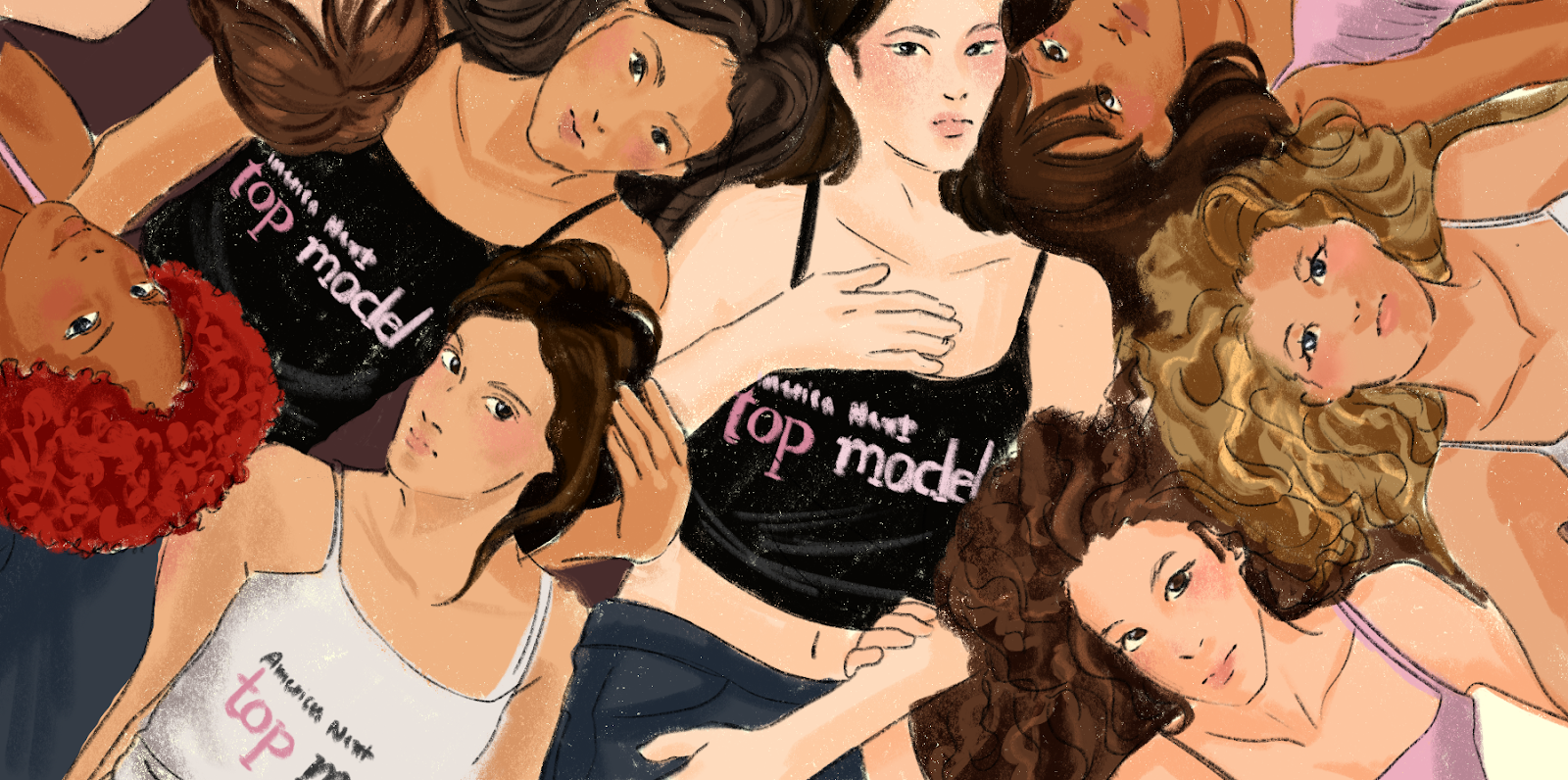

Nearly a decade after it last aired and about 20 years since its debut, “America’s Next Top Model” is back in public discourse — this time as an urgent docuseries rather than a primetime contest.
Netflix released “Reality Check: Inside America’s Next Top Model” on Feb. 16. Directed by Mor Loushy and Daniel Sivan, the three-part docuseries revisits the cultural impact and controversial legacy of the show created by supermodel Tyra Banks.
Banks envisioned the show as a fusion between the competition format in “American Idol” and the communal living style of “The Real World,” set against the backdrop of high fashion. She developed the concept with showrunner Ken Mok, and it was picked up by The United Paramount Network — the least-watched broadcast network at the time — after being rejected by every other network.
“America’s Next Top Model” first aired in 2003 and was celebrated initially for showcasing diversity in the modeling industry. The show prided itself on allowing aspiring models from different backgrounds and with body types to receive industry exposure and professional training — resources that would combat the rigid, harsh structure of the industry.
Additionally, the show introduced millions of viewers to runway challenges, high-concept photo shoots and the now-famous smize. Banks worked alongside a rotating panel of judges that included fashion industry figures such as Janice Dickinson, Nigel Barker, Miss J Alexander and Jay Manuel, whose critiques helped define the show’s often controversial tone.
The series ultimately ran for 24 seasons across three networks before ending in 2018 amid declining ratings, format fatigue and, most notably, mounting criticism over the treatment of contestants.
Here, Netflix’s explosive docuseries confronts the dark legacy the show left behind, as “America’s Next Top Model” had an extensive list of poor treatment of their contestants, such as forcing one to close her tooth gap and harsh comments on bodies that led to body dysmorphia and eating disorders
Over its three episodes, former contestants, judges and producers unpack a range of troubling moments that, in hindsight, raise serious ethical questions about how the show operated and what it asked of its participants.
One of the most unsettling revelations from the docuseries centers on former cycle two contestant, Shandi Sullivan.
The docuseries recounts an incident during their Milan trip that was originally portrayed on the show as a cheating scandal. In the original 2004 episode, audiences saw Sullivan — who had a boyfriend back home — drinking with male models, bringing them to the apartment and later having sex with one of them. This sequence was edited to suggest deliberate cheating and heightened drama. In the docuseries, what Sullivan describes sounds more like a sexual assault all caught on camera.
Sullivan details that she was heavily intoxicated and blacked out during the encounter while the cameras continued rolling and that everything that happened was “just a blur.”
“All I remember is him on top of me. I was blacked out,” she said in her interview. “No one did anything to stop it. And it all got filmed, all of it.”
The show even went as far as to include Sullivan’s emotional phone call with her boyfriend as she breaks the news to him — a private conversation that viewers should never have been a part of.
Producers and Banks, who served as an executive producer, defended the decision to film everything as part of the “America’s Next Top Model” experience, saying contestants were told the cameras would follow them at all times to document “the good, the bad and the in-between.”
Banks avoids taking responsibility for the traumatic sequence of events, instead offering a deflective response that sidestepped accountability.
“I do remember her story. It’s a little difficult for me to talk about production because that’s not my territory,” Banks said when asked about the incident.
“Reality Check: Inside America’s Next Top Model” also does not shy from revisiting its cultural and racial insensitivity.
The docuseries highlights how during 2020’s COVID-19 quarantine, people were looking for shows to binge, which brought “America’s Next Top Model” back into conversation. Variety explained that this cycle of viewers were “watching the show through the lens of post-George Floyd reckoning on race.”
Across its cycles, the show consistently had controversial photoshoots, including contestants posing as homeless alongside unhoused individuals, wearing raw meat and staging dead body crime-scenes. Most notably though, viewers began resurfacing the blatant racism in the show, such as race-swapping and Blackface photoshoots.
There were two infamous race-swapping photo shoots: in cycle four, contestants were made to pose as different races using makeup and wigs — a concept photographer Jay Manuel found troubling from the start but said Banks insisted wasn’t controversial — and once again in cycle 13, a decision Banks now acknowledges is deeply problematic when viewed through a modern lens.
The docuseries also highlights cycle one contestant Ebony Haith as she opens up about feeling discriminated against as one of the few Black women in her season and how she was blindsided when the show publicly outed her as a lesbian. Haith appreciated the show’s inclusivity as they showed her with her partner, which was rare for television at the time.
However, Haith was subjected to a damaging makeover that left her with three bald spots. The treatment carried clear racist undertones, as she was then stereotyped as “angry” and “difficult,” while Banks shamed her further for having “bumpy” skin and being “ashy” rather than offering care or support.
Yet, the series isn’t all criticism. Former runway coach Alexander — affectionately known to fans as Miss J — shares a deeply personal health struggle that wasn’t public knowledge before the docuseries. Alexander reveals he suffered a major stroke that left him in a coma for weeks and impaired his ability to walk and speak in late 2022. His emotional reflection provides one of the docuseries’s most humanizing threads while underscoring the complicated relationships formed behind the scenes.
Perhaps the most scrutinized presence in the Netflix docuseries is Banks herself.
Although she crafted the cultural phenomenon, she acknowledges little accountability. While Banks apologizes for the rampant body shaming and intense production choices, she defends the show’s initial attempts to shake up an industry often criticized for its narrow standards.
By the end of the final episode, she urges audiences to be as open to being called out as she is, blaming her problematic choices and the show’s failures as products of early 2000s culture.
The documentarians undermine Banks’s comment by cutting to cycle six winner Danielle Evans, who responds, “Girl, that is absolutely ridiculous. Perfect time to stop.”
Yet, Banks even teases the possibility of a cycle 25, signaling that “America’s Next Top Model” may not be finished — despite its past now facing renewed scrutiny.
“Reality Check: Inside America’s Next Top Model” arrives as audiences reexamine early reality television and the destructive impact it had on young participants. This Netflix docuseries is not just a look back at a pop culture phenomenon but a pointed reckoning of the blurred line between entertainment and exploitation.
Fiona Clancy is an Arts & Entertainment Staff Writer for the winter 2026 quarter. She can be reached at clancyf@uci.edu.
Edited by Corinna Chin and Annabelle Aguirre

