

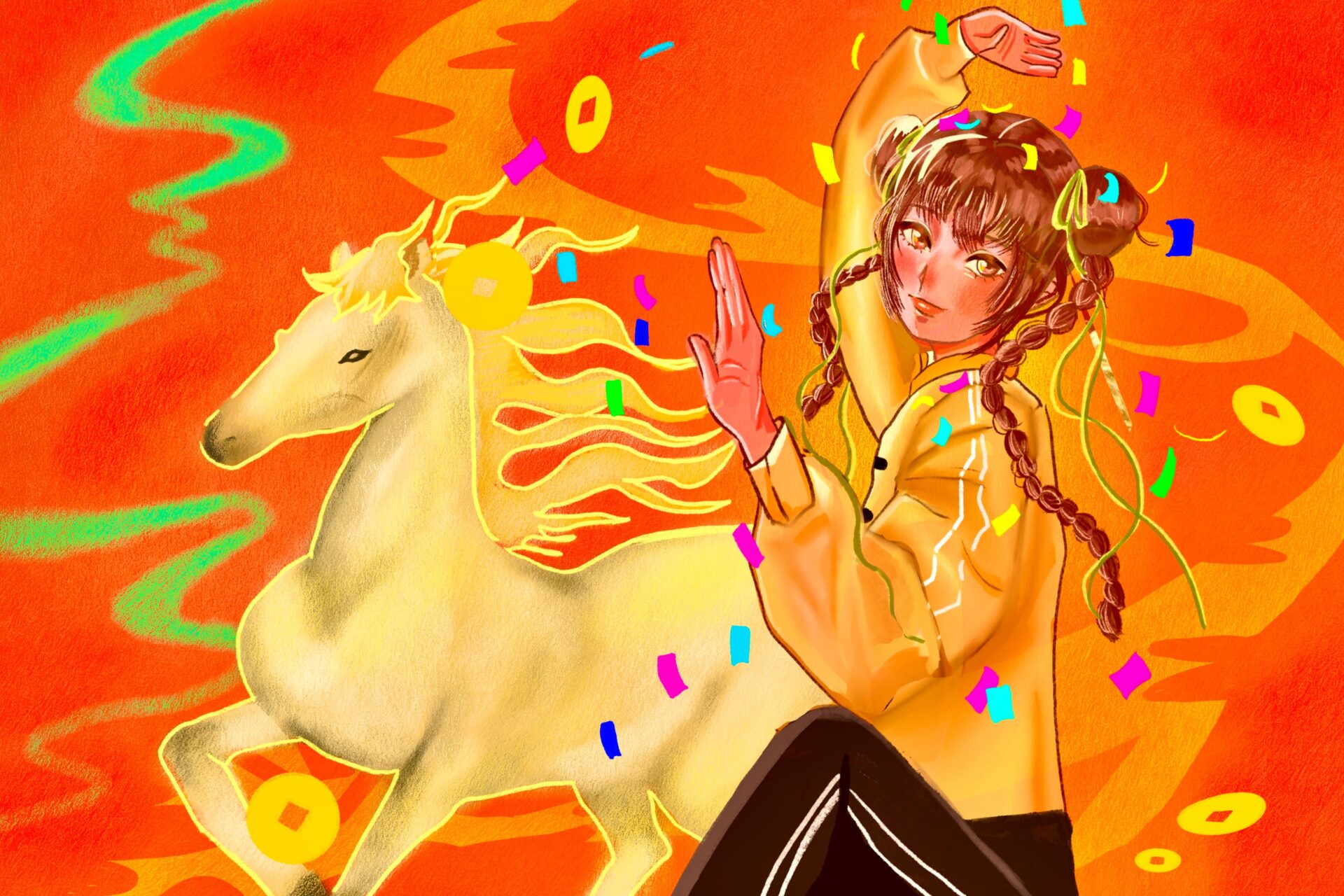


The landscape of “xinzhongshi,” also known as “New Chinese style” or “Neo-Chinese style,” continues to re-conceptualize traditional Chinese symbols through clothing and expand into visual representations of cultural renaissance. The innovative approach to fashion and trend embeds thousands of years of history into fabrics and sustains an ongoing dialogue that transcends time.
Multiple brands have released collections of apparel, accessories and toys to honor Chinese New Year 2026. Together, these initiatives demonstrate how heritage can be expressed across diverse realms of fashion and design.
Adidas Originals x CLOT
Incorporating mandarin collars, frog buttons and the signature stripes, the Adidas Originals x CLOT collaboration interweaves traditional Chinese elements with contemporary streetwear fashion — advancing Neo-Chinese aesthetics into the mainstream.
The viral collaboration between Adidas – the European athletic brand – and the Hong Kong-based streetwear label CLOT, celebrates the Year of the Horse for Chinese New Year 2026. It creates a fusion between cultural heritage and innovative symbolism through various motifs referencing the zodiac animal. The CLOT Track Jacket, for example, pays homage to the ethos of cinematic Chinese martial art while merging cultural memory and sports leisure.
The short and upright mandarin collar adds elegance to the jacket’s casual look while alluding to its cultural origins. The coil-shaped knotted buttons, known as “pankou” – or traditional knotted buttons – provide another distinctive detail to remind viewers of the garment’s deep ties to Chinese heritage.
Louis Vuitton
The French fashion house Louis Vuitton’s Lunar New Year Vivienne Reykjavik 2.0 Scarf features the brand’s iconic monogram pattern on a rich, red and plush cashmere base. The design is intricately adorned with the embroidered motifs of a flower and a fan, blending Chinese symbolism with luxury accessories. The scarf’s bold color reinforces its auspicious cultural association to the notions of luck and prosperity. It serves both as stylish luxury and winter essential, providing warmth during February.
Burberry
Creatively reimagining its equestrian knight motifs, luxury fashion brand Burberry highlights the Year of the Horse through a capsule collection. Vibrant metallic embroidery, cross stitch and appliquéd badges are anchored onto the vibrant red silhouettes as embellishments of good luck and prosperity. The ink-sketch prints showcase a horse’s vitality and bold movement, subtly blending a western brand icon with Chinese zodiac symbolism.
Pop Mart
The influence of Chinese New Year extends beyond fashion. The market-leading collectible toy company Pop Mart released the “Have a Good Run Series,” which curates blind-boxed plush pendants of some of their most beloved characters — including “CRYBABY,” “DIMOO,” “TWINKLE TWINKLE,” “SKULLPANDA,” “LABUBU,” “HIRONO” and “MOLLY” — all in celebration of the Year of the Horse.
The designs of the pendants’ straps are inspired by traditional Chinese knotting, serving both as a decorative element and as symbols of blessings for the year ahead. Each character is dressed in a horse onesie and named after hopeful phrases such as “Bright Future,” “Good Health” or “Rising Star.”
Lego
Popular toy company Lego’s “Galloping Horses Canvas” inspires children to learn about cultural traditions through a hands-on experience. Lego brick-built horses are positioned in front of a scroll-like printed canvas that presents ink paintings of galloping horses. The interactive Lego set depicts the visual effects of the horses leaping from the painting, creating a coming-alive moment to accentuate the themes of strength, good fortune and success.
Lego also released the “Fortune Master” set, which pays tribute to Chinese mythological god Caishen, the figure of wealth and prosperity that bestows riches to his followers. Historically, incense would be burnt to honor Caishen during the two-week Chinese New Year Celebration as people exchange greetings of “gongxi facai,” meaning “may you become rich.”
Through fashion, accessories and toys, xinzhongshi continues to reinterpret cultural essence while preserving collective memory as an evolving visual language. The movement redefines how heritage should be preserved, sparking discussion around how it can not only endure but thrive through the medium of consumer culture. It fosters pride and a sense of belonging within an ever-changing cultural landscape, reimagining the future through retrospection, while achieving unprecedented global relevance.
Eva Jia is an Arts & Entertainment Staff Writer. She can be reached at jiae1@uci.edu.
Edited by Riley Schnittger

Interested in becoming an intern or a contributing writer for the Entertainment section?
Contact us at entertainment@newuniversity.org!