


Discussions of childhood are a battleground in American politics. Every fight over a child is a fight over the future. In legislative debates, representatives have the power to define what truly harms a child. Specifically in recent Republican education politics, especially since 2021, “protecting the children” has been tied to opposition to “gender ideology” and “equity ideology” and the restriction of school policies seen as threatening. A 2025 White House release titled “President Trump is Protecting America’s Children” describes childhood protection through federal actions on education and school mandates. The question is: protection from what, by whom and from what kind of adulthood?
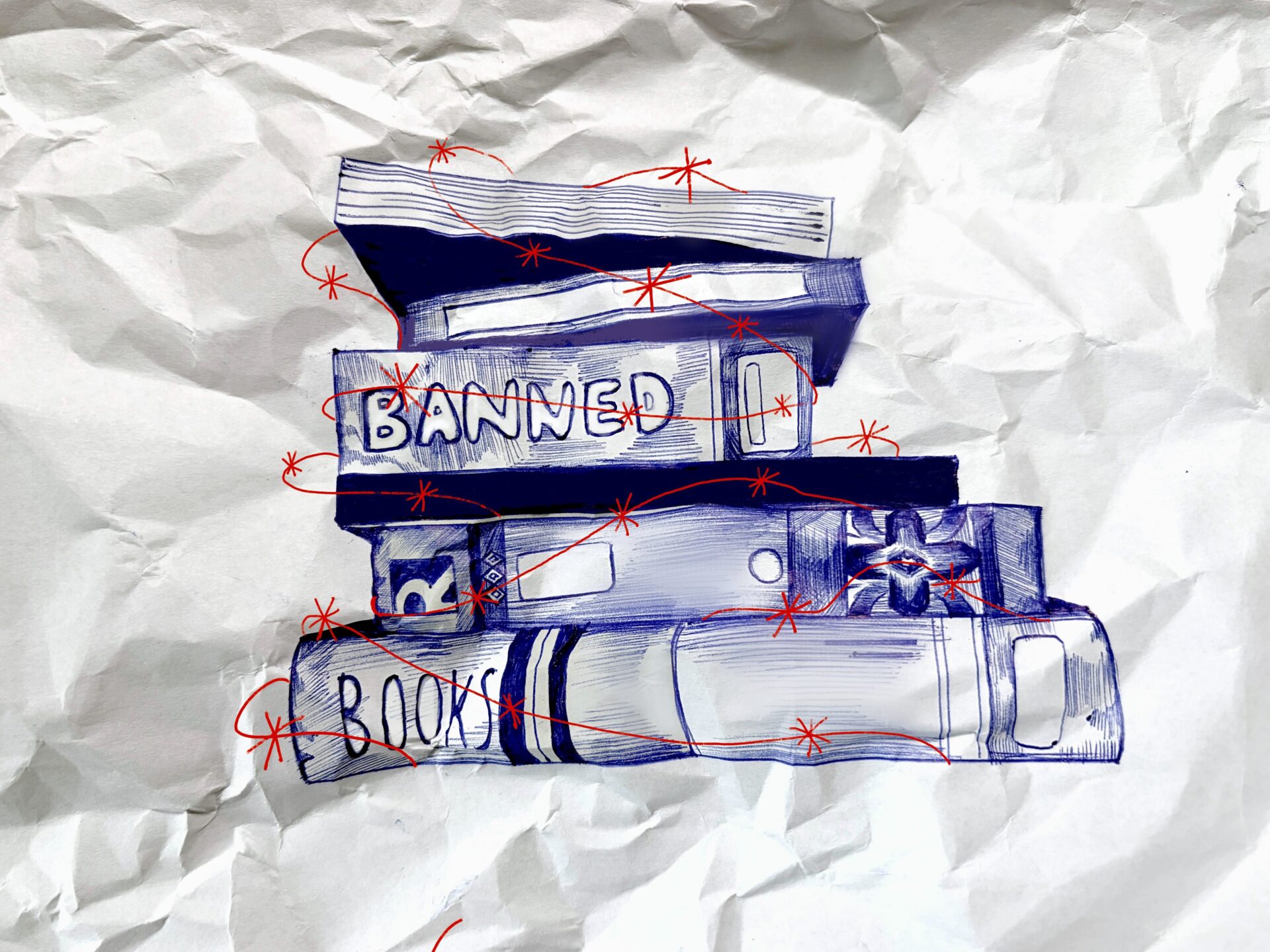
This conflict is visible in the ongoing national fight over the banning of books within public education. These debates are being framed as concern over age-appropriate material, but they can become broader campaigns over whose knowledge receives legitimacy and are deemed as appropriate. The voices that are treated as valid in public institutions shape a child’s view of the world, but are becoming narrower instead of allowing children to see a world beyond their own.
PEN America, a nonprofit organization whose goal is to protect “free expression in the United States and worldwide,” recorded 6,870 instances of school book bans during the 2024-25 school year across 23 states and 87 public school districts. This is a campaign to shape children’ s worlds. Access to reading material defines what holds value or danger because books give recognition to certain experiences and expand upon the range of lives students are allowed to encounter through education. Representation in children’s books shapes how students see themselves and others, allowing students to encounter lives beyond their own.
The American Library Association’s (ALA) data complicates the idea that book bans are an isolated parental concern. The pressure often reaches beyond one household. The ALA’s Office for Intellectual Freedom tracked 4,235 titles challenged in 2025, the second-highest number the group has documented. Of those titles, 40% represent the lived experiences of the LGBTQ+ and people of color. However, they also found that 92% of book challenges came from pressure groups and government officials, while less than 3% originated from individual parents.
When book challenges are presented as the response of the individual family, censorship appears protective. However, when the overwhelming majority comes from organized groups or public officials, the bans look more like an attempt to control public institutions under the ruse of family concern. The parent is the moral image of the movement. But the mechanics of legislating this is far beyond any single household. Innocence is rarely a neutral category, and is often a selective form of comfort, shaped around what certain adults would prefer children to remain unaware of.
The Supreme Court’s 2025 decision in the case titled Mahmoud v. Taylor shows how the politics of childhood moves into constitutional law. The case involved Montgomery County Public Schools in Maryland, which included LGBTQ+ themed storybooks in its elementary school English curriculum. Some parents objected on religious grounds and claimed that the district’s refusal to provide notice and opt-out access isolated their rights under the Free Exercise Clause of the First Amendment. The court sided with the parents in a 6-3 decision, giving families stronger grounds to seek opt-outs when classroom materials conflict with religious beliefs. A shared classroom depends on the idea that students will meet a world larger than their household, since a child who is shielded from difference may grow into an adult trained to mistake the unfamiliar for danger.
Children are protected when they have the intellectual tools to recognize the world. With judgement and empathy from books such as “Brown Girl Dreaming” by Jacqueline Woodson students can learn how race and language shape a child’s sense of self. Or through a novel such as Malinda Lo’s “Last Night at the Telegraph Club” — one of the most banned books of the 2024-25 school year — students can begin to understand how fear can shape communities while also developing the understanding to see identity as something lived under pressure rather than an issue of politics.
Safety has a place in schools, and age-appropriate teaching requires care. But care turns into control when difference is treated as danger. Book bans reveal a society trying to secure the future by narrowing what the future is allowed to know. The danger is that children will inherit a world they were trained to misunderstand.
Jacqueline Lee is an Opinion Intern for the spring 2026 quarter. She can be reached at jacquhl3@uci.edu.
Edited by Tracy Sandoval

