

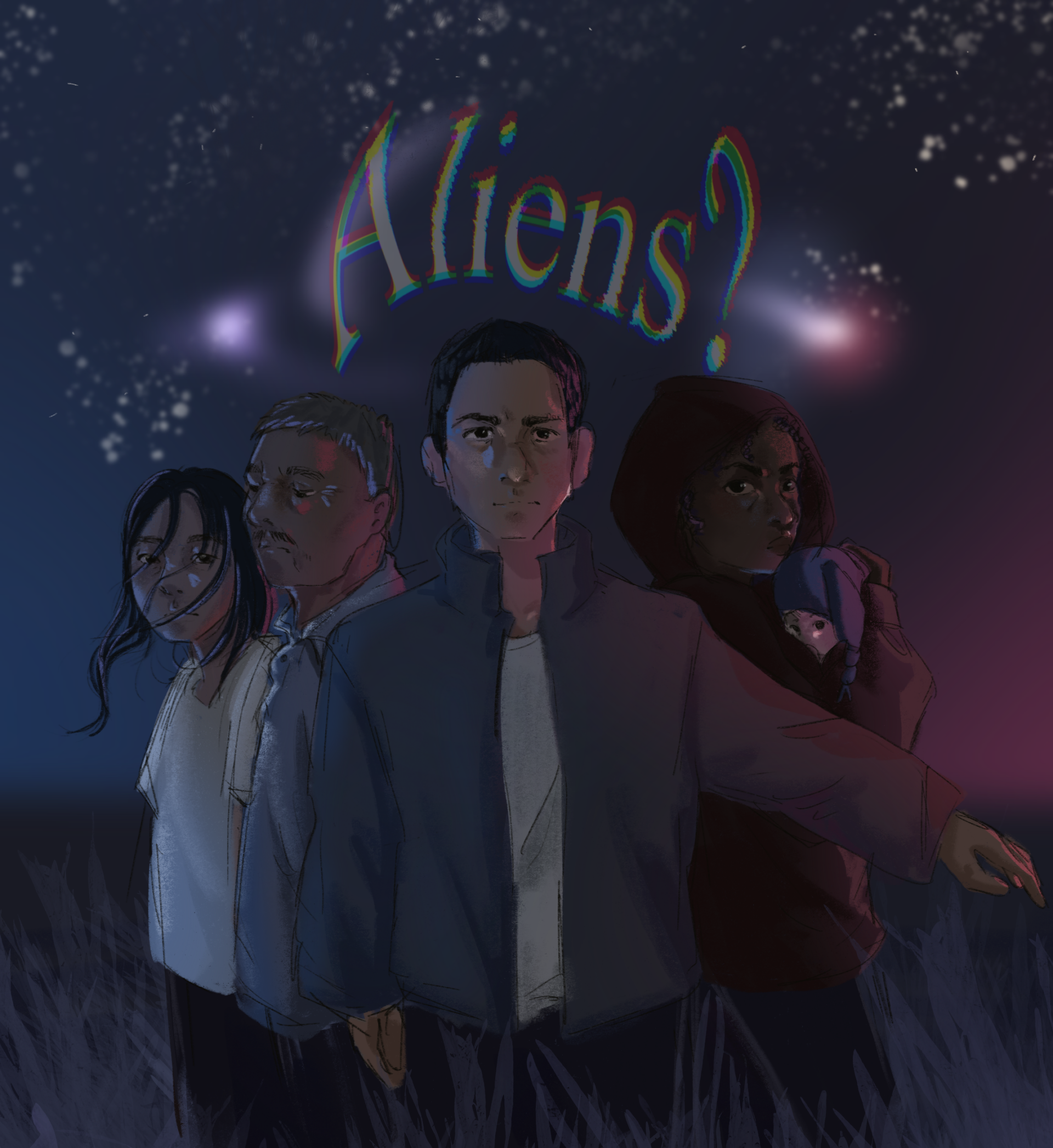


One of the White House’s newest website pages appears to confirm a long-standing conspiracy theory: aliens live among us. With typewriter-esque text reading “declassified,” the government details abductions, invasions and threats hidden from the American public. Unfortunately, the page’s final reveal is a disappointing let-down to such an intriguing buildup: the aliens are a derogatory reference to undocumented immigrants.
It is not a coincidence that President Donald Trump’s administration dehumanizes undocumented immigrants by baiting people with an alien conspiracy. Conspiracy theories are often rooted in pre-existing discrimination against minority groups. They use a dormant mistrust of marginalized people to convince racial supremacists and other paranoid people of outlandish ideas. Even when the imaginary antagonist is not a stand-in for a minority, conspiracy theories may still create public division that Trump can use to his own political benefit.
Trump has fueled his political career with fear, sowing mistrust against other political groups in order to maintain his supporters’ singular loyalty. Often, this involves discrediting news organizations that point out his deception. During his 2016 presidential campaign, he frequently complained about fake news. More recently, the White House added a page to its website lambasting “media offenders” and accusing CNN of spreading its own conspiracy theories.
When politicians hope to manipulate the public, conspiracy theories can be a fast, addictive way to do so. They are seen as harmless entertainment, thus avoiding social scrutiny. Despite this relaxed reception, their discriminatory roots subtly spread division and mistrust among citizens. This is particularly important when the conspiracy theories involve issues that are recent, controversial or otherwise politically relevant.
One such theory about COVID-19 was published on the White House’s website after Trump retook the presidency last year. The page explains the lab leak theory as though it is an unrefuted fact — although researchers concluded that there is not enough information to prove any one theory. The website accuses former President Joe Biden’s administration of a cover up and claims that mask mandates and social distancing are ineffective. Republishing these theories on the White House’s official website could spark racially motivated hate crimes and spread of health misinformation.
The White House’s decision to promote such conspiracies reflects a worrying increase in the theories’ prevalence and perceived legitimacy. In the past, conspiracy theories were primarily shared by unofficial public influencers. Through constant exposure to such voices, the public gradually normalizes radical perspectives within the Overton Window. Politicians then adopt those viewpoints to win social support, allowing fringe ideas into mainstream political conversations. The president’s association with conspiracy theories is an indication that dangerous online theories are beginning to gain a foothold in mainstream politics.
Conspiracy theories seem to be gaining more power online, as well as in the White House. In the mid-2010s, Alex Jones infamously spread a conspiracy theory that the Sandy Hook school shooting was a hoax. At the time, he was rightfully considered harmful and removed from social media platforms. Despite this, Jones has recently begun a podcasting career and continues platforming conspiracy theories. Other figures, such as Tucker Carlson and Candace Owens, have followed his model and built successful careers by promoting political rumors. Some conspiracies have also incited violence, such as the Pizzagate theory from the conspiracy group QAnon.
Conspiracy has become a profitable industry for creators and politicians, but it comes at the cost of reasonable political debate. Fears about government dishonesty have generally gained traction since destabilizing events like Watergate, strengthening existing conspiracy blindness. Fearful voters are often genuinely convinced that the theories they hear are true, which means attempts to disprove the theories are seen as a limit on their right to free speech. These psychological factors make it incredibly difficult to undo the political and social harm of conspiracy theories.
It is important to prevent more conspiracy theories from taking hold in America. Democracy’s strength and legitimacy depend on voters defending their right to accessible, accurate information. If political actors continue to base their campaign strategies and public appeal on deceit, the country will never unite to address its real issues.
Ruby Goodwin is an Opinion Staff Writer. She can be reached at regoodwi@uci.edu.

Ruby Goodwin is a first-year Literary Journalism student. She is interested in writing about American politics, media in sociology, and reforming the public education system. In her free time, she enjoys playing card games and reading mystery novels.