



Editor’s note: The article was originally published on March 15, 2026. An editor’s note was added July 10, 2026. An author title was added to this article on June 29, 2026.
America’s debate over gender affirming care for transgender Americans roars on. Some states, like Utah, have even outright banned gender affirming treatments for transgender minors, such as hormonal treatments, while other policies have restricted federal health insurance plans from covering gender dysphoria-related treatments for adults.
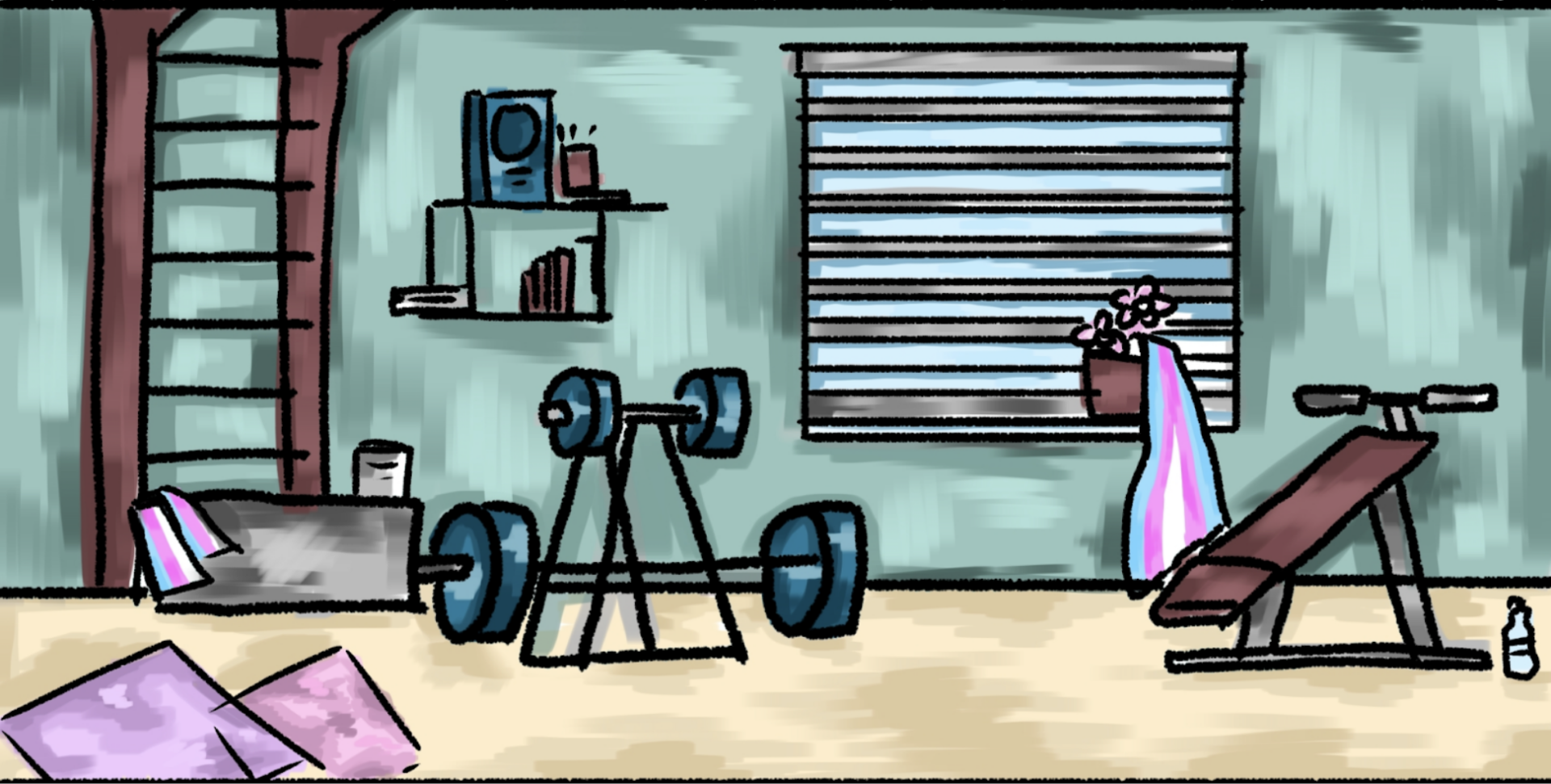
However, what many cisgender Americans aren’t considering is the gender affirming care they go through themselves everyday. The term gender affirmation refers to personal, medical, social or legal decisions to express one’s gender identity and is not exclusive to only transgender people. Before engaging in political discourse invalidating gender affirming care, cisgender people must understand that they undergo gender affirming care consistently and regularly, with the biggest example being their gym workouts.
Many self-proclaimed gym rats understand the feeling of a pump. As a cisgender man, my post-workout pump emphasizes my masculine figure by making my torso look angular and strong, emphasizing my pectoral muscles and inflating the shape of my shoulders entirely. This feeling is euphoric — as it is for many men in the gym who intend on building muscle and strength, which has always been associated with masculinity. In other words, a man’s weight-lifting workout is an experience of gender euphoria for many, emphasizing that gender euphoric experiences are important for cisgender and transgender people.
On the flip side, many women find specific workouts as useful tools to improve their relationship with femininity. Balancing the desire of enhancing femininity with the idea that working out is a stereotypically masculine hobby is a complex discussion, as some women worry that weight-heavy workouts will make them look too bulky — in other words, too masculine. However, others argue that women lifting weights can actually enhance their feminine shape when focus is placed on strengthening the lower body and losing fat. Thus, the differences between how men and women perceive their workouts is undoubtedly gendered.
Therefore, the gym is a tool to construct one’s ideal body, which is almost always gendered. So whether you are training to construct a chiseled, muscular, masculine physique or an hourglass, feminine figure, every workout is gendered. Someone who works out for aesthetic purposes is using their workout as a means to bring out their inner gender perception, even if they are not fully aware of it.
Many men would feel a strong sense of dysphoria if they cultivated an hourglass figure, just as many women feel worried about creating a masculine figure by weightlifting. This is because these body types do not align with their inner gender perceptions.
Thus, your workout is gender affirming care.
Before supporting bans of gender affirming care for transgender Americans, it is vital that cisgender people understand the ways in which they engage in gender affirming care as well. To question gender affirming care contests the validity of men hitting the bench press, or even cosmetic surgeries like lip fillers that enhance feminine characteristics. But, there is no notable discourse on banning lip fillers or men hitting the bench press, indicating that many do not understand how gender affirming care is universal and not exclusive to transgender people.
Denying bodily autonomy to some while allowing it for others fails to protect health or children. In fact, the omission of gender-affirming care for transgender adults in federal programs proves this dialogue is about transgender identities as a whole rather than protecting minors. Bans like these are selectively policing who is allowed to express gender. Approaching gendered conversations without understanding how gender is socialized to begin with, even in gym spaces, will only result in moral inconsistencies.
Alexander Randall is an Opinion Staff Writer. He can be reached at arandal1@uci.edu.
Edited by Casey Mendoza and Geneses Navarro.

Alexander is a fourth-year International Studies & Spanish double major. He joined NewU as an opinion intern in the summer of 2025, primarily writing about politics, culture, and the occasional satire. In his personal time he enjoys reading, collecting houseplants, traveling, and thrifting!