

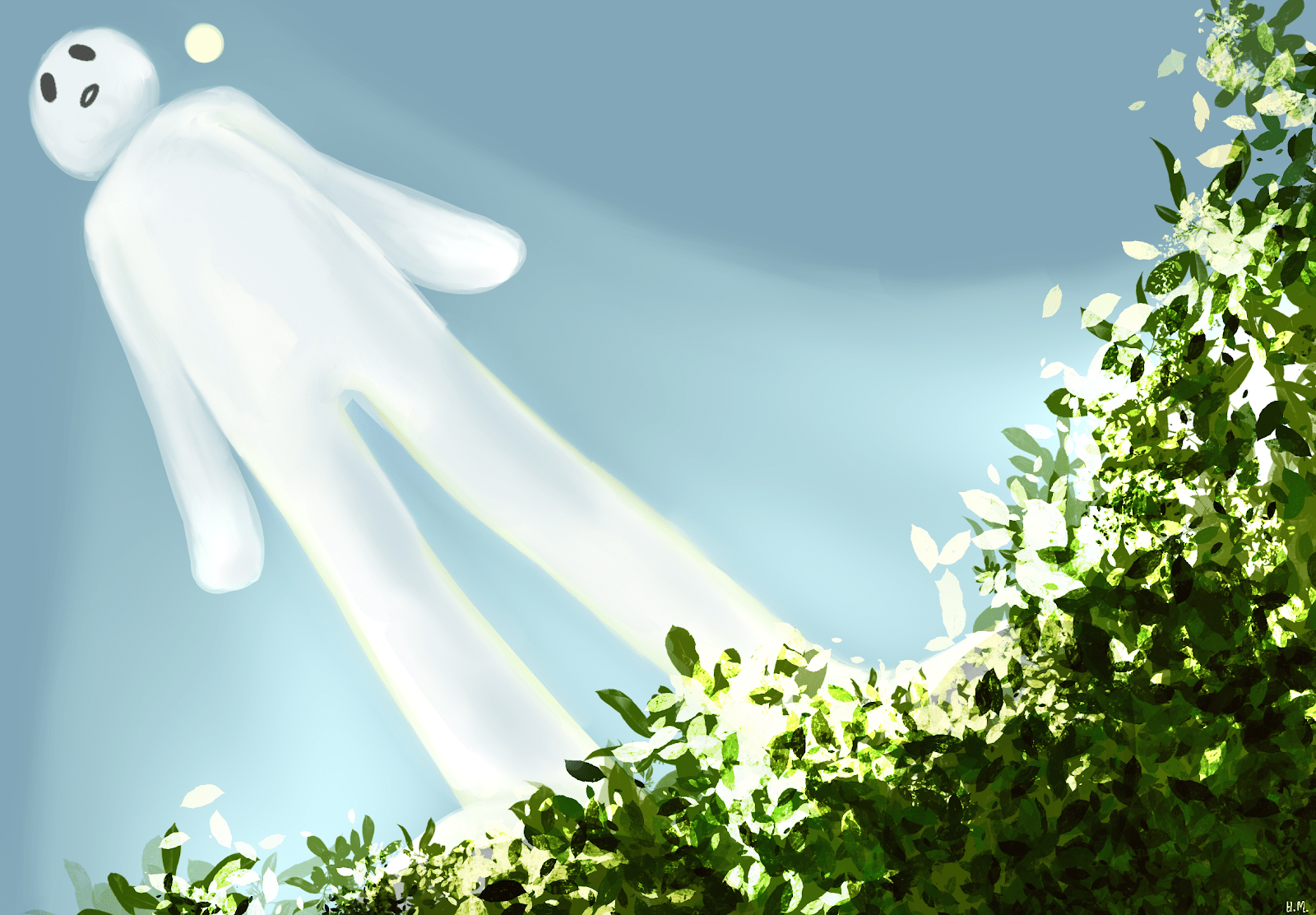


Since 2019, the popular phrase “go touch grass” has been used to encourage those who are chronically online to disconnect from their devices, step outside and reconnect with nature. Although it’s used as something of a joking insult towards people who are unhealthily captivated with internet obsessions and drama, there’s a lot of truth to it.
Spending hours scrolling on social media — what’s colloquially known as doomscrolling — is the process of scanning the constant, addictive stream of endless online content that desensitizes human emotion. The automatic dopamine rush of consuming eye-catching information that is packed into short form videos has been found to have detrimental effects on people’s mental health and only feeds into phone addictions. Many don’t realize that a common cause of deteriorating mental health is social media. Instead, social media users often seek help through therapists or self-diagnosis when a possible cure could have simply been going outside, appreciating the surrounding environment or interacting with the real-world.
Overconsumption of short form content on platforms like TikTok, Instagram and YouTube causes emotional highs and lows and low retention of the overloaded amount of content. Viewers’ attention spans are shortening and their emotional responses are becoming shallower. This numbs the brain’s capacity to process and feel emotions fully, which only makes this generation more out of touch with reality.
However, many begin to misinterpret emotional dullness as chronic depression or anxiety. Being overstimulated by technology can quickly lead to fears of being mentally unwell.
Instead of encouraging rest or professional help, many online spaces — especially social media platforms — add to constant self-comparison and overidentification with mental health labels. Although online conversations about mental health have become more normalized and have helped reduce stigma, it also comes with risks. While online, some users experience increased anxiety exposure to harmful content or cyberbullying. Social media can be both a support system and a source of harm, depending on how it’s used.
On the bright side, allowing people to freely share their mental health experiences online reduces stigmatization, which increases awareness and education on the topic of mental health. Unfortunately, exposure to excessive mental health discussions may subconsciously lead healthy individuals down a path of self-diagnosis and exacerbated symptoms, leaving them worse off than before they logged on.
Self-diagnosis can be incorrectly self-attributed, which may create unnecessary stress and anxiety — ultimately reinforcing the very symptoms users believe they may have.
In addition, by simply researching mental health symptoms online, many begin to fall down a rabbit hole of constant exposure to the issue and comparison to others’ experiences, adding to their excessive screen time. This only leads to poorer sleep, difficulty concentrating, social isolation and emotional fatigue.
Self-diagnosing can be incorrectly self-attributed, which may create unnecessary stress and anxiety — ultimately reinforcing the very symptoms users believe they have.
And while conditions like depression, anxiety and ADHD are real and deserve proper care, many of these symptoms are often mimicked by the consequences of excessive screen time. Though many may think it’s a result of a chemical imbalance, it oftentimes could just be a symptom of not spending enough time outside.
Simply taking some time out of the day to “touch grass” regulates the nervous system, which is responsible for regulating blood pressure, heart rate, blood sugar and endorphins, all of which are crucial for maintaining positive mental well-being. According to the American Psychological Association, exposure to mother nature and green spaces also helps improve attention span and moods, lowers stress and overall reduces the risk of developing psychiatric disorders.
So, instead of self-diagnosing a plethora of mental health issues, individuals might benefit more from re-engaging with the physical world. Touching grass, both literally and symbolically, serves as a reminder that humans are meant to return to natural equilibrium, and that starts with connecting back to nature.
Of course, going outside is not a cure-all. However, before turning to pathologization, it’s worth considering whether online habits or environmental practices are contributing to emotional instability. It doesn’t hurt to try natural remedies such as moving your body, connecting with loved ones and healing with nature.
The phrase “go touch grass” may have originated as a meme, but its implications are serious. It questions the normalization of screen addiction, reaffirms the value of nature and encourages healthier coping mechanisms.
Sometimes logging off a device, going outdoors and soaking up the sun on the grass is all one needs.
Julia Kremenetsky is an Opinion Staff Writer. She can be reached at jkremene@uci.edu.
Edited by Isabella Ehring and Annabelle Aguirre

Julia Kremenetsky is in her final year majoring in Political Science! She is an Assistant Opinions Editor for the 2026-27 year. Since joining in April of 2025, she has written stories ranging political issues, social media and trends, current events, and more. Outside of the New U, Julia loves spending time with her dogs, spending time in nature, and watching YouTube video essays about obscure topics.