

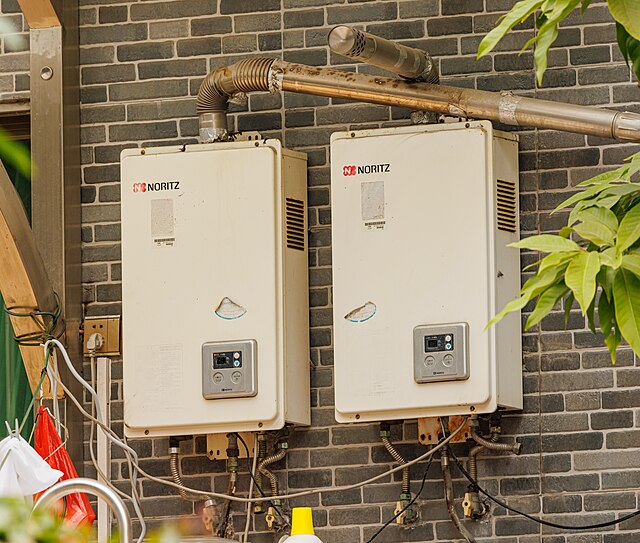

The South Coast Air Quality Management District (AQMD) released the third preliminary drafts of Proposed Amended Rules (PAR) 1111 and 1121, which aim to reduce nitrogen oxide (NOx) emissions by phasing out natural gas furnaces used for interior space heating and water heaters.
During city council meetings in Fullerton and Huntington Beach on March 4, the two cities joined others in Southern California in opposing the proposed rules, citing concerns over cost and the impact on residents.
PAR 1111 and 1121 was introduced by the South Coast AQMD, the regional authority on air pollution. It would apply to manufacturers, distributors, retailers, resellers and installers of NOx-emitting space and water heaters in Orange County and portions of Los Angeles, Riverside and San Bernardino counties. The rules aim to reduce emissions from natural gas use and promote the electrification of appliances as part of California’s broader effort to transition to clean energy and curb air pollution. Specifically, NOx emissions.
NOx is a group of gases that includes nitrogen oxide (NO) and nitrogen dioxide (NO2), primarily released from fossil fuel emissions. NOx is commonly emitted, calculated and expressed as nitrogen dioxide. NO2 negatively impacts the environment by interacting with atmospheric elements to cause acid rain and can make the air hazy by releasing nitrate particles. Short-term exposure can aggravate respiratory issues, while long-term exposure may cause asthma, according to the Environmental Protection Agency.
PAR 1111 seeks to reduce NOx emissions from various types of furnaces used for interior space heating. The rule covers furnaces with a rated heat input capacity of less than 175,000 British thermal units (Btu) per hour and combination heating and cooling units with a cooling rate of less than 65,000 Btu per hour.
Rated heat input capacity refers to the amount of fuel a combustion device can burn in a given period to operate under optimal conditions, measured in Btu. A device with a higher rated heat input capacity consumes more fuel, increasing NOx emissions. Under PAR 1111, all residential fan-type central furnaces emitting NOx would be phased out in existing buildings by Jan. 1, 2029, and in new buildings by Jan. 1, 2027. The proposed rule defines a new building as a “building that is newly constructed or a building with a major alteration that changes the occupancy classification of the building.”
Similarly, PAR 1121 seeks to reduce NOx emissions from water heaters. It applies to water heaters with a rated heat input capacity of less than 75,000 Btu per hour. The compliance deadline for PAR 1121 match those in PAR 1111. After the deadlines for zero-emission limits, furnaces and water heaters under the specific provisions would no longer be supplied, sold or installed within the South Coast AQMD jurisdiction.
Manufacturers may also opt for an alternative compliance option under PAR 1111 and 1121 per new rule concepts outlined in a March 6 presentation. This option which would allow firms to sell appliances emitting NOx under specified limits in new and existing buildings, however for a fee to “incentivize transition to zero-emission technologies without putting undue stress on homeowners.” The alternative compliance model would phase out applicable furnaces and water heaters over the course of approximately 10 years.
These proposed rules have been met with pushback from multiple cities in the jurisdiction, with officials voicing concerns about cost and energy needs. This includes cities in San Bernardino, Los Angeles and Orange counties, including Yorba Linda, Lake Forest, La Verne, Chino and, most recently, Fullerton and Huntington Beach.
The Association of California Cities Orange County, which represents municipalities including Irvine, wrote to South Coast AQMD expressing concerns over cost, public awareness, infrastructure capacity and natural gas’s current role as a “critical resource for energy reliability” during fires or emergencies.
“Second, we have substantial concerns about the electrical grid’s capacity to handle the increased demand that would result from widespread electrification,” Kris Murray, executive director of the Association of California Cities Orange County, wrote in the letter. “Without detailed cost analysis and firm commitments regarding rebates and incentives, we risk placing an undue burden on homeowners and multifamily property owners — many of whom are already struggling with housing affordability.”
During the March 4 council meeting, the Fullerton City Council approved an opposition letter to PAR 1111 and 1121, citing concerns over the city’s ability to retrofit existing buildings and the associated cost. In the letter, Mayor Fred Jung also highlighted potential impacts on affordable housing.
“We believe it is highly likely that if Rules 1111 and 1121 are adopted by the [AQMD] Governing Board, the high costs of compliance will force the owners of older multifamily properties to sell or redevelop their properties, subsequently resulting in a dramatic reduction in the availability of affordable housing in our city and across the region,” the letter reads.
Jung urged AQMD to delay consideration or adoption of the proposed rules to allow more time for information “to address the many unanswered questions regarding cost, technology and the availability of potential incentives.”
In its March 6 presentation, AQMD stated that the new rule concepts for PAR 1111 and 1121 address community concern on cost, consumers and local infrastructure by utilizing a slower transition to zero-emission goals and preserving consumer choice.
Aarav Upadhyaya is a News Intern for the winter 2025 quarter. He can be reached at aaravu1@uci.edu.
Edited by Jaheem Conley
Editor’s Note:
This article was corrected to reflect new rule concepts for PAR 1111 and 1121 as provided in a March 6 presentation by AQMD. An earlier iteration of this article omitted terms of the alternative compliance option under the proposed rules.

