

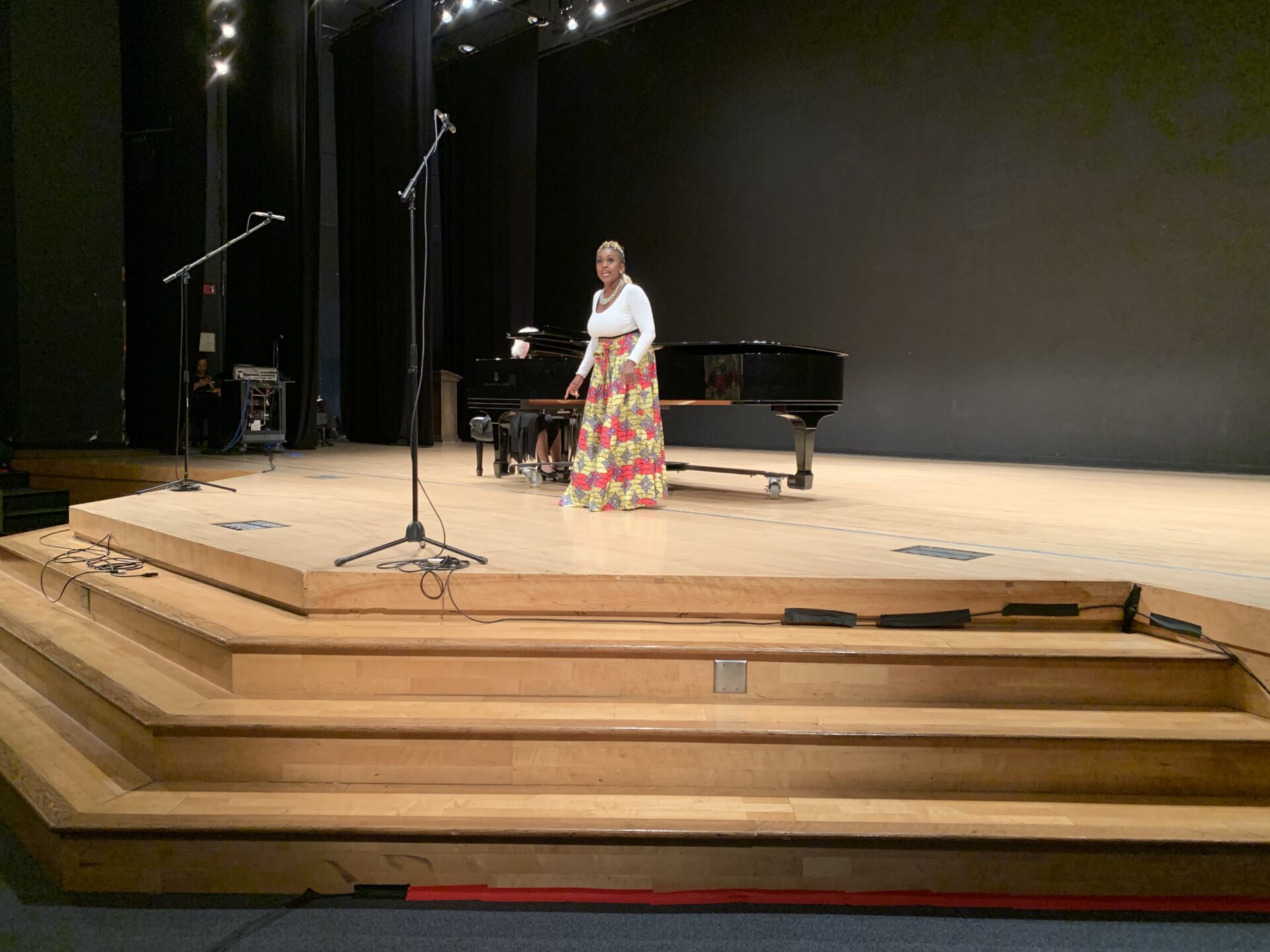

The Claire Trevor School of the Arts (CTSA) hosted the 25th-anniversary celebration of the African American Art Song Alliance from Oct. 13-16.
Renowned composers, vocalists, musicians, scholars and guests from all over the country were in attendance, honoring and educating attendees on the impact and history of African descendants’ contribution to the art song genre.
Each day was filled with lectures, performances, discussions, panels and workshops surrounding different themes of African descendants in art song. Topics like the African diaspora, social justice, the Harlem Renaissance centennial, the importance of Black women composers and a world of expression were all covered over the course of the conference.
On Saturday, Oct. 15, the main topics for the lectures, panels and performances were the Harlem Renaissance Centennial and Black Women Composers Matter. Guests were invited to attend any of these events throughout the day, beginning at 8 a.m. in Winifred Smith Hall and the Colloquium Room.
Attendees that remained until the evening witnessed the composer’s forum, which was a panel discussion moderated by Louise Toppin, an esteemed vocalist and professor of Music (Voice) at the University of Michigan. The panel consisted of two groups of composers of African descent, each with differing experience and area of expertise. They discussed the similarities and differences they encountered coming into the art song genre. When asked about what they started off as before finally becoming composers, many said that they began as pianists or singers, rather than composition.
When asked what gives them hope about the longevity of the art song genre, Dr. Marvin V. Curtis, a composer, Assistant Dean of Humanities and Social Sciences, and Choral Director at Fayetteville State University in Fayetteville, North Carolina, stated that he found hope and inspiration in the conference and creativity showcased by the youth in attendance.
“This conference has opened my eyes to what is out there. [These] young people are out here doing some amazing things and I heard [compositions] this morning that just knocked my socks off,” Curtis said.
To close off each group’s discussion, Toppin asked both groups of panelists what advice they would give to those coming behind them. Many gave words of encouragement and reminders to keep going and not tell themselves “no” before even trying. Mason Bynes, a composer, vocalist, and multimedia artist based in Boston, Massachusetts, reminded the audience of the beauty in uncertainty.
“Embrace uncertainty. When you embrace uncertainty, even things that are insane and wild and unfortunate exist on the same plane as things that are spontaneous and exciting and beautiful,” Bynes said.
Following the composer’s forum, there was a performance entitled “A Salute to Margaret Bonds.”
Bonds was an African-American composer, pianist, arranger, teacher and one of the first Black composers and performers recognized in the United States. Vocalists and pianists from all across the country performed pieces composed by Bonds in honor of her achievements and legacy.
The event highlighted and allowed live access to a history that, to many, is unknown and somewhat hidden. The conference, held annually, allowed attendees a glimpse into the creativity and wide-ranging world that is Black people in art song. Attendees were met with experiences unique to the African American Art Song Alliance conference.
When asked, in her own words, what she would say to someone who may not know about this event, Dr. Diane White-Clayton, an attendee, composer and professor of ethnomusicology at the University of California, Los Angeles, emphasized the importance of learning the history of Black people in the arts because of the central mindset around how we tend to musically express ourselves.
“It is important for anybody because it is American history, but in particular, classical music in the United States, and other countries as well, we focus at least 99.1% on Europe and on Caucasian males in Europe. I don’t have a problem with that focus in terms of the beautiful music that has come out of those individuals and those particular places, but it is not the breadth of [what] classical music is. We are not monolithic,” White-Clayton said.
Recordings of the conference’s performances and discussions can be found on YouTube.
Makyla McLeod is a Campus News Intern for the fall 2022 quarter. She can be reached at msmcleod@uci.edu.

