

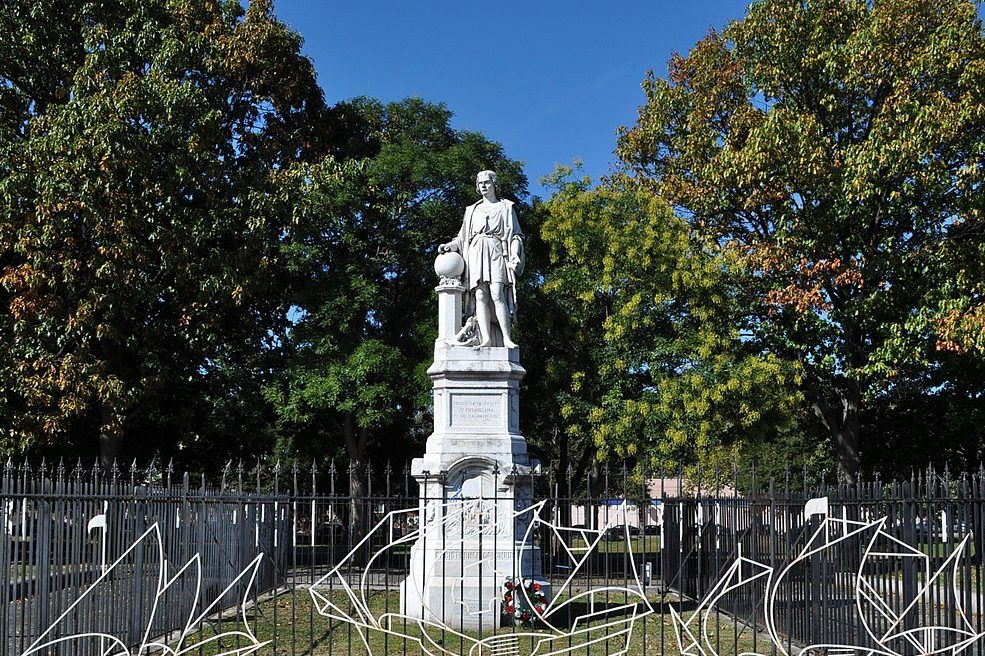


In recent years, Columbus Day has become a target of criticism for its celebration of colonization and the inherently forceful means through which America was established. However, the day should be left alone for its relative insignificance on the American psyche. Most people don’t really care about Columbus Day, and the only reason anyone remembers it is because of media aimed at stirring outrage over a day we don’t even get off.
This isn’t to defend Columbus’s actions, which belong to an era of gross violence, but
modern culture reflects a particularly apathetic attitude towards historical figures, characterized by cynicism and suspicion. Some of the most popular online content includes counter-narratives to all kinds of “official” stories. YouTube videos exposing “the truth” about Columbus Day have been around since the site’s inception, and they’ve been thoroughly absorbed by the millions of people that account for their views. George Washington’s slave ownership and arguments over the motivation for the Civil War currently proliferate some of the most popular YouTube channels, partly for the immature thrill of having a stance against the standard narrative and partly because people genuinely seek knowledge.
More significantly, voter apathy is also an indicator of cynicism towards political figures. Voter turnout percentages have barely hovered over half of eligible voters for years now. The internet age has effectively made any source of information questionable, especially the K-12 history curriculum, which makes me think it’s highly unlikely that anyone considers Columbus any sort of hero at this point.
Since Donald Trump’s inauguration, journalism isn’t perceived with the same trust and integrity it once had. The subject of Columbus Day seems to belong to those blatantly slow news weeks which precipitate a meaningless article or video to fill some content quota and contribute to the cynicism of the average viewer. Any political attention drawn to Columbus Day immediately brings to mind countless efforts to politicize anything in order to achieve favour towards a political party. There is a kind of outrage-saturation that has been reached, and even the tired attention that media outlets vie for has usually already been drawn by more prominent stories like Kaepernick’s Nike deal and Kavanaugh’s confirmation. With November elections on the way, it will likely be weeks before more outrageous, politicizing stories are thoroughly exploited for their ability to rouse viewers. Long gone are the days, if they ever existed, when news was reported simply for its facts, and media criticism of Columbus Day is the most blatant example of news politicization nowadays.
With all this in mind, I think news publishers should consider easing up on Columbus Day in favor of more newsworthy subjects. Their political motives seem too obvious when bringing attention to a day that should have remained a simple remnant of primary and secondary school education. Save the outrage for Thanksgiving.
Henry Pineda is a fourth-year English major. He can be reached at hrpineda@uci.edu.

Interested in becoming an intern or a contributing writer for the Opinion section?
Contact us at opinion@newuniversity.org!