


We all saw the hustle and bustle occurring around Gateway Study Center and Langson Library around the beginning of June. I was hoping the crowds were signaling a commencement ceremony for the launch of another AI-powered dating app designed specifically for people who like matcha and thrifting — since, in my opinion, our campus doesn’t have nearly enough of them. Apparently, though, the swarms of people were here for an entirely different and exceedingly fruitless purpose: participating in the California statewide election.
As one of the most notable political scholars in the nation (check my credentials), I truly get a kick from watching the general populace racing — like hoodwinked little lab rats — to fill out a ballot more usefully repurposed as toilet paper. By this point, it should be common knowledge that statewide elections are time sinks fabricated to divert public attention from what really matters. However, judging by the flocks of ‘sheeple’ clogging up my stroll to class, the witless proponents of state and local elections have gripped the nation’s psyche too firmly.
Allow me to make my thesis abundantly clear: Participating in statewide and local elections is an utter waste of time, ink and paper … but more importantly, it’s a diversion tactic. A ploy. A stratagem to maintain the facade of democracy as the nation is pulverized by the powers that be. And it all happens right beneath our noses.
Let’s begin this discussion by considering who the advocates of these elections are and what their incentives might be. On one hand, we have local business leaders. Nationwide, they fuel economies and strengthen the character of communities through their hard work and tenacity. We also have educators, whose lives revolve around improving the awareness, intellect and capability of America’s youth. We have community members who present compelling anecdotes about the ways state and local government initiatives have benefitted their lives. Some even work hard enough to produce citizen-led ballot measures representing the issues they care about. They speak of reducing worries about feeding their kids, creating measures to strengthen responsible policing, allocating government funds to reflect the interests of the nation’s citizens and other useless things of the like.
You may be saying to yourself, “Casey! These sound like good people who represent noble causes! Why on Earth would I do anything to act against them?” I cannot fault you for that assumption, oblivious as it may be. However, it’s important to note that there are nefarious actors at the core of this predatory scheme who take precedent in this discussion — by virtue of my personal gripes with the hypothetical issues they may or may not actually have the capacity to cause. These are wicked and conspiratorial individuals — notorious for their large-scale, despicable actions and vitriolic tendencies, who are operating their dastardly plots in plain sight each and every day. I’m referencing none other than state and local government leaders, who routinely present cases of executive overreach and abuses of power so shocking, I dare not even discuss them here.
While I admit you might be hard-pressed to discover the horrific instances I am hinting at, I assure you they are real and imminent. We all know how tirelessly the media works to cover up corruption if they are paid off enough — and this case is no different. We need to respond to the hubris in one way or another, even if it is being masterfully hidden. I assure you, the only viable answer is completely succumbing to malaise and discontent.
These villainous individuals are indirect agents of collective suffering, expecting us to wait on them hand and foot during the navel-gazing festivities they call an election. Why buy into their system? Why capitalize on our opportunities to make collective, decisive advancements towards the good? In many cases, there seems to be next to nothing we can do. So, let’s really stick it to the system by doing absolutely nothing — but this time, on purpose. That approach makes perfect sense, and isn’t ironic at all.
The only way to make a change in our communities is by ensuring nothing ever happens, just as Alexis de Tocqueville told us. Speaking of, I read “Democracy in America” from front to page three before giving up and relying on Steven Bilakovics’ lectures to get me through an entire course. From that insightful method, I learned far more than if I had stupidly played an active role in acquiring my own ideas — much less made use of them in a direct and productive fashion. The same philosophy applies with elections, advocacy, organizing and practically every other aspect of the so-called democratic process you can think of.
Now, if the notion of complete and total surrender is too difficult for your tiny brain to fathom, rest assured. I have some alternative suggestions for developing your personalized contributions to the non-movement movement.
The first is engaging in online discourse. This is undoubtedly the most direct strategy for effecting true, tangible progress in almost any matter, especially politics. Imagine if they had wojaks in 1776. That would be more revolutionary than the war itself;. “Great Britain has fallen! Billions must hold this truth to be self-evident!” Something like that.
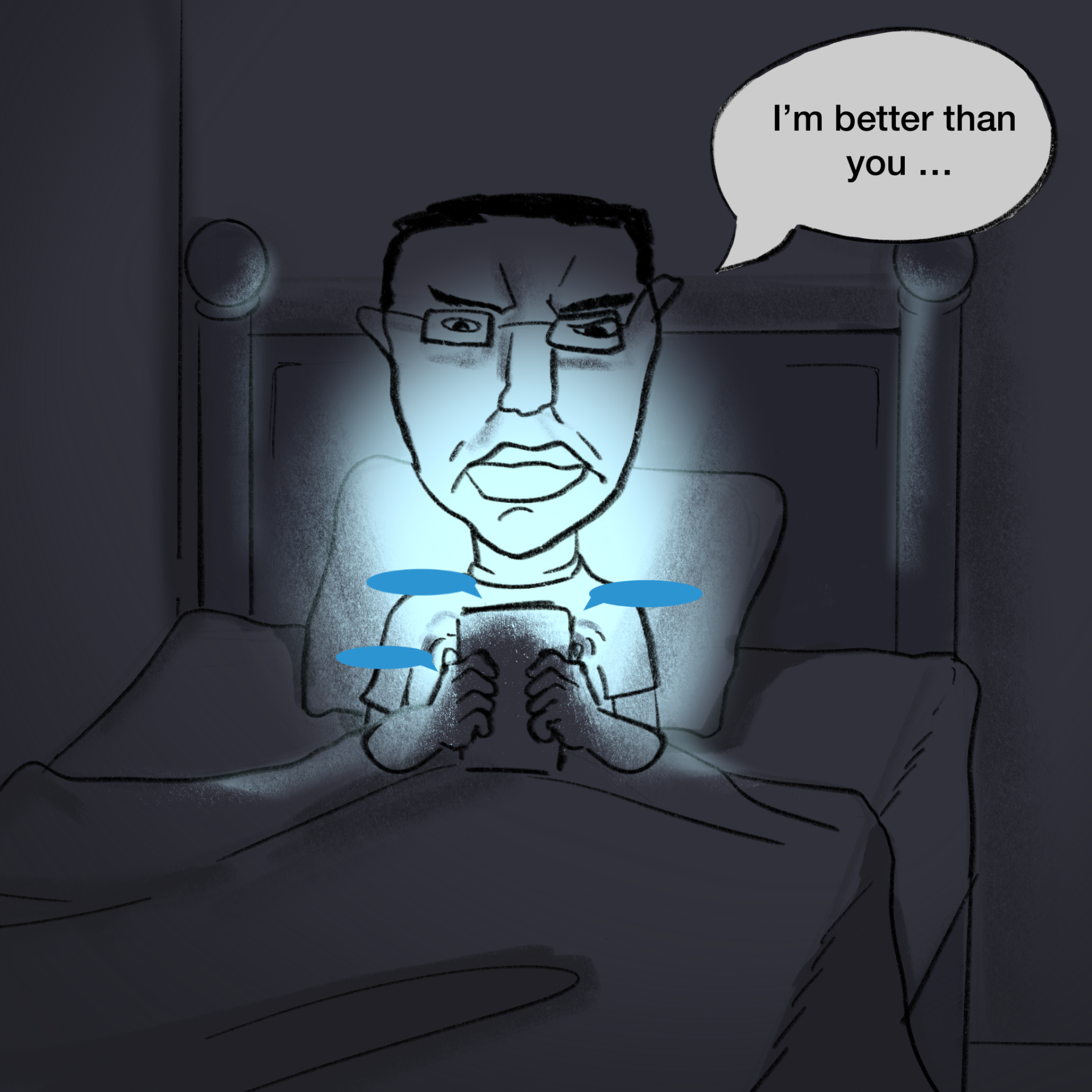
The second method is egregious pride. Try acting better than everyone who was imbecilic enough to vote because you — an informed citizen — understand the mathematical marginalization that each individual vote is subject to. I think this strategy presents such outstanding rhetorical value that I’ve even prepared a script. Your line is, “Do you know how many people live in the United States? You really think one vote is gonna make a difference?” Checkmate. Make sure to smirk condescendingly at your opponent to guarantee the strongest impact, and selectively shut your ears off when they start talking about working class people and immigrants and reproductive rights and kids and stuff.
To successfully master democracy from both a philosophical and practical standpoint, all it takes is understanding this principle: There will always be some things you can’t do much about, but there are even more things you can choose to do absolutely nothing about.
Casey Mendoza is a 2025-2026 Assistant Opinion Editor. He can be reached at caseym4@uci.edu.
Edited by Ruby Goodwin

