




Editor’s Note: Content Warning: This article discusses topics of sexual assault and gun violence.
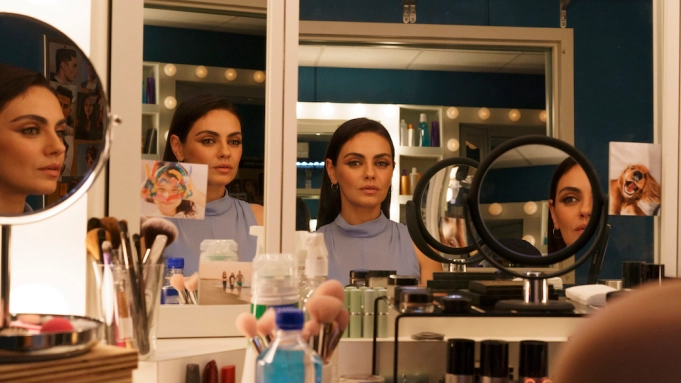
Based on the 2015 debut novel by Cosmopolitan senior editor Jessica Knoll, Netflix’s new thriller-drama film “Luckiest Girl Alive” follows Tiffani “Ani” Fanelli (Mila Kunis) a writer for The Women’s Bible, working towards a promotion and becoming a writer for The New York Times.
With her wedding quickly approaching and big career moves in her path, Ani has the perfect life for herself, one which was handcrafted after she was gang-raped by three of her classmates and experienced a deadly school shooting. The film follows Ani’s pristine facade as it slowly unravels due to the filming of a documentary about the shooting. As her trauma resurfaces, Ani must face the girl she left behind so many years ago and discover who she truly is behind the protective walls she put up.
When flashbacks from her past resurface to haunt her, the truth about the incidents are uncovered piece by piece as Ani tries to move on without ever fully healing. As a result, “Luckiest Girl Alive” is aggressively anti-victim blaming.
After her rape, Ani is shamed by her mother, gaslit by her abusers, shunned by her classmates and ridiculed by her friends. This movie takes a strong stance against that type of mistreatment, and Ani takes healing into her own hands, secretly recording her abuser’s confession and publishing her story in The New York Times. While this is an empowering message for women around the world who are blamed for their own abuse, this is one of the only aspects of the movie worth praise.
Even with Ani’s sharp wit and biting commentary, the film cannot hold audience attention — taking on too many topics and storylines to create a clear picture. Aside from a school shooting and the sexual assault, Ani also struggles with her self-identity, residual trauma, a poor relationship with her mother and an eating disorder.
While it is not uncommon for victims of traumatic events to face many other difficulties, it is hard to digest within a movie running just under two hours. The film grazes over each of these topics without truly delving into them, leaving the audience unable to fully care — let alone truly connect — with each. Rather than impactful, “Luckiest Girl Alive” is messy and flat.
Mila Kunis is striking and commendable in her role as Ani, and the story is captivating. Yet, there is not quite enough dramatization nor horror elements to capture intrigue for the entire runtime. In the end, she gets revenge, a new job and starts over with life. The story’s buildup did not live up to the grand finale. With such heavy topics and interweaving storylines, almost nothing was resolved in the end, yet the film argues it was.
With the film set in 2015 and production delayed until its ultimate 2022 release, it is possible that the gravity of the film’s topics regarding the #MeToo Movement lost their impact due to preceding films with similar themes such as “Bombshell” (2019), “Athlete A” (2020), and “On the Record” (2020). However, when other women read Ani’s exposé in The New York Times, they feel seen and heard for the first time.
In an interview with Bazaar, Knoll revealed that the scene was “drawn from real life.”
“We set the film in 2015, when the book came out because it was important that it was pre-#Me Too. Because it wasn’t yet commonplace for women to write these essays. We didn’t know yet if the world was ready to embrace them in kind,” she said. “One thing that we wanted to do in the movie was move past this idea that it was just about Ani and her experience and how it affected her. We wanted to show that this was more epic. That it was bigger than her, this story and what she had learned from it. That there were so many women out there who could connect with it.”
In a sense, this movie is a coming-of-age story for Ani. Her youth was stunted due to severe traumas and she wasn’t able to heal until she finally got her story told. “Luckiest Girl Alive” held promise and would likely have been more impactful as a television series with room to unpack Ani’s life in its nuances, along with its highs and lows. While it was not a film to discard, it promised more than it could bear to deliver and was ultimately disappointing.
Lillian Dunn is an Entertainment Staff Writer for the fall 2022 quarter. She can be reached at lbdunn@uci.edu.

Lillian Beatrice Dunn is an Arts & Entertainment Editor for the New University, majoring in Literary Journalism and minoring in Queer Studies and Creative Writing. She has over 50 published pieces, including interviews with indie band Small Crush and dark-pop princess Ashley Sienna. She has freelanced for OUT FRONT Magazine and the LA Dance Chronicle and has previously held staff writer positions at Her Campus UCI and Fever Dreams Magazine.