


The Hulu original series, “The Dropout,” is based on the podcast miniseries by Elizabeth Meriwether by the same title. Based on a true story surrounding a fraudulent Silicon Valley startup, “The Dropout” relays a romanticized account of Stanford dropout Elizabeth Holmes, and her company, Theranos, from its rise to its fall, frequently flashing back to her infamous 2018 deposition for context.
“I kind of agree with Mark Zuckerberg when he said, ‘move fast and break things,’” Elizabeth Holmes (Amanda Seyfried) says in a faked deep voice before a group of Walgreens employees. Little did they know at the time, Holmes was selfishly scamming them out of obscene amounts of money for a pipe dream project that was wildly unsuccessful.
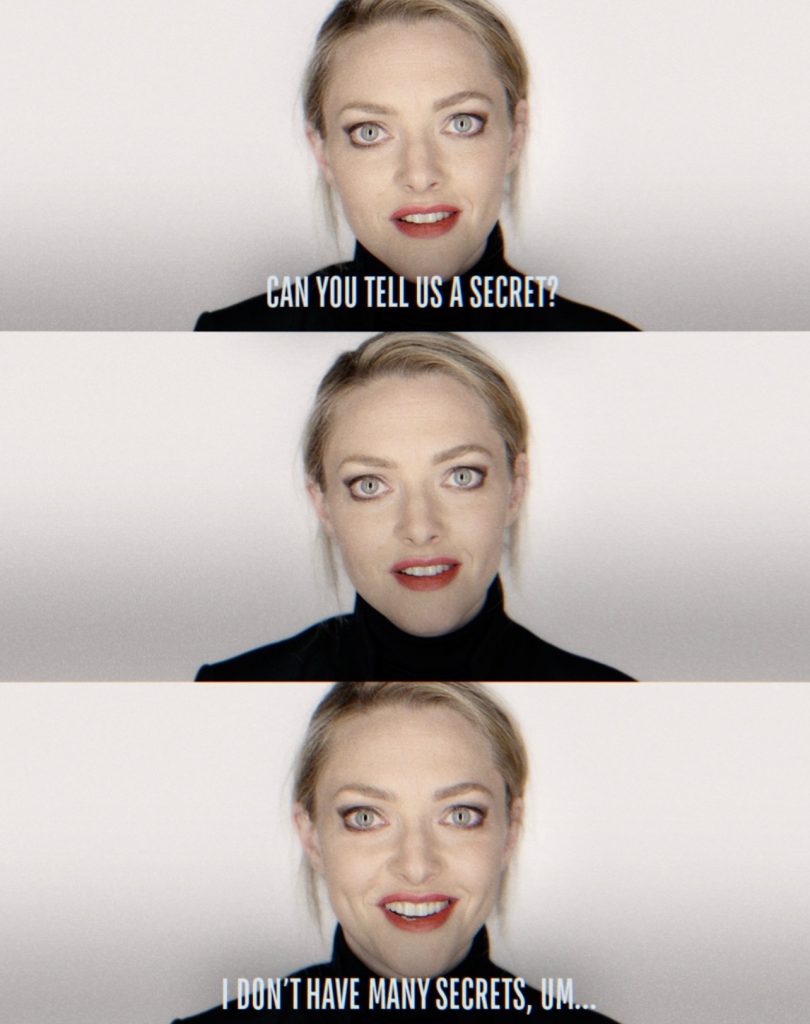
Seyfried embodies Holmes’ mannerisms with such ease, from the vocal modulations to the purse of her lips. In an interview with Entertainment Tonight, Seyfried admits that she was interested in Holmes’ story before “The Dropout” was presented to her. Her dedication to the role consisted of days on set studying videos of Holmes’ mannerisms and memorizing the entire deposition “word for word,” something she confesses is something she never thought she would experience in her career.
Holmes’ ambitions were always to become a billionaire. She idolized other successful, rich company owners and emulated them in her overly-ambitious project that claimed to change the world with just a drop of blood tested for hundreds of ailments. Based on her own fear of needles as a child, Elizabeth made unkeepable promises of both therapy and diagnoses that would ultimately be taken down by an exposé written by The Wall Street Journal’s John Carreyrou.
The series does a phenomenal job humanizing and dramatizing Holmes. Her drive to make her goals become reality is shown early on in the show as she finishes high school with incredible aspirations and inserts herself into a graduate research group at Stanford her freshman year. The rich character development inspires the audience and sucks them into this riveting tale of a passionate young woman, her deception and ultimate failure completely forgotten without reminders from the flashes from the deposition tapes.
The cutting-edge, anxiety-free technology she promised the world did not work, rather it negatively impacted the lives of many who fell for her confident, manipulative demeanor. Once Theranos technology was being practiced on real patients, inaccurate test results for HIV and diagnoses of cancer were wrongfully being given out to unassuming patients. However, the branding was not the only faulty aspect of Theranos.

Holmes completely changed around her company, morphing into a ruthless, superficial, green juice fanatic in a black turtleneck and pantsuit reminiscent of her idol, Steve Jobs. She rebranded herself into a woman that the world would accept and respect. A big part of this rapid transformation was due to her boyfriend and future business partner Sunny Balwani (Naveen Andrews) whom she met on an immersion trip to Beijing when Elizabeth was 18 and he was 37. His influence on her at such an impressionable age calls into question his morals, and his hand in Holmes’ abrupt shift from being so incredibly unkempt, strung out, and frankly childish.
“The Dropout” highlights this in many ways as Balwani critiques the neatness of her hair, selects the outfits she wears on work trips and forces her to chug green juice like her life depends on it. Holmes even alters her voice to sound more authoritative, ignoring the fact that it is clearly forced and extremely awkward. She was forced to go from a 19-year-old Stanford sophomore with dreams of making it big and changing the world to a businesswoman, dealing with the harsh realities of running a company with no understanding of the very science required to make her dreams come to fruition.
The dramatization created by the camera work allows the viewer to lose themselves in the overwhelming unraveling mess that Holmes’ life slowly becomes. Her story is no longer of a fraud, scamming her way to fame and fortune as those around her suffer. Theranos is not a cult-like prison of secrets and lies. The cinema allows for a glamorization of her faults and inserted motifs such as her repeated mantras and rehearsed behaviors that make Holmes out to be the victim, losing out on her formative years to running a company she could not control. She was simply not ready to take on such a giant responsibility, and the audience willingly forgives her.
Holmes emphasizes making “strategic connections” repeatedly throughout the series, and episode 4, “Old White Men,” highlights Holmes’ manipulation of companies, taking advantage of their financial equity to fund her failing project. Even with sketchy, secretive protocols, taking advantage of and lying to many individuals throughout the series, the public remained in awe of this young woman worth $4.5 billion.
It is almost unbelievable, how a young girl could have gotten this successful this fast. In episode 6, “Iron Sisters,” during a meeting between Rochelle Gibbons (Kate Burton) — wife of Theranos’ head of chemistry Ian Gibbons (Stephen Fry) who committed suicide after being called in to testify against the company — Richard Fuisz (William H. Macy) and Phyllis Gardner (Laurie Metcalf), Gibbons stated simply that “she’s a symbol of feminist progress. She makes the men in tech and business feel good without challenging them.”
It could not last forever though, and the Wall Street Journal story broke. Just a few years after the Theranos labs were closed, both Holmes and Balwani were indicted for fraud. Their sentencing date has not yet been set; however, Balwani and Holmes both face up to 20 years in prison for their crimes.
Even though she plays the villain, the audience feels sympathy for her character; rooting for her is made evidently easy due to her character being painted as a young woman striving for success against all odds. She is inherently erratic and disorderly, yet those traits make her more human, in comparison to the cold, unsympathetic Holmes the public is used to seeing in videos and interviews.
In some ways, “The Dropout” is reminiscent of “The Social Network.” It highlights a famous pop culture icon from their roots: how they came to gain their successes and includes all the people they hurt along the way. It makes for fantastic, riveting cinema that audiences are drawn to, like a powerful compulsion driven by drama and attraction to horrible messes. Like Zuckerberg in “The Social Network,” Holmes becomes unethically wealthy, throwing countless people under the bus to win in their own game.
Even though the ending is clear, as it has already happened, a glimmer of hope remains that the wrongdoer will do the right thing. It becomes its own masterful genre, taking advantage of overwhelming public interest in normal people from humble roots that become famous billionaires.
Lillian Dunn is an Entertainment Staff Writer for the spring 2022 quarter. She can be reached at lbdunn@uci.edu.

Lillian Beatrice Dunn is an Arts & Entertainment Editor for the New University, majoring in Literary Journalism and minoring in Queer Studies and Creative Writing. She has over 50 published pieces, including interviews with indie band Small Crush and dark-pop princess Ashley Sienna. She has freelanced for OUT FRONT Magazine and the LA Dance Chronicle and has previously held staff writer positions at Her Campus UCI and Fever Dreams Magazine.