

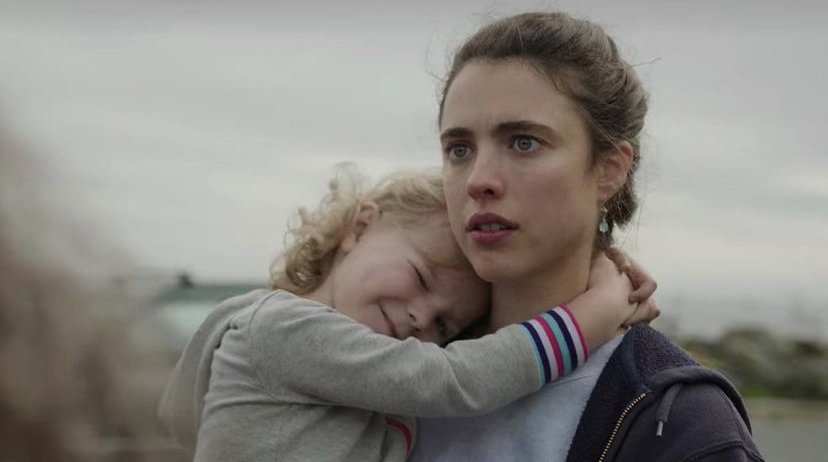

Wide awake in the middle of the night in northern Seattle, a woman lays in bed staring at a man who, hours prior, punched a wall beside her face during a heated argument. After having to remove shards of glass from their two-year-old daughter’s hair, she is left rattled and frightened. Waiting until he is fully asleep, she grabs their daughter and drives away from their mobile home. We don’t know where she is headed, and neither does she.
Loosely adapted from Stephanie Land’s memoir “Maid: Hard Work, Low Pay, and a Mother’s Will to Survive,” Netflix’s 10-episode series “Maid” features 25-year-old aspiring writer Alex (Margaret Qualley) who struggles to raise her young daughter Maddy (Rylea Nevaeh Whittet) while working as a maid after fleeing from her emotionally abusive alcoholic partner Sean (Nick Robinson). Alex starts with only $18 in her pocket, and we witness the amount dwindle throughout the series from a pop-up tally on the screen as she purchases food, gas, daycare and other essentials. This aspect invites the audience to put themselves in her shoes as she experiences the precariousness of her new life as a poor, unemployed and single mother.

Alex’s freedom comes at a great cost. Seeking help from a social worker, Alex gets a job as a maid at Value Maids; however, her trials do not end there. Restricted from working longer hours, she struggles to make enough money to sustain both herself and her daughter. Although she receives seven different types of governmental assistance, they come in limited amounts and require arduous effort on Alex’s end. To obtain this assistance, Alex suffers through an endless cycle of paperwork, requiring many documents such as proof of identification, residency and employment — most of which she lost the second she stepped out of her abusive household. Struggling to secure affordable housing, Alex and Maddy live at a domestic violence shelter where she meets other domestic violence survivors as they too attempt to get back on their feet.
As Alex moves from house to house to clean her rich clients’ toilets, the fate of who will get full custody of Maddy remains up in the air. Alex manages to receive some help from her mother Paula (Andie MacDowell) who is a narcissistic artist with undiagnosed bipolar disorder. She helps take care of Maddy at times, but her mental instability proves to be fatal for Maddy’s well-being.
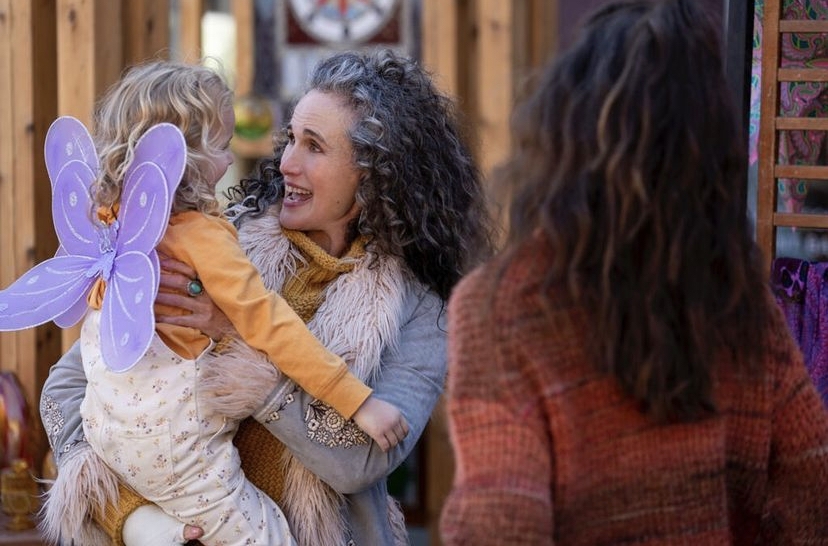
Behind the trauma of enduring domestic violence lies a talented writer who yearns for something greater in life. Four years ago, Alex received a scholarship to University of Montana’s creative writing program, but passed on the opportunity due to financial restraints. In the present, she finds her acceptance letter again, awakening the writer in her as she seeks comfort by jotting down her experiences as a working maid. After deciding to reapply, she was accepted again with a scholarship and financial aid. Believing that moving to Montana would grant her and Maddy a new beginning, she works harder and perseveres to turn her dream into a reality. However, Sean refuses to go down without a nasty custody fight.
“Maid” acknowledges that emotional abuse is on par with physical abuse, something that many states in the U.S. have yet to establish. According to the National Domestic Violence Hotline, “an average of 24 people per minute are victims of rape, physical violence or stalking by an intimate partner in the United States,” translating to roughly more than 12 million women and men within a single year. Emotional abuse, in particular, may be more difficult to identify compared to physical violence, but it is equally damaging. Oftentimes, emotional abuse is the precursor to physical abuse. Alex represents the millions of emotionally abused victims who avoid reporting their abusers, mainly due to fears of people not believing them. Initially, Alex was in denial of her status as a victim until the domestic violence shelter opened her eyes to the true nature of her PTSD. In Alex’s case, the property damage instigated by Sean punching a wall beside her face serves as a “symbolic violence” that affected her psychologically and socially. As stated by Alex’s fellow domestic violence survivor Danielle (Aimee Carrero) during Season 1’s Episode 2: “Ponies,” “Before they bite, they bark. Before they hit you, they hit near you. Next time, it was gonna be your face, and you know that.”
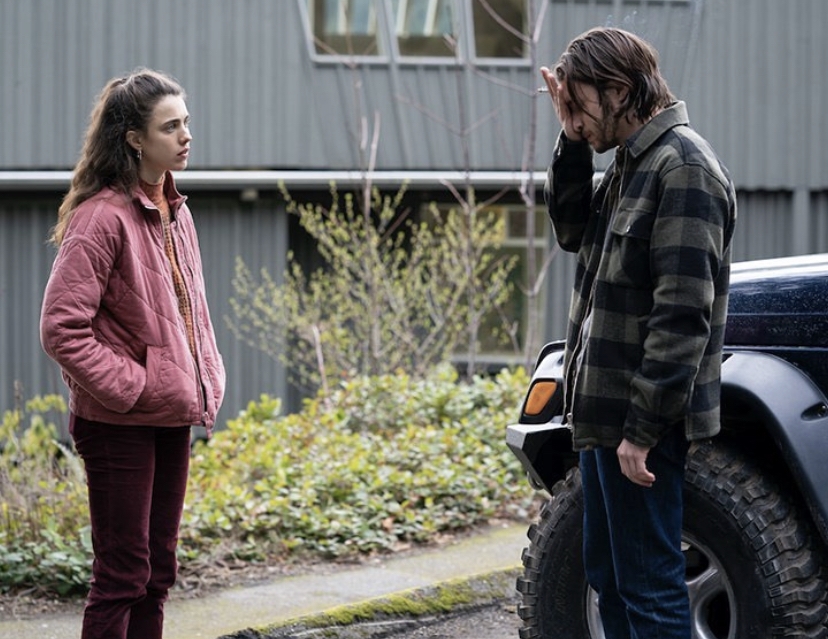
Alex rekindles her relationship with her estranged father and a darker truth is revealed — Alex and her mother have more in common than she expected. We learn along with Alex that Paula is also a victim of domestic abuse, having been hit by Alex’s father long ago, which prompted her to run away with a young Alex. Meanwhile, Sean is held captive by his own demons from his mother’s opioid addiction and his father’s emotional abuse in which his father relentlessly blamed Sean’s existence for ruining his life. Sean’s traumatic childhood heavily influenced his alcoholic tendencies, as well as his hostility towards Alex. This cycle of abuse prevails in countless households across the world, with most families failing to recognize and stop it.
“Maid” was a rather frustrating and heart-wrenching watch that revealed the harsh, unfiltered realities undergone by victims of domestic abuse while switching up the narrative and living up to the true definition of what it means to be a courageous domestic violence survivor. Qualley’s unwavering portrayal of a single mother and domestic violence survivor proves to be empowering and admirable, bringing justice to a character that the audience can learn to love and empathize with, regardless of their economic background. In her attempt to be independent from Sean, Alex defied the odds by making the brave decision to leave home, secure a job, buy her own car, find housing and pursue a college degree all while being a single parent. The extent to which she provides for her daughter is awe-inspiring, from stealing work shifts to earn more money to shielding Maddy from toxic family members like Alex’s father.
Alongside Qualley is the rest of the show’s outstanding cast, whose authentic portrayal of their respective characters brought the story to life. While weaving in the heavy topics of mental illness and trauma into the story, “Maid” successfully balances out these heavy elements with Alex’s journey of self-discovery. Most significantly, it also steers clear from typical stereotypes of maids being Latina or Black by portraying Alex as a white domestic worker in middle America. This show perfectly encapsulates how a mother’s love goes beyond all understanding, as well as reminding us that we are the only ones who truly have control over our lives and possess the power to reclaim what is rightfully ours.
Annabella Johan is an Entertainment Intern for the fall 2021 quarter. She can be reached at ajohan@uci.edu.

