


Freeform’s “The Fosters” spinoff series, “Good Trouble,” has been successful in its last three seasons, featuring the revamped lives of Callie (Maia Mitchell) and Mariana Adams Foster (Cierra Ramirez) with shiny new careers in the works as they move to Los Angeles and find themselves in a communal living situation called the Coterie. The show debuted its fourth season on March 9, and Callie is already bidding farewell to her newfound LA life for a job with the ACLU in Washington DC, leaving Mariana to brave the City of Angels all alone, despite her endless supply of nosy yet caring housemates.
The end of the third season leaves viewers on cliffhangers for each of the characters as they face life-altering decisions, and the first episode of the fourth season ties up loose ends elegantly before season four mayhem begins.
The Tommy Sung trial comes to a close, Alice (Sherry Cola) is touring with Margaret Cho, Dennis’ (Josh Pence) new toast food truck business is successful and healing, Isabella (Priscilla Quintana) gets a job so she can stay in LA with Gael (Tommy Martinez), Malika’s (Zuri Adele) polyamory journey is making her much more confident and Davia (Emma Hunton) makes a romantic decision between Dennis and Matt (Erik Stocklin).
Callie tells Jamie (William Beau Mirchoff) that she needs to make some big life changes by the end of the first episode, and the season’s blissful simplicity starts to look more complicated. When Callie and Mariana’s moms come into town to help break the news of Callie’s new job gently, their maternal presence causes truths to come out and chaos to ensue. A Coterie family dinner devolves into a dramatic scene quickly as Jude (Hayden Byerly) blurts the news of Callie’s job in front of everyone.
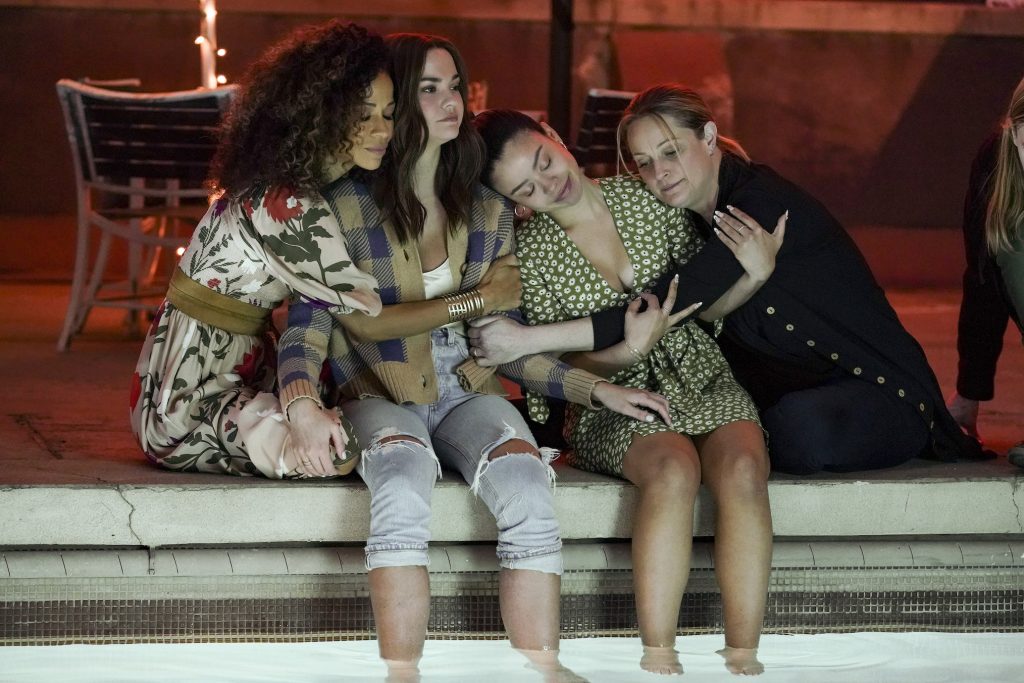
Mariana is hit hard by the news and she finds herself struggling to accept the absence of her sister, especially in such an uncertain time in her life. Of course, she won’t admit this to herself; instead, she delves into work and delegates her time and efforts toward Revitalize Beauty and Bulk Beauty all at once.
Without Callie there to discuss her struggles, Mariana’s confusion about working for the enemy while also learning to love the enemy is unresolved. Mariana is typically put together and on top of everything, but in her sister’s absence, she loses the sense of stability and assuredness she once possessed.
Growing up in a giant family, she feels betrayed and alone, finding herself relating to new Coterie member, Joaquin Perez (Bryan Craig), an enigmatic freelance investigative journalist in search of his long-lost sister Jenna, who he thinks may have spent some time in the Coterie. Their relationship is need-based, and it does seem to be sparking up some attraction.
Freshly single and without a roommate, it would be unsurprising to see Mariana jump into bed with the brooding and equally lonesome Joaquin. Solely living there to search for clues, he also finds that the Coterie is truly a place of empathy and love, opening up to Mariana about Jenna, telling her that she is lucky her sister is just a call away. It is possible that their relationship could lead to something more permanent and emotional as Joaquin becomes more and more attached to the Coterie, but it does not seem to be possible without a whole lot of drama involved.
Mariana’s frustration and bitterness toward her sister is likely a shared feeling with audiences that grew up watching Callie and Mariana from their roots in “The Fosters.” Fans of the unstoppable sisters followed their journey to “Good Trouble,” and with Mariana as the only “Fosters” cast member left as a main character, it is unclear whether she is enough to make the fanbase stay engaged.
In an emotional farewell post on Instagram, Mitchell expressed both gratitude for the show and remorse to leave the show and the character behind.
“Ten years ago, I auditioned for a little pilot called ‘The Fosters’…Years later, I was able to continue my journey as Callie when we formed the ‘Good Trouble’ family. Two shows, 156 episodes, and a chosen family for life,” she wrote.
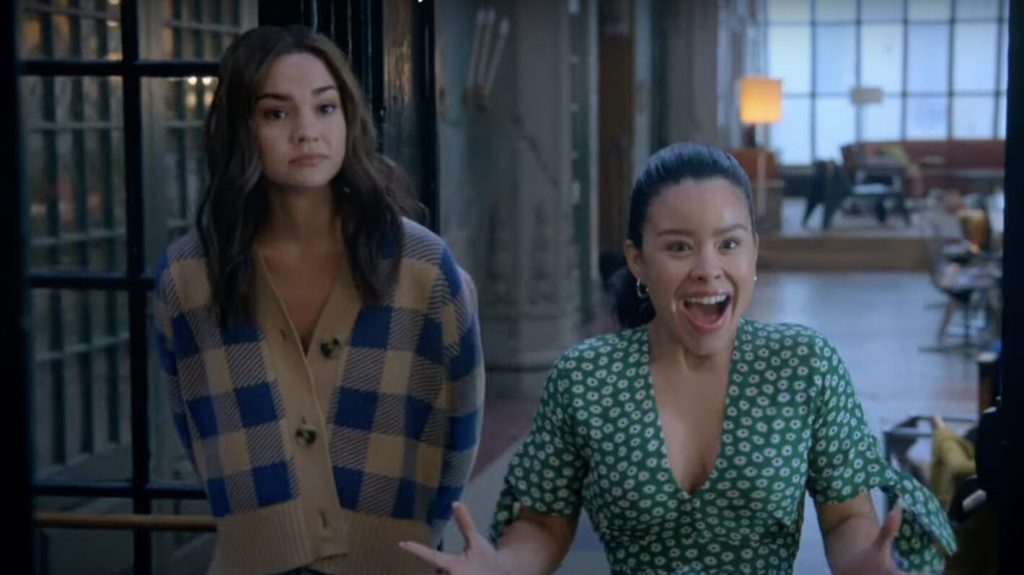
She explained that leaving the show was not an easy decision but the right one, as she needed to return home to Australia where her family had been during the pandemic.
Callie and Mariana’s relationship was rocky when they first met, but they quickly became best friends, close sisters and partners in crime. Mitchell told Entertainment Weekly in an interview that her most emotional goodbye scene was with her on-screen sister.
“Me and Cierra have been working together now for like almost 10 years…and we have become truly so close. It was my last day and the last scene I filmed with Cierra was the cab driving away, which was just cruel,” she said.
Final as it may seem, “The Fosters” characters frequent the “Good Trouble” set for cameos and guest appearances, and it is likely that audiences have not seen the last of Callie Adams Foster.
While Callie has been a beloved member of the Adams Foster family from the beginning, Mariana is more than capable of carrying the weight of “Good Trouble,” and after four seasons, the Coterie clan is no longer composed of background characters in the sisters’ lives. Each character’s story arc is rich and morally complex as the 20-somethings struggle their way through the real world, and each episode brings about new topics of social justice and scenarios of great authenticity.
Most notably, Davia’s body positivity journey is taking a new turn this season. Previously denoting herself as a proud “Fat Bitch,” Davia is now empowering herself through burlesque dancing, learning to appreciate her body at any size and love herself under any circumstances. Spending a majority of the previous seasons focusing on the men in her life, it is refreshing to see her focus on her own personal joy, rather than being someone else’s.
Despite one of the main characters parting ways from the show, its unique style of editing and storytelling remains consistent. Each episode is anachronistic; the audience is shown glimpses into the climaxes of each character’s current situation, before being thrust back in time to experience the reveal in pieces. Observing lots of “what if” scenes as characters deliberate with their constant, ongoing dramas, viewers are left on their toes at all times, which only makes the show more engaging.
Throughout its time on the air, “Good Trouble” has been extremely realistic, diverse and aware of itself in a number of ways. Each character fights for justice in their own ways, coexisting as queer, female, nonbinary, sexual, grieving, racially diverse, pregnant bodies, whilst asserting their normalcy in the midst of the abnormal. This show does inclusion in the right way, making its diversity a big deal, while also treating it with a sense of normalcy. As season 4 progresses, “Good Trouble” only gets rawer, weirder and more compassionate.
“Good Trouble” season 4 is available Wednesday nights at 10 p.m. PST on Freeform and streaming the next day on Hulu.
Lillian Dunn is an Entertainment Staff Writer for the spring 2022 quarter. She can be reached at lbdunn@uci.edu.

Lillian Beatrice Dunn is an Arts & Entertainment Editor for the New University, majoring in Literary Journalism and minoring in Queer Studies and Creative Writing. She has over 50 published pieces, including interviews with indie band Small Crush and dark-pop princess Ashley Sienna. She has freelanced for OUT FRONT Magazine and the LA Dance Chronicle and has previously held staff writer positions at Her Campus UCI and Fever Dreams Magazine.